





Wooden Floor Cupboard
A wooden floor cupboard organises a room with vertical presence, offering shelved storage tailored to awkward corners and alcoves.
Wooden Floor Cupboard
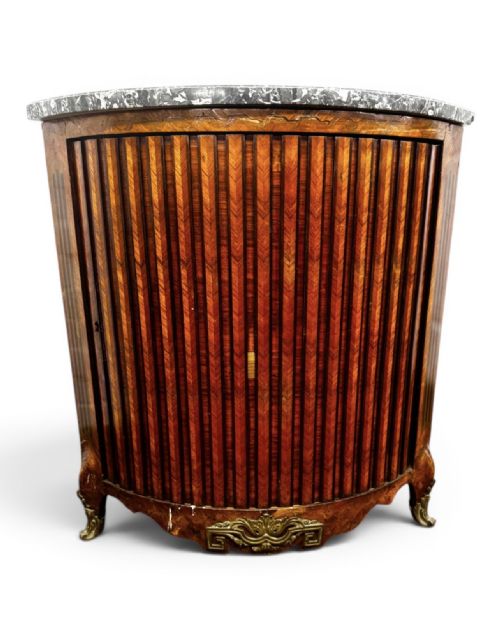
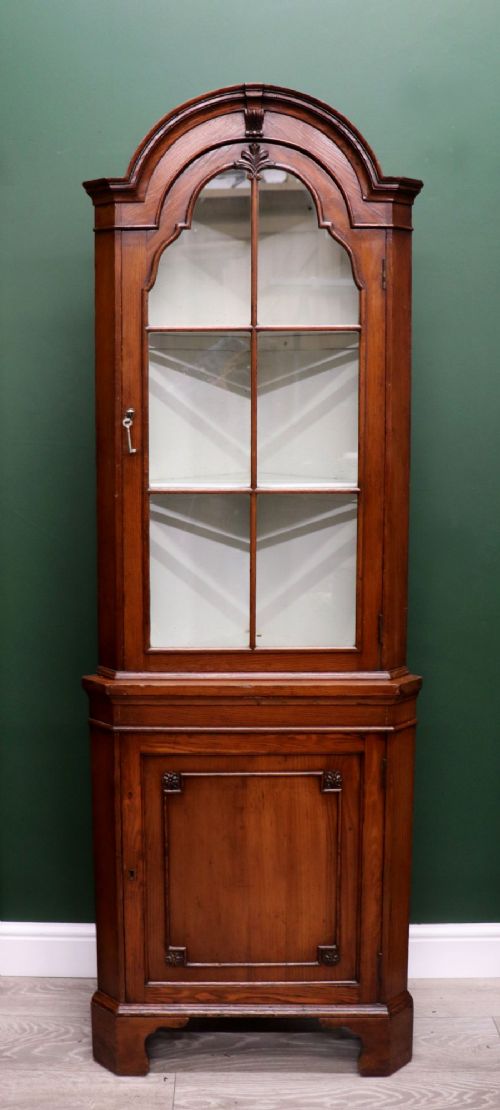
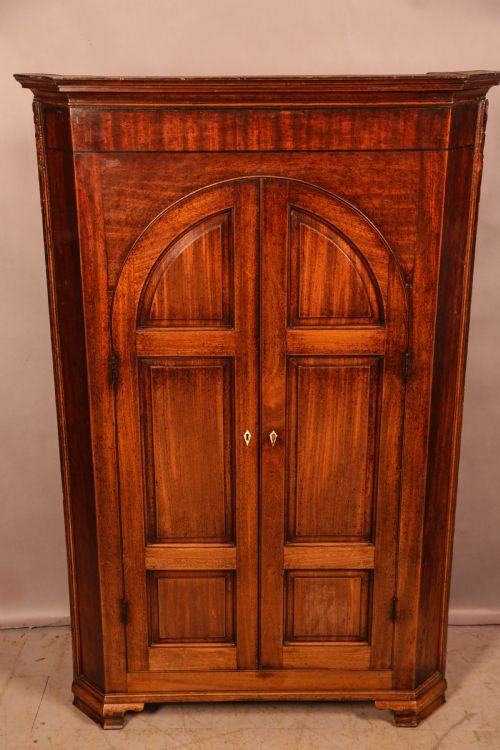
A wooden floor cupboard stands directly on the ground rather than hanging upon a wall, often built to fit snugly into room corners. The inventory displays numerous standing corner cabinets and cupboards alongside bookcases and display cabinets.
Makers fashioned these pieces across multiple eras, ranging from Georgian and 18th century examples through to Victorian, Edwardian and early 20th century iterations. Styles lean heavily towards classical proportions, incorporating Dutch Baroque influences and Georgian Revival revivals.
Formats vary from solid timber doors concealing plain shelves to glazed upper sections designed for the exhibition of porcelain or glassware. Certain variants function specifically as book presses, combining utilitarian function with domestic display.
How they were made
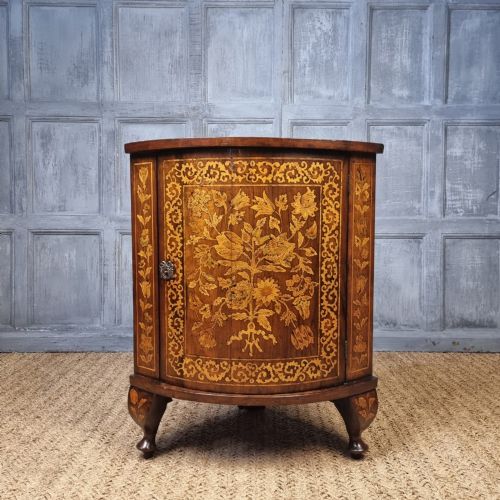
Cabinet makers utilised dense hardwoods such as oak, mahogany and walnut for the primary carcases, frequently selecting fruitwood and boxwood for decorative detailing. Marquetry inlay appears on select examples, creating intricate patterns across the timber grain.
Functional metalwork remained essential to construction, with brass hinges and key escutcheons securing doors alongside iron internal brackets. Glazed panels utilised thin timber glazing bars to segment the glass frontages safely.
Wooden Floor Cupboard Retail Price Guide 2026
Typical asking prices for wooden floor cupboard among the pieces listed under this phrase on Sellingantiques today, from the lower quarter to the upper quarter. They describe what is for sale here now, not the wider market.
Listings feature oak, mahogany, walnut and fruitwood across Georgian, Victorian and Edwardian periods.
What varies in quality
The refinement of the timber selection largely dictates the standing of an individual piece, moving from straightforward country house oak to figured mahogany and detailed walnut marquetry. Superior examples exhibit harmonious grain matching across the visible door panels and curved bow fronts.
Construction intricacy separates standard utility storage from ambitious cabinet work, particularly in the handling of curved cornices and specialised corner joints. The survival of original brass hardware and well-fitted timber doors indicates higher workshop standards.
The Wooden Floor Cupboard Glossary
- Bow Front
- A convex curved cabinet front that projects outward in a smooth arc. This shape softens room angles and demands precise woodworking.
- Marquetry
- The art of applying decorative veneer pieces to a structure to form geometric or floral designs. Artisans use contrasting timbers like boxwood and walnut for visual depth.
- Book Press
- A heavy cabinet or standing press designed to flatten paper or store volumes securely. These incorporate sturdy timber screws and internal shelving.
- Glazed Door
- A door fitted with glass panes to permit the viewing of interior contents. This feature turns a storage cupboard into a display cabinet for ceramics.
Wooden Floor Cupboard: Frequently Asked Questions
Where should I place a corner cupboard?
These cabinets suit empty room junctions and dark alcoves where standard rectangular furniture fails to fit properly. Their tall proportions draw the eye upward while making use of otherwise wasted floor space.
Ensure the surrounding clearance allows the doors to swing open fully without striking adjacent walls or furniture. A well-placed corner unit anchors the room layout effectively.
How do I identify a Georgian cupboard?
Georgian pieces rely on classical proportions, solid timber construction, and restrained decorative elements like dental cornices or simple paneling. Mahogany and oak predominate during this period.
Inspect the interior construction methods and secondary timbers used at the back and drawer linings. Hand-cut dovetails and hand-sawn boards indicate appropriate age.
Can I store heavy books inside?
Most floor standing cupboards feature fixed or adjustable shelving designed to support substantial weight, particularly sturdy oak and mahogany book presses. Check the thickness of the shelf timber before loading heavy volumes.
Distribute weight evenly across the boards to prevent sagging over time. Heavier folios rest best on lower shelves.
What is marquetry decoration?
Marquetry involves veneering thin slices of contrasting woods onto a carcase to create pictorial or geometric designs. Walnut and fruitwoods often appear in these patterns.
This technique requires meticulous hand-cutting and fitting by skilled artisans. Surviving work demonstrates the decorative ambitions of the period workshop.