




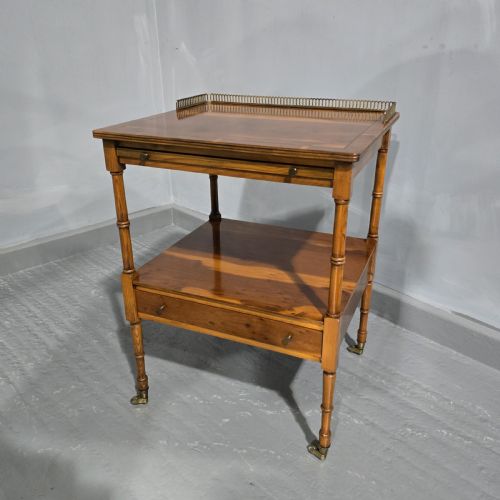


Wooden Etagere Table
A wooden etagere table organises small rooms with tiered display space, offering multiple surfaces in compact footprints across various nineteenth-century and early periods.
Wooden Etagere Table
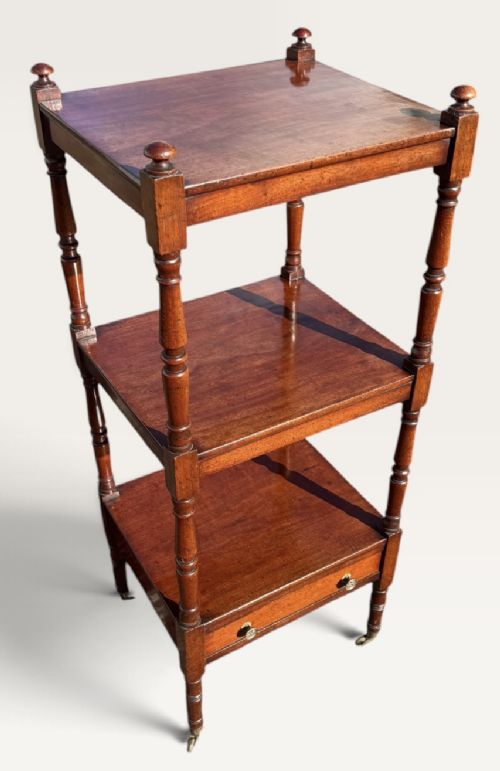
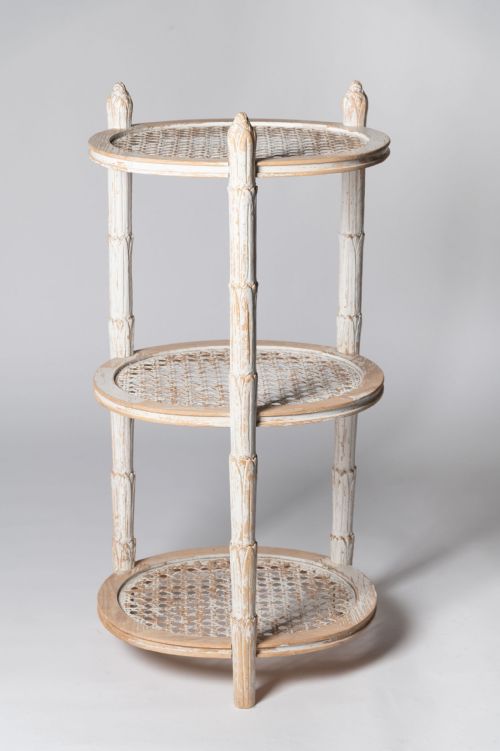
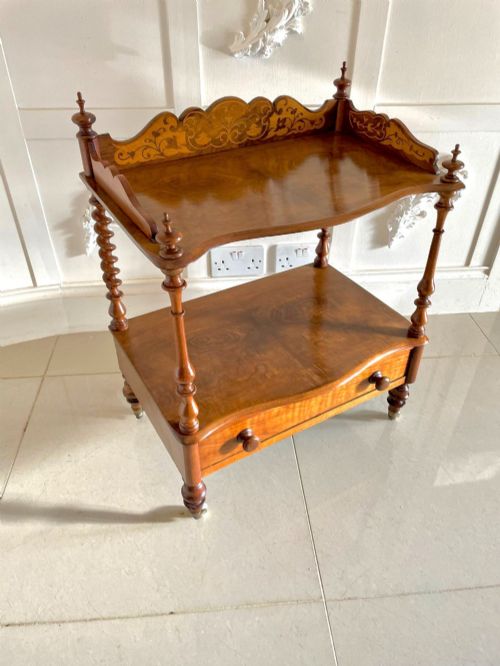
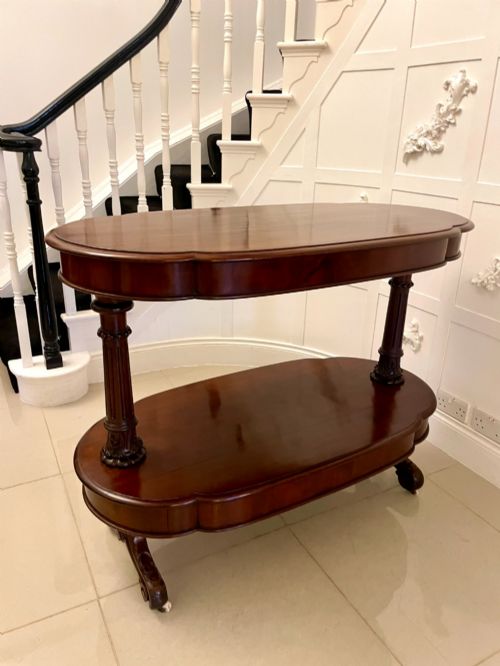
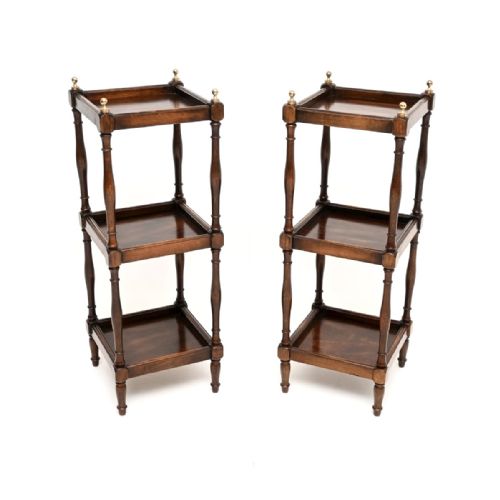
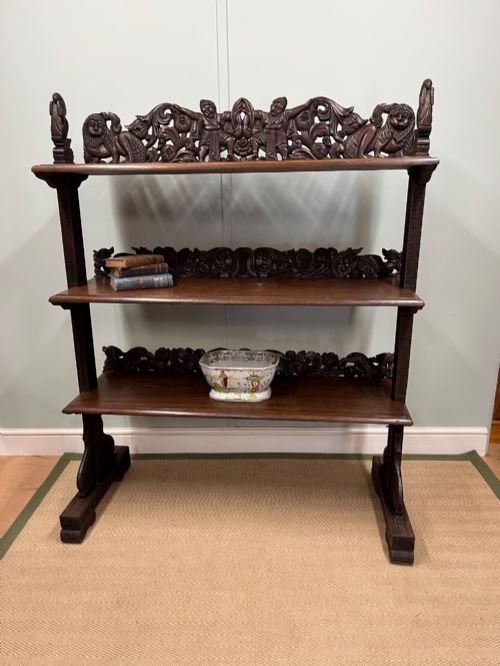
A wooden etagere table combines display shelves with the surface utility of a standard table, frequently taking the form of a three-tier whatnot or tiered stand. These pieces emerge in Georgian, Regency, and Victorian workshops to serve as mobile display surfaces for porcelain, books, and ornamental objects.
The most common examples encountered on this page span the nineteenth century and use mahogany or walnut as their primary timber. Buyers select these tables to add vertical display capacity in sitting rooms and hallways without taking up excessive floor space.
Materials and construction
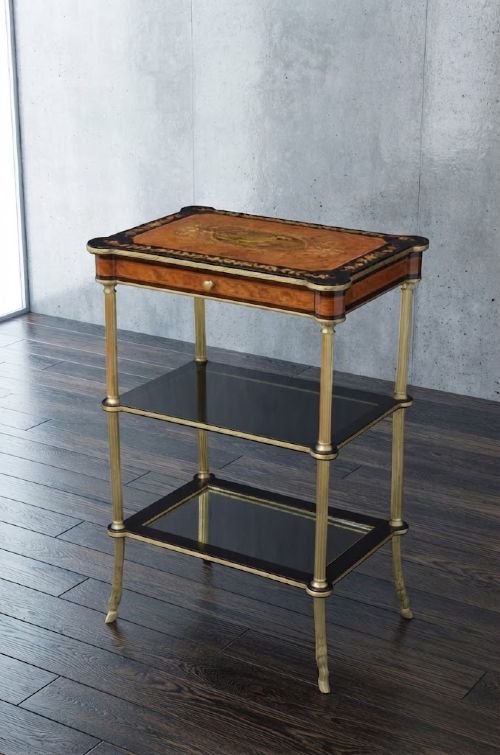
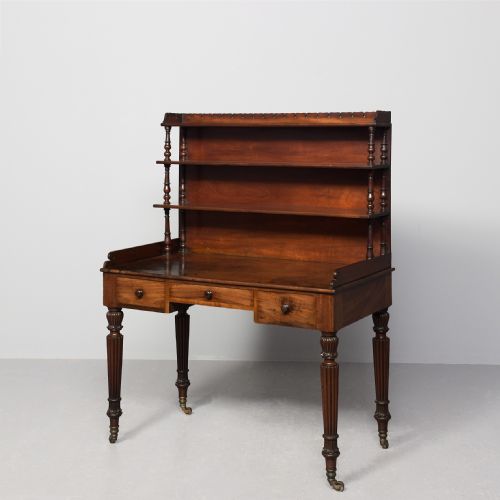
Cabinetmakers construct these tables using dense hardwoods such as mahogany, walnut, rosewood, and satinwood, frequently enhanced with contrasting marquetry inlays or ebonised details. Supporting columns often feature turned or carved uprights that separate the graduated tiers.
Brass castors and fittings appear on numerous examples to allow easy movement across carpets and floorboards. Joinery relies on traditional techniques to support multiple stacked shelves securely.
Wooden Etagere Table Retail Price Guide 2026
Typical asking prices for wooden etagere table among the pieces listed under this phrase on Sellingantiques today, from the lower quarter to the upper quarter. They describe what is for sale here now, not the wider market.
Listings feature woods like mahogany, walnut, rosewood, and satinwood across periods from the Georgian era through to the Edwardian period.
What separates the fine examples
The selection of timber grain dictates much of the visual appeal, with figured burr walnut, flame mahogany, and detailed satinwood marking out superior workshops. Crispness in carved details, fine marquetry patterns, and solid brass mounts separate standard utility pieces from high-grade commissions.
Proportion and structural rigidity across multiple tiers determine the overall success of the piece. Tables that retain balanced heights between shelves and tight joints at every level demonstrate superior cabinetmaking skill.
James Mein of Kelso·W. Turner Lord & Co·Maple & Co
The Wooden Etagere Table Glossary
- Etagere
- A piece of furniture consisting of a set of open shelves for displaying small objects. These tiered stands developed in France before becoming popular across British drawing rooms.
- Whatnot
- A multi-shelved open cabinet used for storing and displaying ornaments, books, or curiosities. The form shares a close relation with the etagere and dumb waiter.
- Marquetry
- Decorative woodwork where pieces of veneer are fitted into a background to form intricate patterns or pictures. Craftsmen utilise contrasting timbers like satinwood and walnut to create floral or geometric designs.
- Ormolu
- Gilt bronze mounts applied to furniture edges, feet, and uprights for decorative effect. This technique adds metallic highlights to wood surfaces, particularly on French pieces.
- Dumb waiter
- A tiered stand traditionally placed beside a dining table to hold dishes and tableware without requiring servants. These pieces utilise graduating shelves supported on central columns.
Wooden Etagere Table: Frequently Asked Questions
What is a wooden etagere table used for?
These pieces function primarily as display stands and occasional tables in living spaces, holding books, ceramics, and decorative objects across their multiple tiers.
Their tiered design maximises vertical surface area, making them practical for smaller rooms where floor space remains limited.
How do I date a wooden etagere table?
Dating relies on examining the timber species, secondary woods, fixing methods, and decorative styles typical of Georgian, Regency, or Victorian periods.
Cabinetmaking techniques evolved through the nineteenth century, moving from hand-sawn timbers and subtle cockbeading to heavier machine-assisted mouldings and dense marquetry.
Where should I place an etagere table?
These tables fit well beside seating areas, in hallways, or against empty wall spaces where their stacked shelves can display ornaments effectively.
Because many examples feature finished backs and freestanding proportions, they also suit placement away from walls in the centre of a room.
Are etagere tables stable?
Sound construction and sturdy turned uprights provide reliable support for normal decorative items distributed across the tiers.
Heavier objects belong on the lower shelves to maintain a low centre of gravity, while lighter porcelain and glass sit safely on the upper levels.