




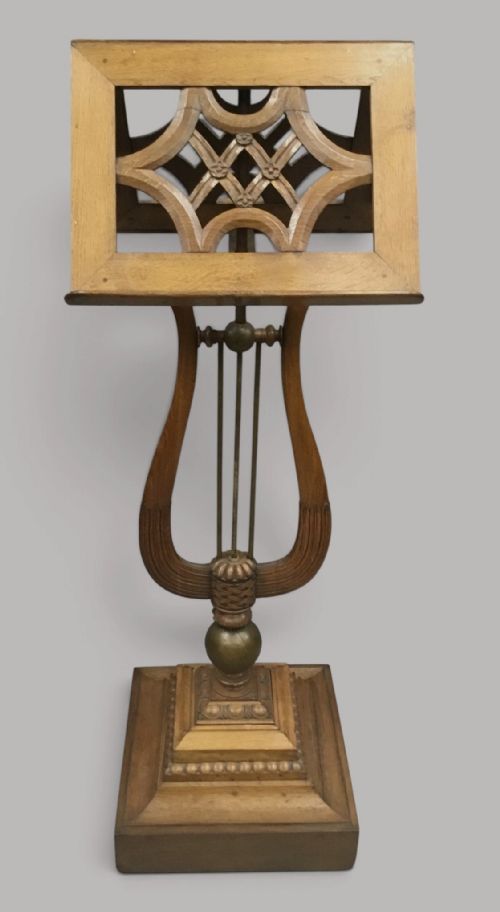

Wooden Duet Stand
These wooden duet stand examples offer dual desks for shared performance, built by craftsmen who understood the practical needs of musicians.
Wooden Duet Stand
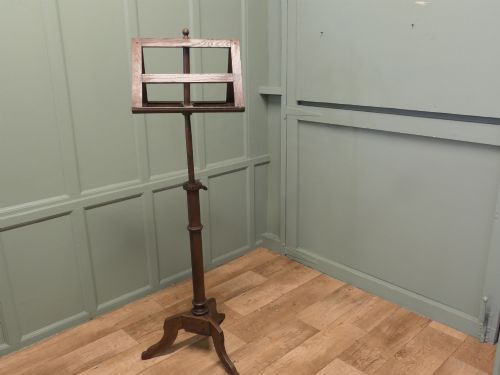
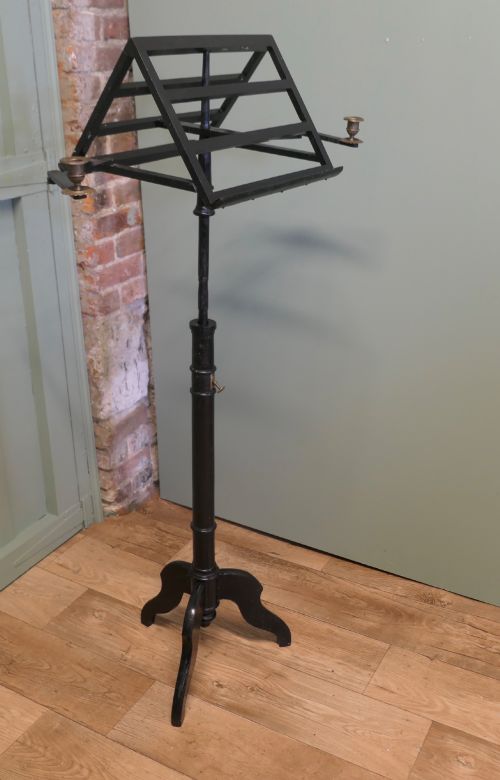
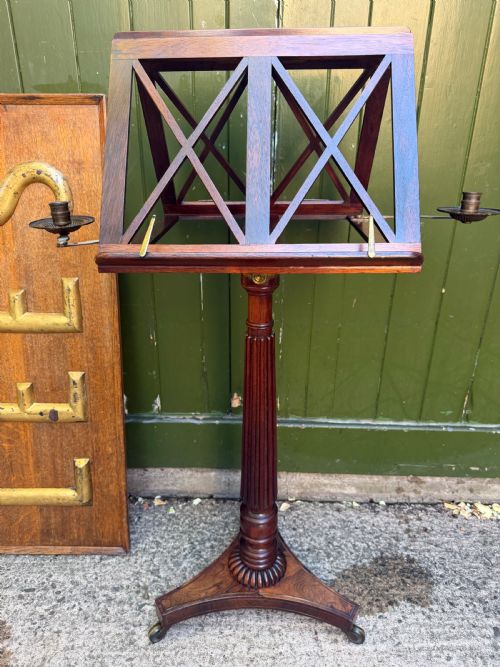
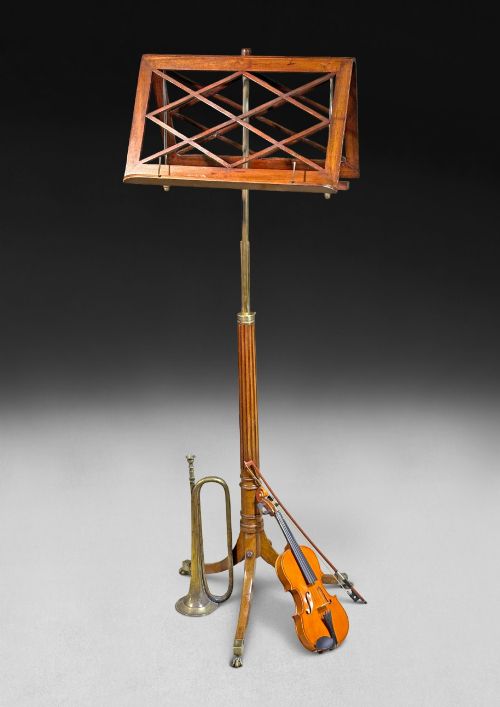
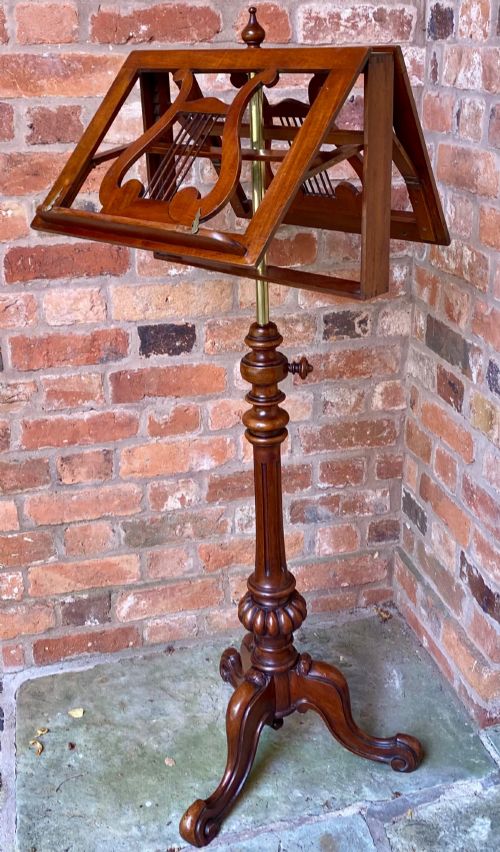
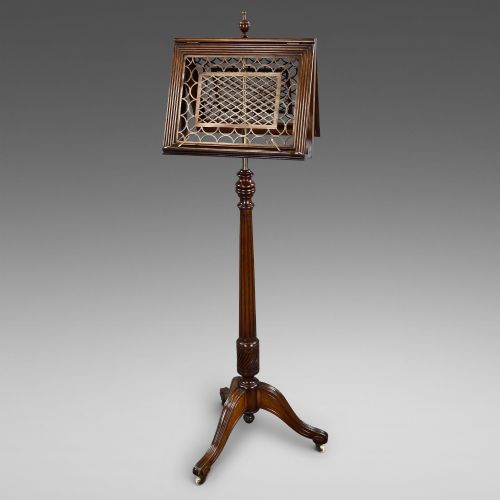
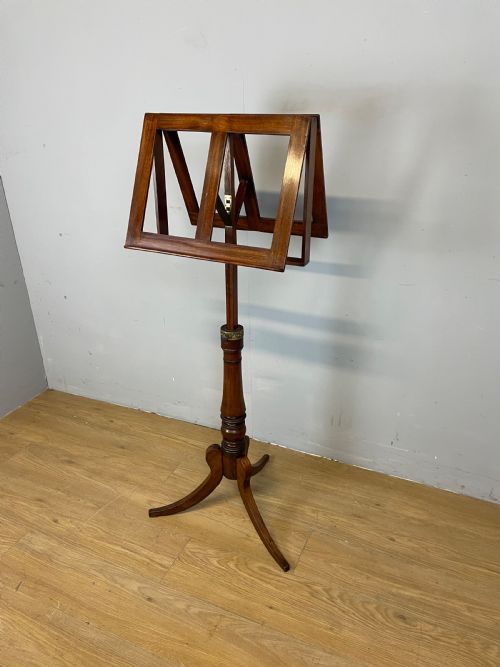
A wooden duet stand provides a dual platform for two musicians to read sheet music simultaneously. The pieces found here span the Georgian, Regency, Victorian, and Arts and Crafts eras, offering traditional forms designed for shared performance or reading.
The materials reflect the prevailing cabinet-making tastes of the nineteenth century. Mahogany and oak dominate the selection, alongside richer timbers such as rosewood and burr walnut intended for more formal settings.
How they were made
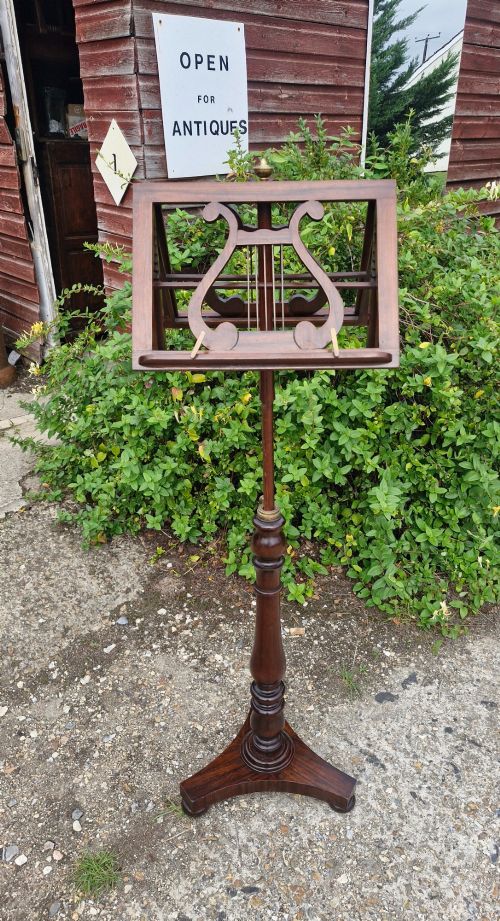
Cabinet makers utilised dense hardwoods like mahogany and oak to ensure the stability required for supporting heavy bound music books. Selected pieces feature contrasting veneers and intricate fretted woodwork to enhance their visual appeal.
Makers incorporated adjustable brass mechanisms to allow users to alter the height and angle of the twin desks. Metal mounts, brass inlay, and cast iron elements were frequently added to strengthen stress points and decorate the framework.
Wooden Duet Stand Retail Price Guide 2026
Typical asking prices for wooden duet stand among the pieces listed under this phrase on Sellingantiques today, from the lower quarter to the upper quarter. They describe what is for sale here now, not the wider market.
Listings feature nineteenth-century pieces spanning the Georgian, Regency, Victorian, and Arts and Crafts periods, constructed from mahogany, oak, rosewood, and walnut.
What varies in quality
The sophistication of the adjusting mechanism distinguishes standard pieces from superior examples. Smooth movement in the brass screws and tight joints indicate careful workmanship by the original maker.
The choice of timber and decorative embellishment also sets individual stands apart. Plain utilitarian pieces contrast with those featuring figured rosewood, burr walnut, intricate fretwork, and precise brass inlay.
The Wooden Duet Stand Glossary
- Duet stand
- A music stand featuring two adjacent desks designed for two players. These pieces allow musicians to share scores easily during a performance.
- Tripod base
- A three-legged support structure commonly found on nineteenth-century music stands. This configuration provides steady balance on uneven floorboards.
- Fretted
- Woodwork pierced with decorative open patterns using a saw. This technique lightens the visual weight of the music desk while adding ornamental detail.
- Inlay
- Pieces of contrasting material fitted into depressions in the wood surface to form a design. Brass and lighter timbers are frequently used for this purpose.
- Lectern
- A slanted reading desk designed to hold books or papers for a standing speaker or musician. Many duet stands double as lecterns.
Wooden Duet Stand: Frequently Asked Questions
What is a wooden duet stand?
A wooden duet stand is a specialised piece of antique furniture designed to hold sheet music or books for two people reading or playing together. They typically feature adjustable twin desks supported by a central column and a stable tripod base.
These stands were staples in nineteenth-century music rooms and parlours where shared musical performance was a common domestic pastime. Their adjustable nature allowed players of different heights to use the same stand comfortably.
How do I date a wooden duet stand?
Dating these stands involves examining the timber, construction methods, and decorative styles used by the cabinet maker. Georgian and Regency examples often feature clean lines in mahogany or rosewood, while Victorian pieces may incorporate burr walnut or heavier carving.
Hardware such as brass screws and adjustment mechanisms also provide chronological clues. Arts and Crafts examples from the late nineteenth century tend to show simpler oak construction with an emphasis on hand-craftsmanship.
Can these stands be adjusted?
Most antique duet stands incorporate mechanical adjustments for both height and desk angle. Original brass screws and sliding shafts allow the user to position the twin music desks precisely for seated or standing use.
When handling these mechanisms, gentle operation preserves the integrity of the antique brass and timber threads. They remain fully functional for modern musicians and readers.
Where should I place a duet stand?
These stands suit music rooms, studies, and living spaces where their architectural forms can be appreciated. Placing them away from direct heat sources protects the antique timbers and prevents veneer cracking.
They also function effectively as book or tablet displays in modern interiors. Their adjustable desks make them practical for holding open volumes in everyday use.