




Wooden Dressing Table Seat
A wooden dressing table seat offers a low, sturdy perch for the bedroom, usually taking the form of a small stool.
Wooden Dressing Table Seat
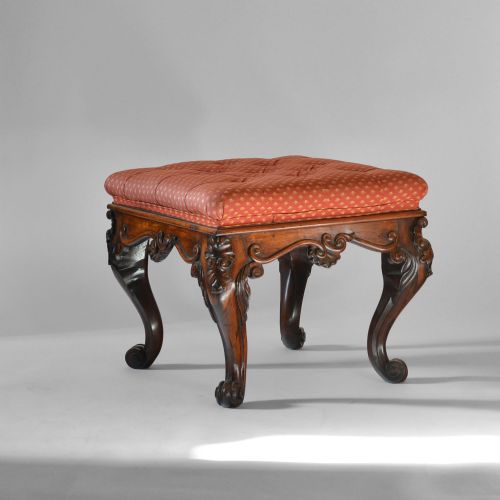
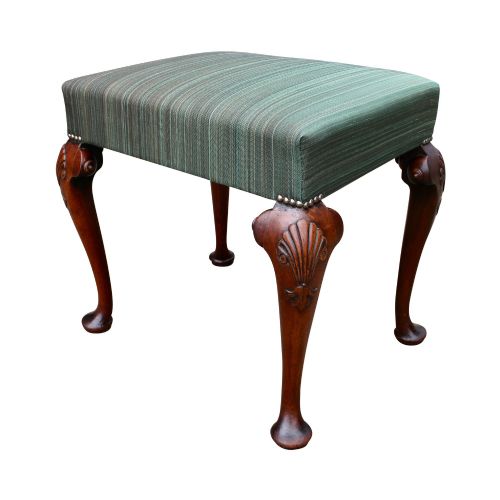
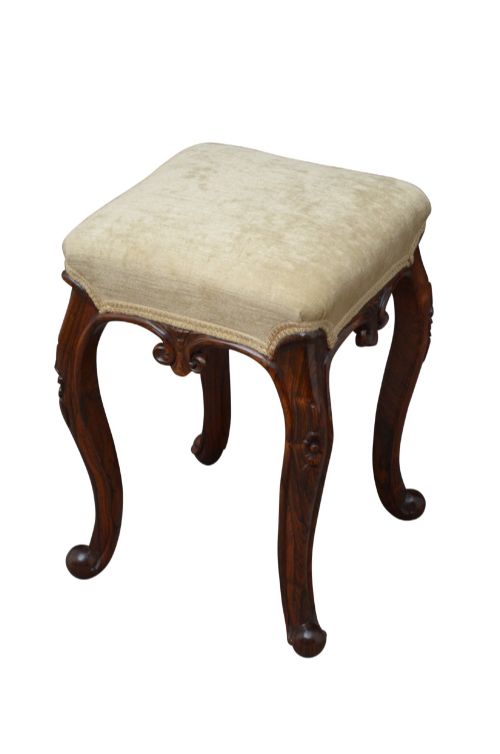
A wooden dressing table seat functions primarily as a low stool for a vanity or dressing table. The pieces found here span multiple periods, most notably the nineteenth century, the Victorian era, and the Edwardian period, alongside Georgian and later twentieth-century examples.
Most items appearing under this heading take the form of stools, footstools, or low benches. Stylistic influences range from Queen Anne Revival and Louis XVI Neoclassical to Arts and Crafts, Art Deco, and Anglo-Indian designs.
Makers utilised various timber frames, often pairing exposed woodwork with upholstered tops covered in fabric, linen, textiles, or leather. These seating options serve practical functions in bedrooms while reflecting distinct historical periods and decorative styles.
How they were made
Cabinet makers constructed the frames of these seats using solid hardwoods such as mahogany, walnut, rosewood, goncalo alves, birds-eye maple, and oak. Some examples feature painted or gilded finishes applied to the timber surfaces, while others incorporate inlaid details and brass fittings.
Upholstery techniques varied according to the period and style, utilising traditional fillings covered in woven fabrics, linen, textiles, or leather. Frames frequently displayed carved cabriole legs, X-frame structures, or straight supports influenced by Queen Anne, Chippendale, or neoclassical designs.
Wooden Dressing Table Seat Retail Price Guide 2026
Typical asking prices for wooden dressing table seat among the pieces listed under this phrase on Sellingantiques today, from the lower quarter to the upper quarter. They describe what is for sale here now, not the wider market.
One unexpected project piece arrives complete with an unpolished frame, waiting patiently for someone to restore its forgotten French charm.
What varies in quality
The selection of timber significantly influences the overall standard of a piece, with dense hardwoods like rosewood, walnut, and mahogany representing superior material choices compared to simpler painted or domestic woods. Joinery methods and the precision of carved details further separate standard examples from finer productions.
The sophistication of the design, such as authentic period revival styling or complex cabriole leg shaping, dictates the execution level. Additionally, the integration of complementary upholstery materials and intact decorative treatments elevates the character of the seating.
The Wooden Dressing Table Seat Glossary
- Cabriole leg
- A furniture leg that curves outward at the knee and tapers inward toward the foot, commonly seen in Queen Anne and eighteenth-century inspired designs.
- Goncalo alves
- A dense exotic hardwood with distinctive figuring, utilised in fine nineteenth-century cabinet making.
- X-framed
- A structural support formed by two intersecting diagonal members shaped to create an X silhouette underneath the seat.
- Louis XVI Neoclassical
- A style characterised by classical symmetry, straight tapering legs, and restrained decorative carving originating from late eighteenth-century France.
- Birds-eye maple
- A figured timber exhibiting small circular patterns resembling eyes, prized for decorative veneering on cabinet work and seating.
Wooden Dressing Table Seat: Frequently Asked Questions
What is a wooden dressing table seat used for?
These pieces serve primarily as low seating placed in front of a bedroom vanity or dressing table. They provide a compact perch for daily grooming routines.
Because of their modest proportions, they also function readily as occasional footstools or low benches in various rooms around the house.
How do I identify a Victorian dressing table stool?
Victorian examples often employ dense timbers such as rosewood, walnut, or goncalo alves, frequently displaying substantial carved wooden frames. Cabriole legs and robust construction are common characteristics.
Many incorporate upholstered tops covered in traditional textiles or fabrics that match the heavy aesthetic typical of nineteenth-century domestic furniture.
Are these seats suitable for everyday use?
Solid wood frames provide sturdy structural support suitable for regular daily seating at a dressing table. Their compact size makes them easy to tuck beneath furniture when not in use.
Buyers should consider whether the existing upholstery meets their functional requirements or if the piece requires recovering for heavier daily interaction.
What styles are common among these seats?
Queen Anne Revival and Victorian designs appear frequently, often featuring characteristic cabriole legs and curved wooden outlines. Other examples draw inspiration from Chippendale, Louis XVI Neoclassical, and Arts and Crafts movements.
Later pieces from the twentieth century introduce Art Deco forms utilising distinct timbers like birds-eye maple alongside leather upholstery.