

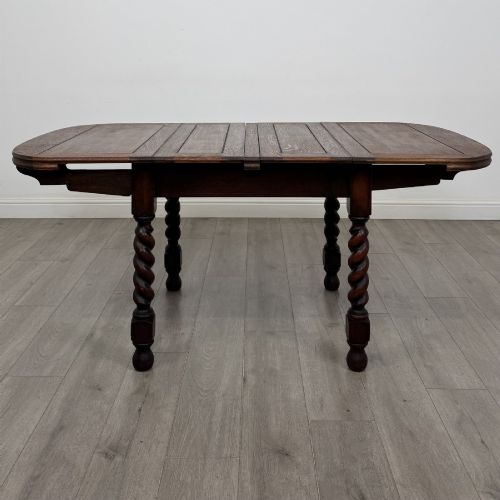
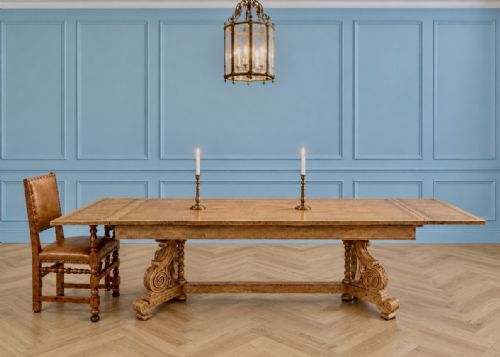
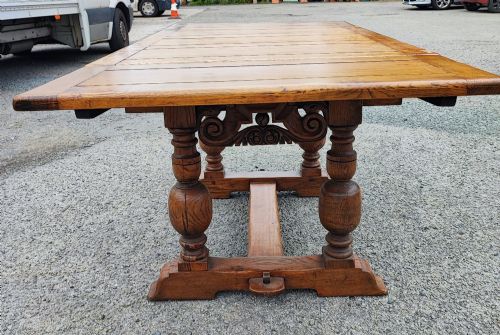
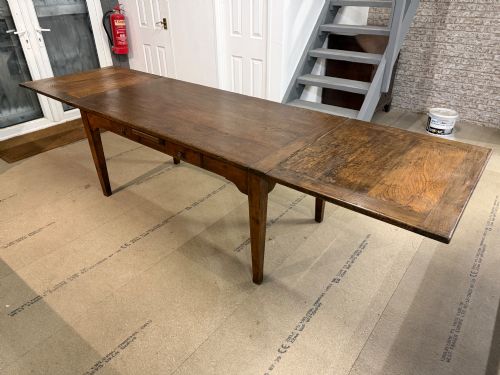
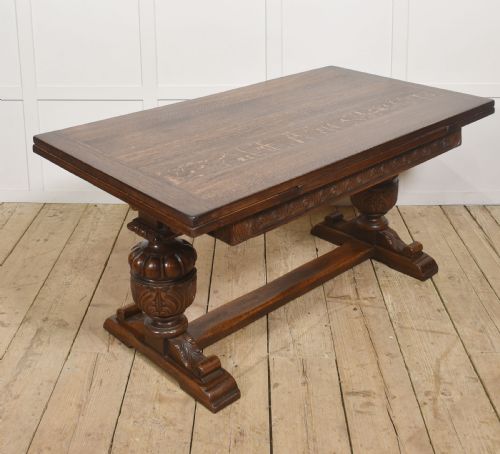


Wooden Draw Leaf Table
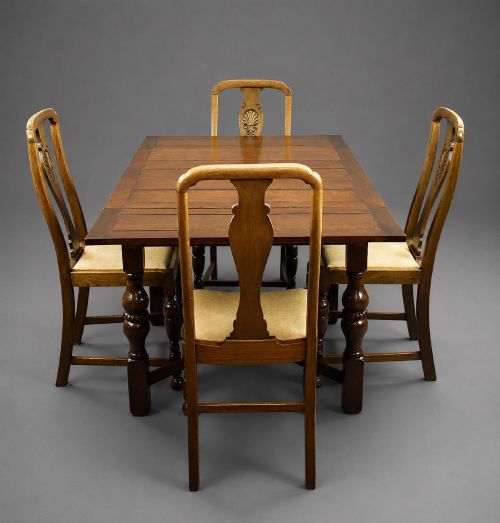
These wooden draw leaf table examples offer clever expanding surfaces built from oak, fruitwood, and mahogany across several historic periods.
Wooden Draw Leaf Table
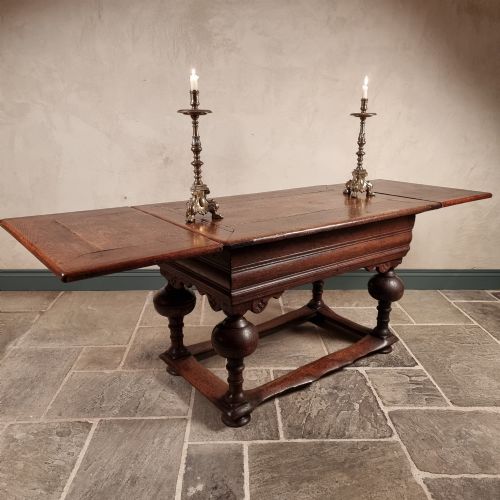
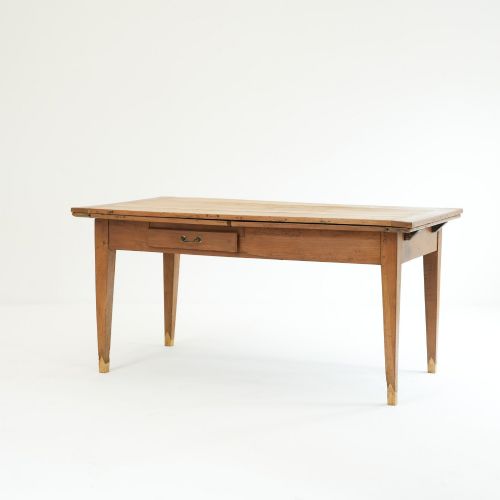
The selections span from seventeenth-century origins through nineteenth-century vernacular interpretations to early twentieth-century revivals. Oak examples often display refectory proportions, while fruitwood versions lean towards French provincial farmhouse styles.
Most entries function primarily as dining tables designed to accommodate extra guests without requiring separate storage leaves. The mechanisms rely on traditional runners that elevate slightly before dropping level with the main tabletop.
Construction and Materials
Cabinetmakers constructed these tables primarily using solid timber frameworks of oak, fruitwood, and mahogany. Secondary timbers such as pine sometimes appear in internal framing and support runners.
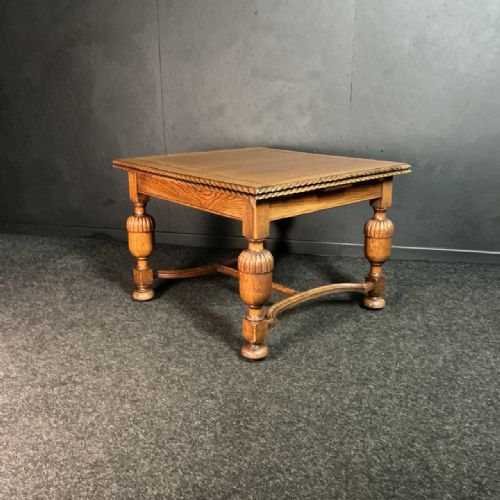
Joinery techniques involve traditional pegged mortise and tenon joints to withstand the stress of daily extension and retraction. Carved details and turned supports appear on specific revival pieces from the nineteenth and twentieth centuries.
Wooden Draw Leaf Table Retail Price Guide 2026
Typical asking prices for wooden draw leaf table among the pieces listed under this phrase on Sellingantiques today, from the lower quarter to the upper quarter. They describe what is for sale here now, not the wider market.
Assessing Quality and Execution
Quality rests on the precision of the sliding mechanism and how flush the extension leaves sit when fully opened. Superior pieces maintain alignment without excessive sagging at the unsupported ends.
The choice of timber grain and the depth of natural patination distinguish fine examples from simpler utility furniture. Original hardware and minimal timber replacement elevate the standing of older pieces.
The Wooden Draw Leaf Table Glossary
- Draw leaf
- An extension system where two leaves slide out from beneath the main surface. This design doubles the usable length of the table.
- Refectory
- A long narrow dining table style traditionally used in monastic or institutional dining halls. These frequently feature heavy stretcher bases.
- Fruitwood
- Timber harvested from fruit-bearing trees such as cherry or pear. It offers a warm tone and fine grain utilised extensively in provincial furniture.
- Patina
- The surface sheen and colour acquired through decades of handling, polishing, and natural ageing. It serves as a key indicator of genuine age.
Wooden Draw Leaf Table: Frequently Asked Questions
How do draw leaf tables work?
Two concealed leaves reside directly beneath the primary tabletop on wooden runners. Pulling these ends outwards causes them to rise slightly and lock level into place.
This ingenious mechanism allows the table to expand quickly without storing loose boards elsewhere. Pushing them back in restores the compact footprint.
What woods were used for these tables?
Oak remains the predominant timber, especially in English refectory and Jacobean revival pieces. Fruitwood, cherrywood, and mahogany appear frequently in continental and later formal examples.
Pine and secondary timbers sometimes support the internal sliding tracks. Each wood dictates the regional style and weight of the furniture.
Are these tables suitable for daily dining?
Solid timber construction makes these tables robust enough for regular family meals and gatherings. The extending mechanism is designed for frequent use if operated with care.
Protecting the surface from heat and moisture helps preserve the historic finish. Regular maintenance keeps the sliding runners moving smoothly.
How can I tell the age of the table?
Tool marks, timber species, and construction methods provide clear clues to the period of manufacture. Hand-cut joints and deep patination typically point to earlier centuries.
Revival pieces from the early twentieth century often employ machine assistance while imitating seventeenth or eighteenth-century styles. Comparing the hardware and timber shrinkage helps confirm the timeline.