




Wooden Dowry Chest
A wooden dowry chest is a sturdy receptacle designed to hold household goods for a marriage, spanning multiple global traditions and centuries of craftsmanship.
Wooden Dowry Chest
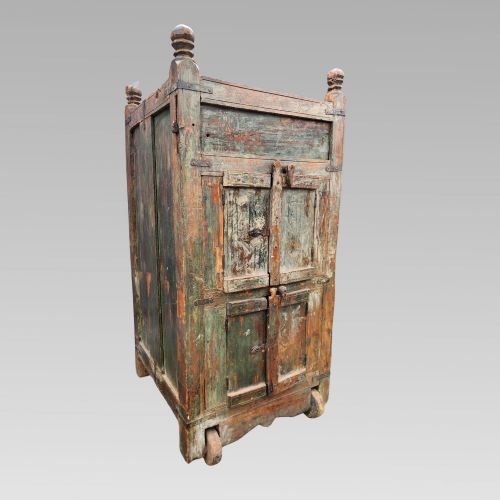
When you search for a wooden dowry chest, you encounter a wide assortment of storage furniture spanning from the seventeenth century through to the early twentieth century. These pieces originate from diverse regions, including British workshops, Indian provinces such as Rajasthan, and various European localities.
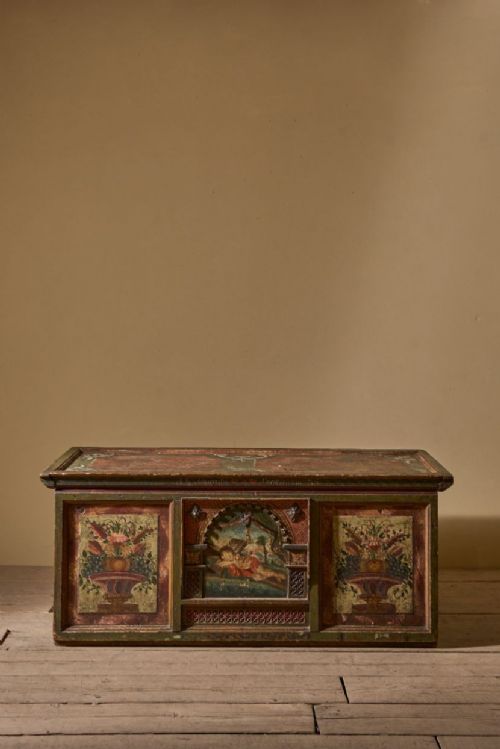
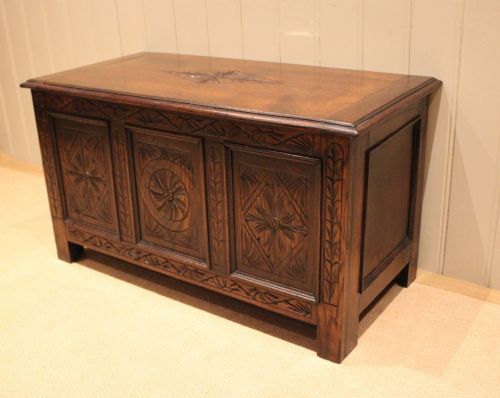
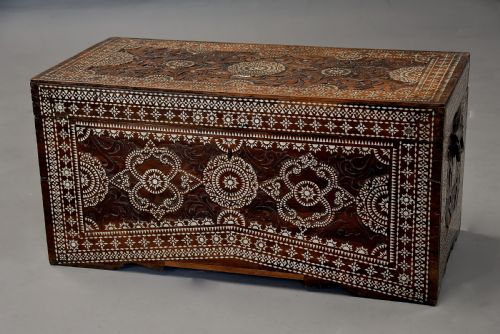
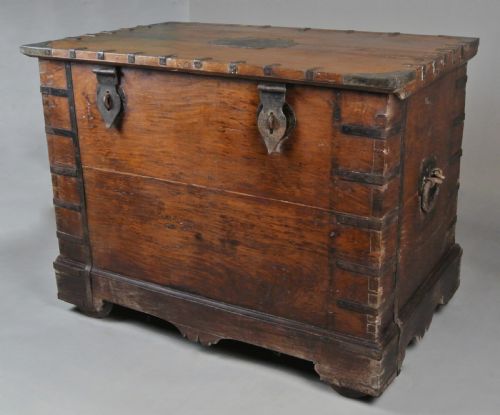
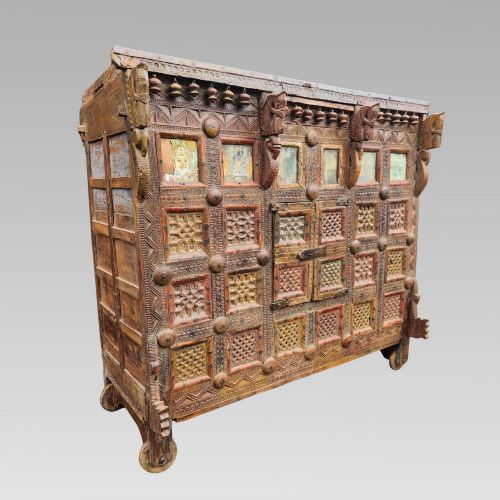
The most common examples on this page are substantial Indian teak and hardwood damchiya cabinets or iron-banded trunks alongside British oak coffers. European painted marriage chests in pine also appear frequently alongside Middle Eastern and Anglo-Indian variants.
These vessels served practical storage roles in households while frequently functioning as decorative focal points or marriage gifts. Their varied forms reflect the distinct regional customs and joinery traditions of their makers.
How They Were Made
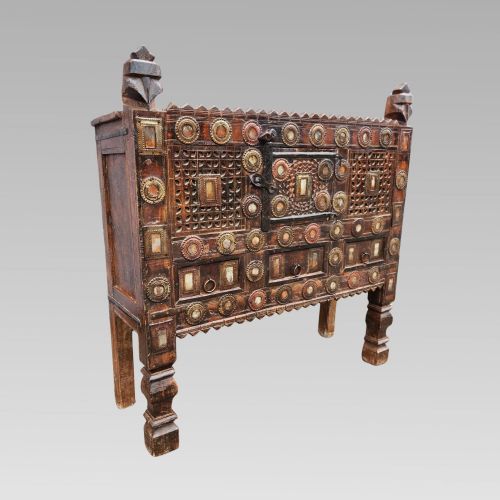
Joiners and carpenters built these coffers primarily from solid timbers like oak, teak, pine, and hardwood, often reinforcing the heavy structures with iron bands and brass stud work. Surfaces received varied treatments, ranging from natural polish on dark oak to applied pigment and detailed hand-painted finishes on folk art boxes.
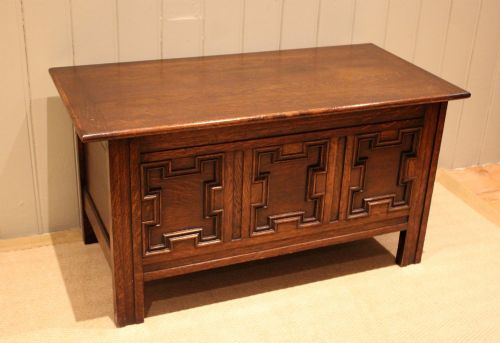
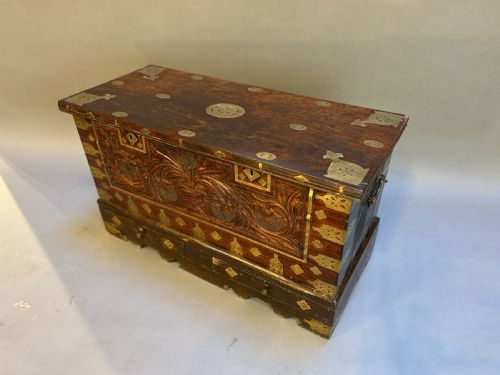
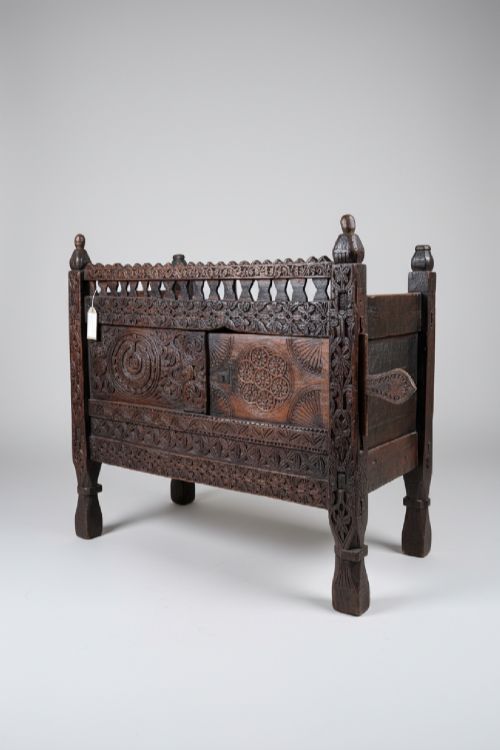
Carving techniques required expert hand chisel work to produce scratch-carved motifs or deeply recessed panels, as seen on seventeenth-century English coffers and intricately carved Indian cabinets. Inlaid materials such as mother-of-pearl also feature on Middle Eastern examples, demonstrating complex assembly methods.
Listings span multiple centuries, ranging from seventeenth-century English oak coffers to early twentieth-century Middle Eastern trunks.
What Varies in Quality
The standard of a wooden dowry chest rests upon the integrity of its timber selection and the precision of its original construction. Pieces retain greater appeal when structural elements like hinges, locks, and iron banding remain original to the piece.
Artistic execution dictates distinction, separating simple utilitarian boxes from heavily carved or finely painted marriage chests. Depth of relief in woodcarving and vibrancy in surviving pigment layers distinguish superior examples.
The Wooden Dowry Chest Glossary
- Coffer
- A heavy wooden chest traditionally used for storing valuables or household goods. These pieces often feature hinged lids and sturdy plank construction.
- Damchiya
- A traditional Indian dowry chest or storage cabinet, often constructed from teak and featuring low-relief carvings or recessed panels. They serve as prominent household furniture.
- Mule chest
- A traditional storage chest featuring one or more drawers beneath the main lift-top compartment. This form bridges the evolution between simple coffers and multi-drawer chests of drawers.
- Zanzibar chest
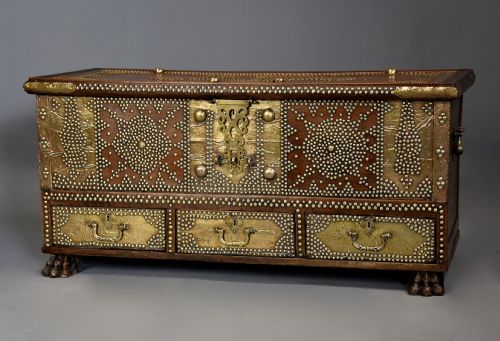
- A distinct type of heavily constructed trading chest featuring brass stud decoration and iron reinforcement straps. These trunks reflect maritime trade links across the Indian Ocean.
- Scratch carved
- A rudimentary form of surface decoration created by scoring or scratching patterns directly into the wood using a gouge or pointed tool. This technique appears frequently on seventeenth-century English joinery.
Wooden Dowry Chest: Frequently Asked Questions
What is a wooden dowry chest used for?
These chests were traditionally commissioned to hold household linen, garments, and valuables accumulated for a bride's new home. Families utilised them as secure storage receptacles that doubled as seating or display surfaces.
Today, they function well in modern interiors as coffee tables, blanket boxes, or hallway storage benches. Their robust construction allows them to withstand daily domestic use while housing household items.
How do I identify an oak coffer?
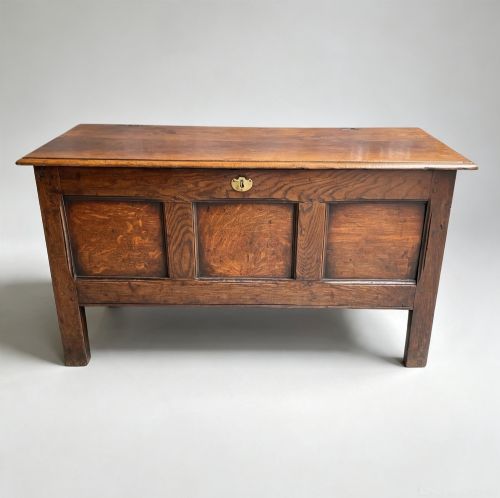
Oak coffers typically display deep brown patination, visible medullary rays in the timber grain, and traditional pegged joinery. Many early examples feature hand-carved front panels typical of seventeenth-century or Georgian cabinet making.
Examining the interior reveals hand-riven boards and tool marks that indicate age. The weight and density of the oak timber separate genuine period examples from later revival pieces.
Where did painted marriage chests originate?
Painted marriage chests originated across various European regions, including Sweden, Hungary, and the Alpine districts. Local artisans decorated these pine boxes with vibrant pigments to commemorate nuptials and family alliances.
Surviving examples preserve regional folklore motifs and traditional colour palettes applied directly to softwood panels. The style of the painted ornament usually points to the specific geographical origin.
Are Indian dowry chests made of teak?
Many Indian dowry chests and damchiyas are constructed from durable teak or dense regional hardwoods. These timbers resisted local climatic conditions and insect damage while providing a stable base for intricate carving.
Makers frequently enhanced these cabinets with brass studs, iron strapwork, and specialised locking mechanisms. The presence of these metal elements marks them out from European equivalents.