

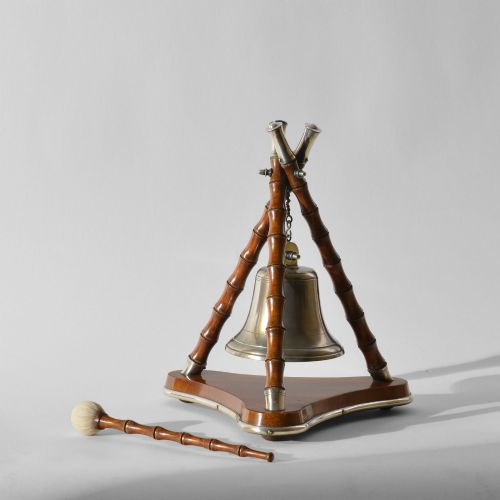
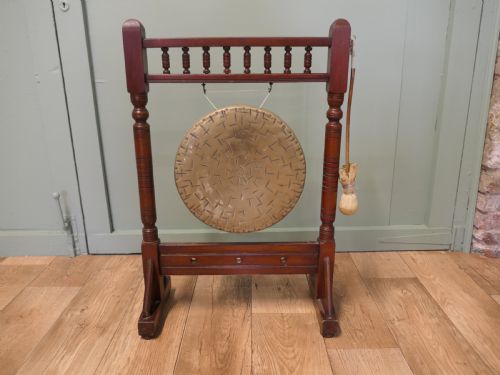
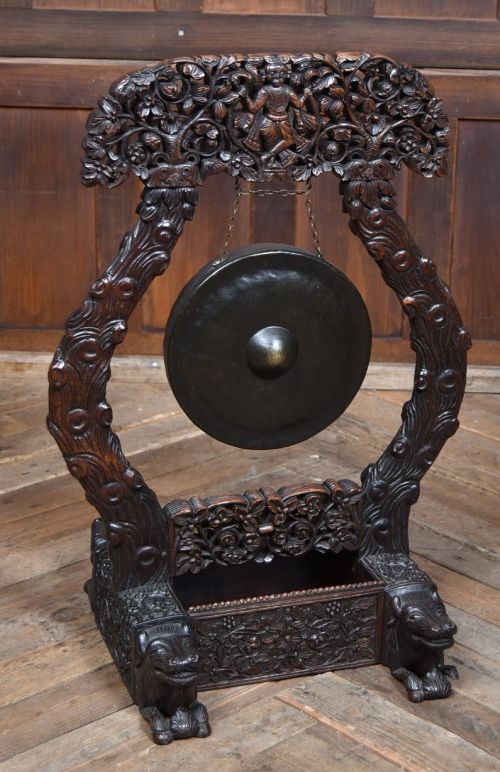
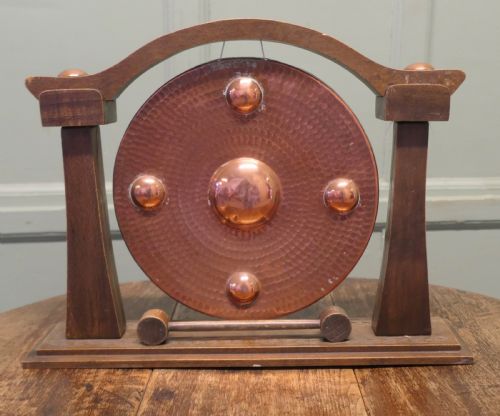
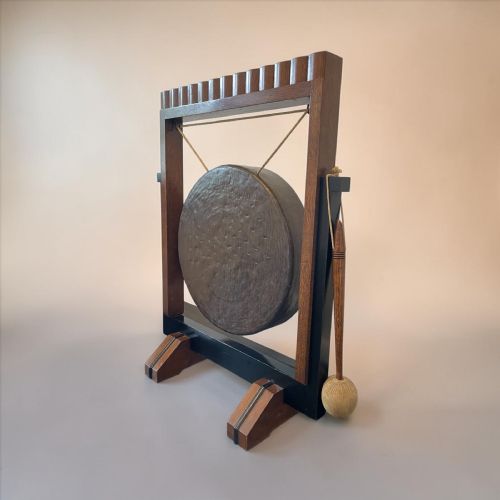


Wooden Dinner Gong
A wooden dinner gong summons households to the table with resonant theatre, pairing rich timber frames with vibrating brass or bronze.
Wooden Dinner Gong
A wooden dinner gong combines a supportive frame of timber with a suspended metallic disc or bell, designed to produce a deep, echoing tone across the house. These pieces appear across various forms, ranging from compact tabletop versions to tall floor-standing frames.
The selections here span the Victorian, Edwardian, and later twentieth-century periods, showing diverse stylistic influences such as Gothic Revival, Arts and Crafts, and Chinoiserie. Oak and mahogany dominate the structural timberwork, often joined by exotic hardwoods and mango wood.
Buyers frequently encounter hanging frames designed to sit upon side tables or hall furniture, alongside larger monumental structures intended for grander spaces. Alongside these gongs, occasional related forms such as hall tables appear within the group.
Materials and construction
The striking elements rely on cast or engraved brass, bronze, and copper gongs suspended by durable cord. These metal discs and bells are paired with dedicated wooden strikers designed to draw out the fullest acoustic resonance from the metal.
Wooden Dinner Gong Retail Price Guide 2026
Typical asking prices for wooden dinner gong among the pieces listed under this phrase on Sellingantiques today, from the lower quarter to the upper quarter. They describe what is for sale here now, not the wider market.
The selection spans the nineteenth century, the Edwardian era, and the nineteen-thirties, embracing Arts and Crafts, Gothic Revival, and Chinoiserie styles.
Judging quality in a wooden dinner gong
Quality rests upon the depth of the carving and the acoustic resonance of the suspended metal disc. Superior examples display crisp, confident hand-carving on the wooden frame and produce a clear, sustained tone when struck properly with the matching striker.
Proportion and material selection also distinguish finer pieces from standard production. Well-balanced frames utilising dense hardwoods like oak or mahogany hold the suspended weight securely while maintaining structural integrity over decades of use.
The Wooden Dinner Gong Glossary
- Striker
- A wooden mallet or stick specifically used to hit the suspended metal disc of the gong. The head is often shaped to maximise the acoustic resonance.
- Table Gong
- A compact version designed to sit upon a sideboard, hall table, or dining surface rather than standing directly on the floor.
- Floor Standing Gong
- A large, architectural frame that rests directly on the floor, often incorporating substantial timber posts and elaborate pediments.
- Gothic Revival
- A nineteenth-century design style drawing inspiration from medieval architecture, frequently characterised in these pieces by pointed arches and heavy tracery.
- Arts and Crafts
- A movement prioritising visible handcraftsmanship, simple structural honesty, and traditional woodworking techniques over mass production.
Wooden Dinner Gong: Frequently Asked Questions
How do I care for the wooden frame?
Dust the timber regularly with a soft, dry cloth to prevent the buildup of dirt within deep carvings. Avoid harsh chemical polishes that can damage older wax finishes.
Keep the piece away from direct heat sources and strong sunlight to prevent the timber from drying out, warping, or splitting over time.
How do I maintain the brass gong?
Clean the metal gently using a soft cloth to remove dust and fingerprints without disturbing the natural patina. Avoid aggressive metal cleaners unless strictly necessary, as age-related darkening is often desirable.
Check the suspension cord periodically to ensure it remains strong and securely tied, supporting the weight of the metal safely.
Where should I place a floor standing gong?
Position the piece in a hallway, landing, or large dining room where the sound can travel effectively through the surrounding spaces. Ensure the base rests evenly on a stable surface.
Allow enough clearance around the frame so the suspended disc can swing freely and resonate without hitting nearby walls or furniture.
How do I identify the period of a gong?
Examine the timber species, joinery methods, and decorative style to find clues about the date of manufacture. Victorian and Edwardian examples often display distinctive Gothic Revival or Arts and Crafts characteristics.
Look for hand-carved details and construction wear that point towards traditional nineteenth or early twentieth-century workshop practices.