

Wooden Dining Room Seating
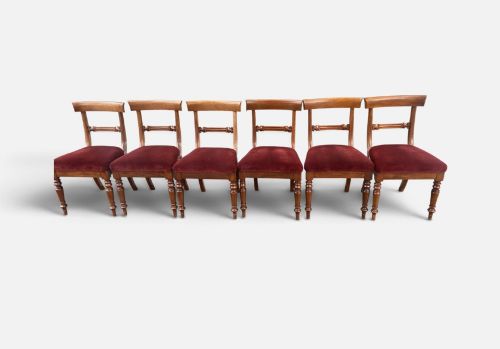
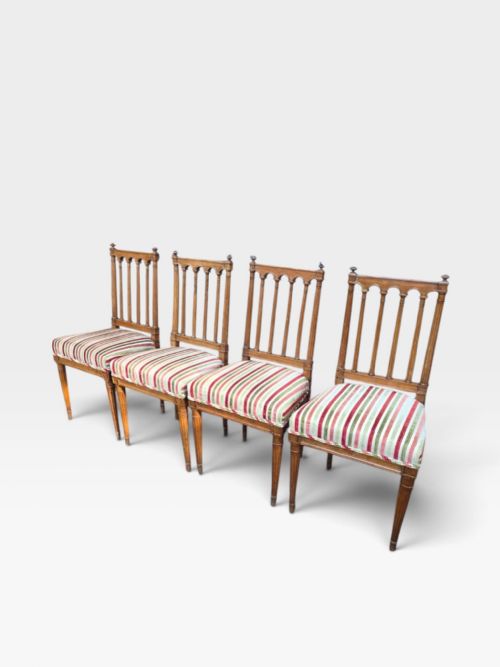
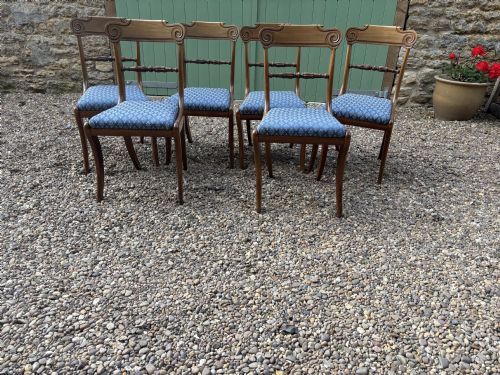
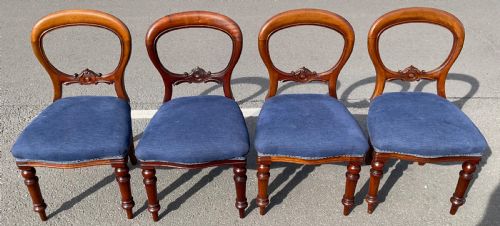
Wooden dining room seating brings together solid period frames and comfortable upholstered pads, offering the character that modern tables lack.
Wooden Dining Room Seating
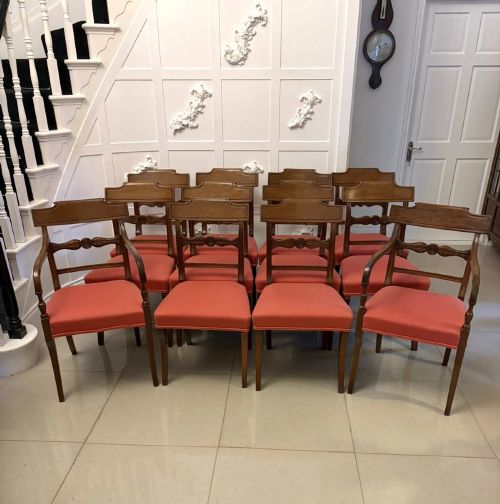
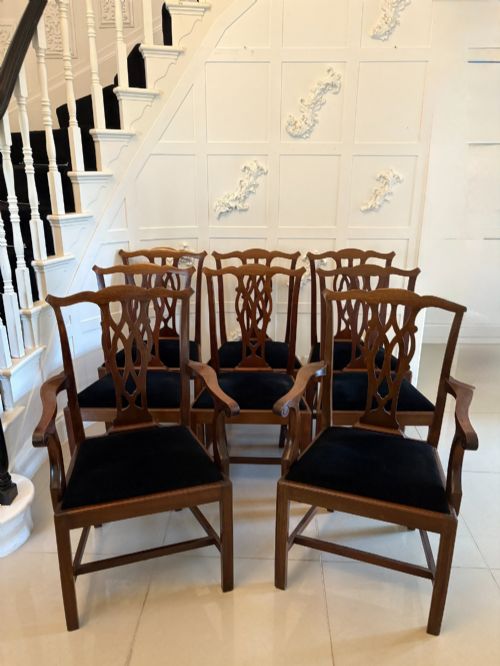
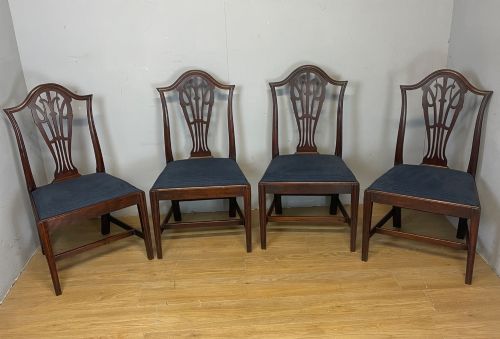
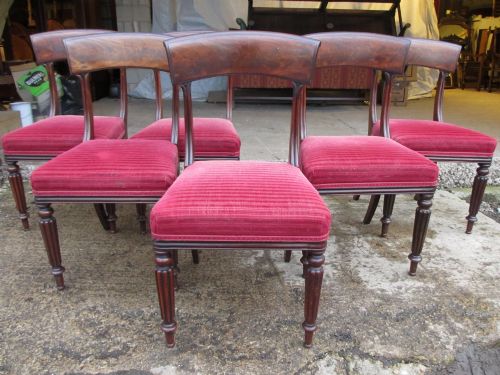
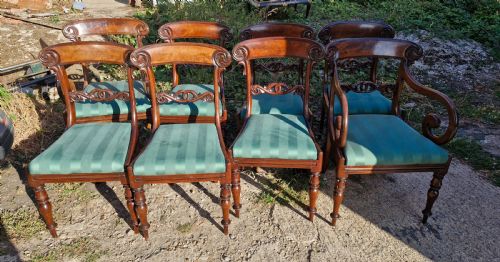
Wooden dining room seating covers chairs, carvers, and complete dining sets gathered around tables from the Georgian, Victorian, and Edwardian eras. Buyers searching for wooden dining room seating encounter matching sets of four, six, eight, or twelve chairs, often including armchairs for the heads of the table.
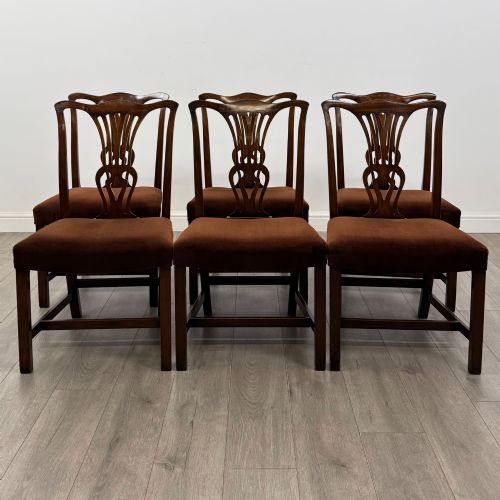
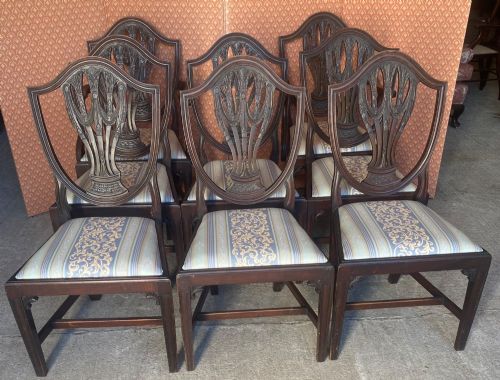
The prevailing material across these pieces is mahogany, shaped into balloon backs, pierced splats, or spindle backs, alongside variations in oak, walnut, and rosewood. These forms reflect the design shifts from Regency grace through Victorian elaboration to Edwardian refinement.
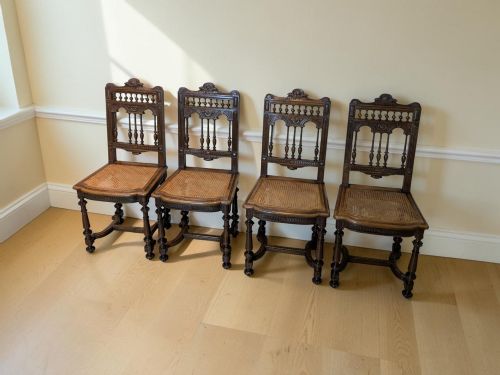
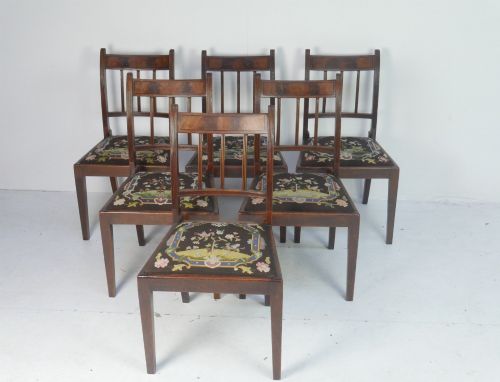
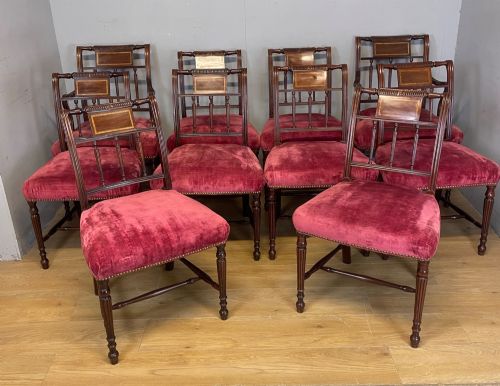
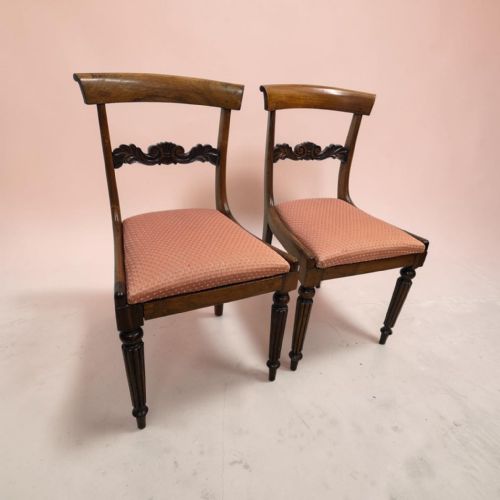
Sets frequently pair solid wood frames with upholstered seats in fabric, velvet, or textile, while some retain simpler rush seating. This combination provides both the warmth of polished timber and the comfort necessary for prolonged dining.
How they were made
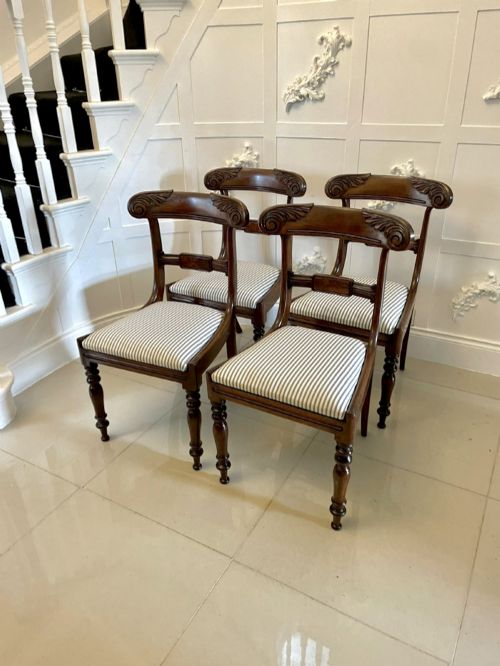
Cabinetmakers constructed these chairs using dense hardwoods like mahogany and oak, employing traditional joinery such as mortise and tenon to ensure long-term stability under daily use. Turned legs, carved crest rails, and inlaid details required skilled hand-tooling rather than mass production.
Upholstered elements relied on stuffing held by webbing and tacks, covered in textiles, fabric, or velvet that complemented the timber frame. Brass accents occasionally reinforced stress points or decorated the feet and rails.
Wooden Dining Room Seating Retail Price Guide 2026
Typical asking prices for wooden dining room seating among the pieces listed under this phrase on Sellingantiques today, from the lower quarter to the upper quarter. They describe what is for sale here now, not the wider market.
Some Victorian rush-seat chairs bring a touch of the countryside right into the formal dining room.
What varies in quality
The distinction between standard examples and superior sets lies in the crispness of the carving, the selection of the timber grain, and the matching of the wood across all chairs in a set. Finer sets display deep relief work on balloon backs or careful pierced splats that require patient hand labour.
Structural integrity also separates grades, as chairs that retain their original tight joints without excessive re-gluing hold higher regard among collectors. The selection of secondary woods and the quality of the upholstery foundation further define the tier of the piece.
Lamb of Manchester
The Wooden Dining Room Seating Glossary
- Carver
- An armchair designed to match a set of single dining chairs, traditionally placed at the head of the table. These often feature sweeping arm supports attached to the main frame.
- Balloon back
- A rounded, oval-shaped chair back popular during the Victorian period, resembling an inflated balloon. This form allowed makers to showcase the grain of mahogany and walnut.
- Pierced splat
- The vertical wooden slat running down the middle of a chair back, cut through with open designs. This technique lightens the visual weight of the timber while displaying the cabinetmaker's skill.
- Spindleback
- A chair back constructed from a series of thin, turned wooden rods arranged vertically. These point back to simpler country traditions seen in elm and oak seating.
- Inlay
- The technique of embedding contrasting woods or materials into the surface of the primary timber to create decorative patterns. Edwardian and Regency pieces frequently use this method on their crest rails.
Wooden Dining Room Seating: Frequently Asked Questions
How many chairs come in a typical set?
Sets usually range from four to twelve chairs, frequently including two carvers alongside single chairs. Larger sets of eight or ten are less common and suited for substantial dining tables.
Buyers should verify whether all chairs in a large group share identical proportions and timber figuring, as older sets were sometimes assembled from mismatched pieces over time.
What is the difference between a carver and a single chair?
A carver includes armrests designed for the host at the end of the table, while single chairs lack arms to allow easy movement and compact arrangement along the sides. Both share the same stylistic motifs, timber, and upholstery to maintain a cohesive appearance.
Historically, dining sets provided two carvers for the heads of the table and six or eight side chairs for guests.
How do I identify a Victorian chair from a Georgian one?
Georgian chairs tend to feature straight lines, pierced splats, and sturdy proportions influenced by Chippendale or Hepplewhite designs in mahogany and oak. Victorian examples often introduce curved balloon backs, heavier carving, and darker walnut or rosewood finishes.
Examining the turning on the front legs and the shape of the crest rail helps pinpoint the manufacturing era.
Are these chairs suitable for daily use?
Period wooden seating was built for everyday dining using durable hardwoods like mahogany and oak joined with traditional techniques. Ensuring the joints remain tight allows them to withstand regular sitting.
Many sets have been re-upholstered over the decades, making them comfortable for modern meals while retaining their historical frames.