
Wooden Dining Credenza
These wooden dining credenza listings bring together period sideboards, chiffoniers, and servers to anchor a dining room with practical storage.
Wooden Dining Credenza
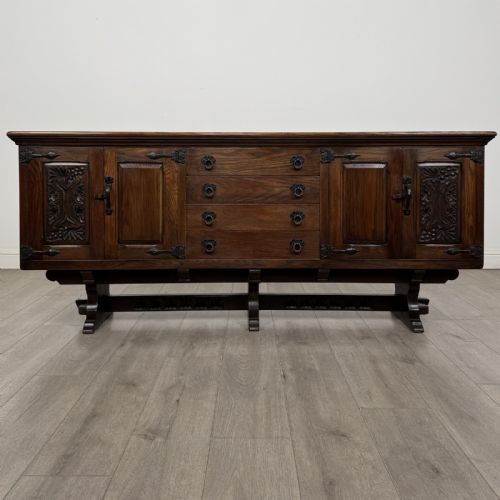
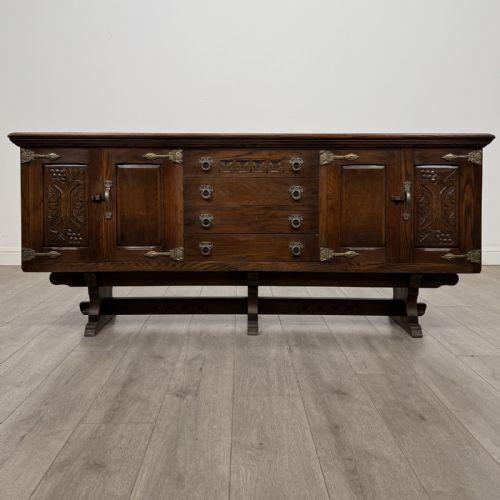
When you search for a wooden dining credenza, you encounter a variety of substantial storage furniture historically used in dining spaces. The selection ranges from robust oak pieces from the early twentieth century to refined mahogany designs dating back to the Georgian and Victorian periods.
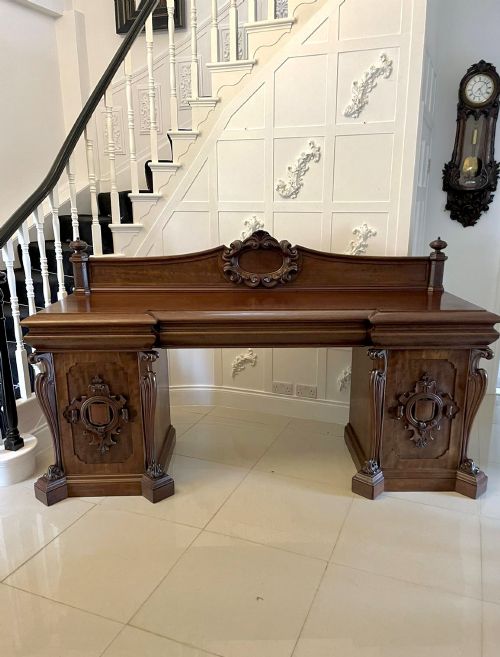
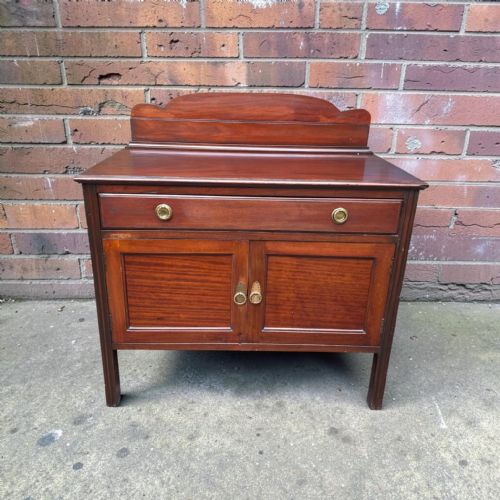
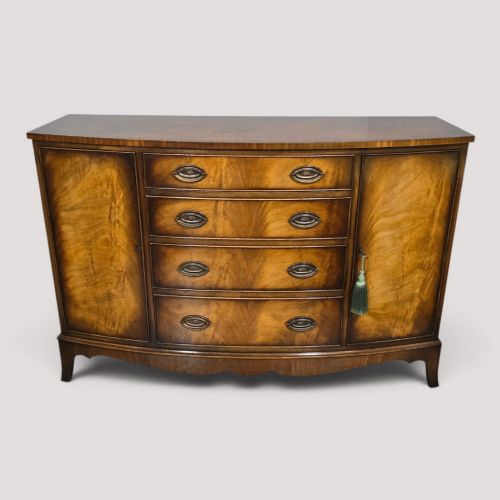
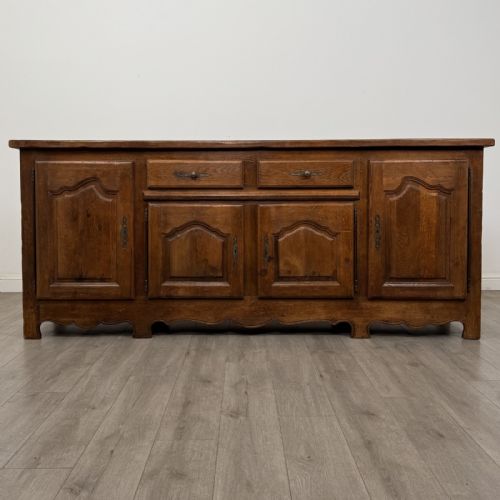
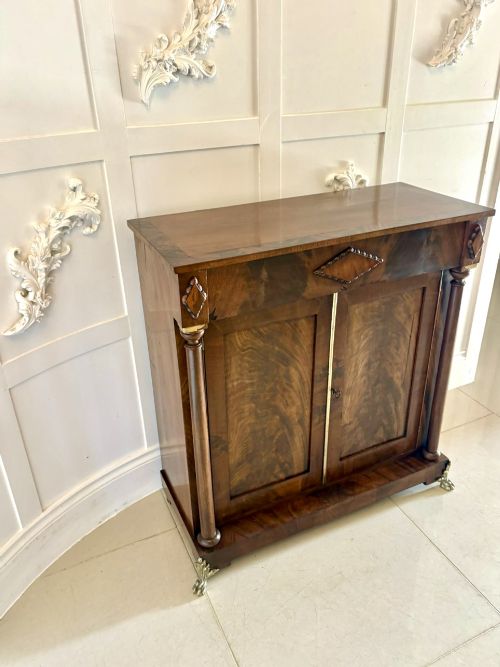
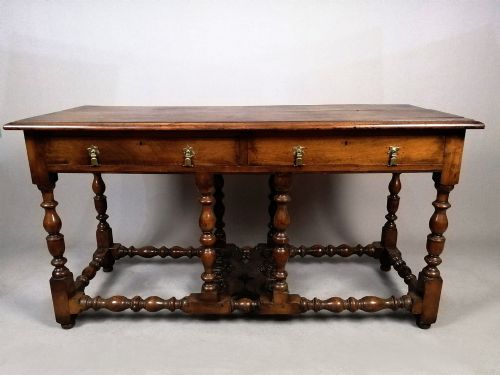
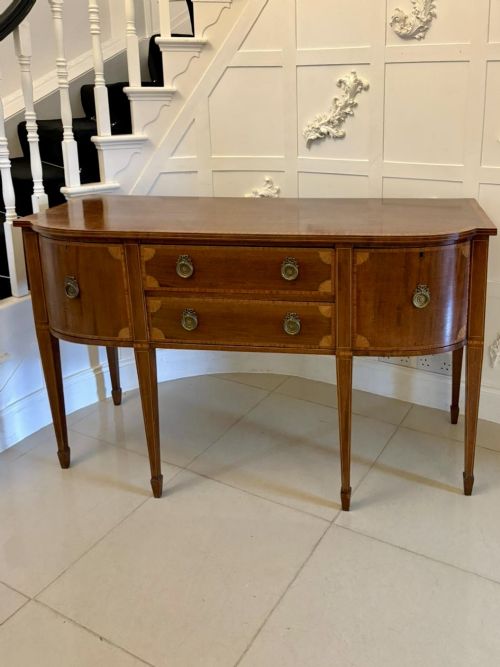
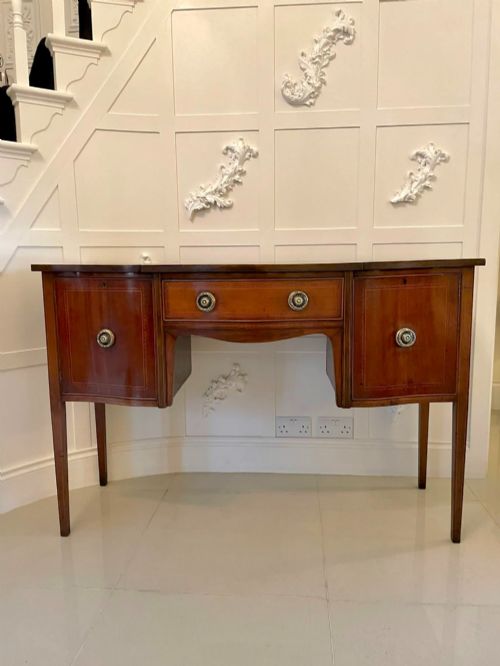
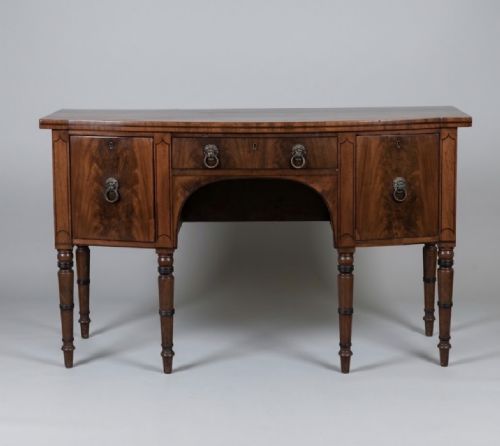
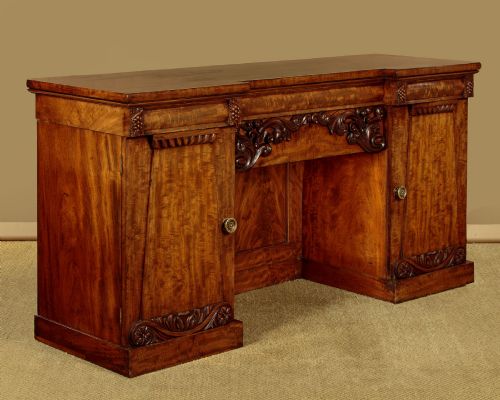
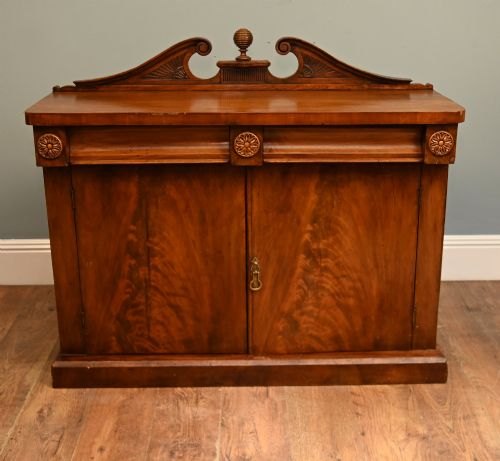
You are most likely to meet mahogany and oak forms on this page, including bowfront and serpentine sideboards, pedestal designs, and chiffoniers with tiered shelving. These pieces frequently incorporate cupboards, drawers, and occasionally mirrored galleries or raised backs.
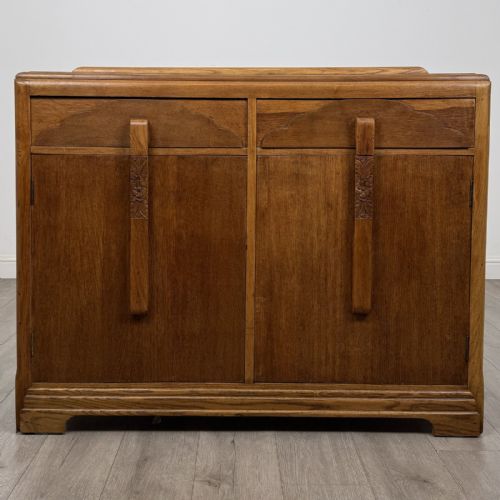
The objects span multiple eras, including the eighteenth, nineteenth, and early twentieth centuries, alongside Art Deco interpretations. Each variant serves the fundamental purpose of holding dining silver, linen, and service items while establishing a strong visual anchor in the room.
Materials and construction
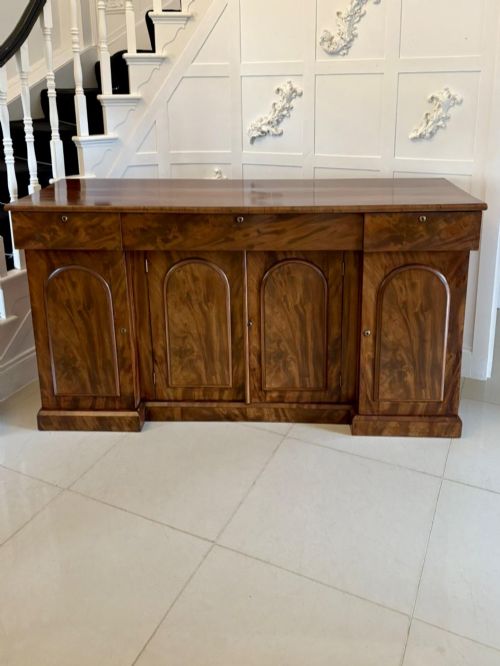
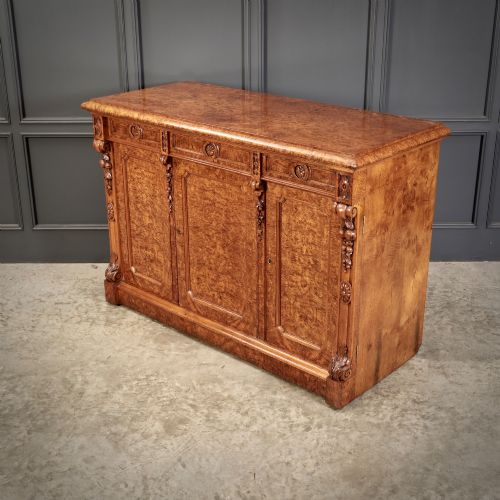
Cabinet makers relied heavily on solid and veneered timbers such as mahogany, oak, walnut, and satinwood to build these items. Timber selection often involved figured mahogany, flame mahogany veneer, and burr walnut to create striking grain patterns across large cabinet doors and drawer fronts.
Construction techniques combined traditional joinery with decorative detailing like brass handles, inlaid crossbanding, and carved elements. Makers also integrated glass panels and marble tops into specific Victorian and Edwardian iterations to alter the texture and utility of the surface.
Distinguishing quality
The distinction between standard examples and the finest pieces rests upon timber selection and surface articulation. Superior items utilise carefully matched figured veneers, intricate satinwood inlay, and balanced proportions that define periods like the Georgian era.
Hand-carved details, heavy brass hardware, and secondary woods chosen for drawer linings signal higher levels of workshop attention. Conversely, simpler production methods and plain timber surfaces appear on more utilitarian Edwardian and later pieces.
Maurice Adams
The Wooden Dining Credenza Glossary
- Bowfront
- A curved cabinet front that swells outward in the centre. This shape gained popularity during the Georgian and Regency periods to soften room angles.
- Chiffonier
- A compact sideboard variant, often featuring a two-tiered shelf superstructure or mirror back. These appeared frequently in nineteenth-century interiors for serving food or displaying china.
- Serpentine
- A shaped furniture front featuring a convex centre flanked by concave curves. This design requires advanced woodworking skill and appears on high-status eighteenth and nineteenth-century pieces.
- Crossbanding
- A strip of veneer applied perpendicularly to the grain of the main surface. Makers used this technique to frame drawer fronts and tabletops with contrasting timber.
- Pedestal sideboard
- A form consisting of two distinct cabinets connected by a central recess or table section. These substantial pieces dominate large dining spaces from the nineteenth century.
Wooden Dining Credenza: Frequently Asked Questions
How do I date a wooden dining credenza?
Dating relies on observing timber choices, construction methods, and stylistic cues present in the piece. Georgian and Regency examples often show fine mahogany with hand-cut dovetails, while Victorian and Edwardian items introduce heavier carving or different secondary woods.
Hardware and interior linings also offer clues, though many pieces underwent restoration or handle replacement over their lifespan.
Where should I place a sideboard in a dining room?
These long cabinets traditionally sit against a primary dining room wall where they remain accessible during meals. They function well opposite a dining table to hold serving dishes, cutlery sets, and glassware.
Ensure adequate clearance around the piece for doors and drawers to open fully without obstruction from chairs.
How do I care for antique mahogany and oak?
Protect wood surfaces by keeping pieces away from direct heat sources and strong sunlight that can fade polished finishes. Regular dusting with a soft, dry cloth prevents grime accumulation without harming the antique polish.
Avoid commercial silicone sprays and consult a professional restorer for deep cleaning or wax maintenance.
What is the difference between a sideboard and a credenza?
The terms often overlap in the marketplace, though traditional sideboards lean toward dining room utility with deep drawers and cupboards. Credenzas historically originated as low cabinets for serving and display, evolving over time to describe similar low-profile storage forms.
Both categories provide extensive surface area and interior capacity for hosting tableware.