

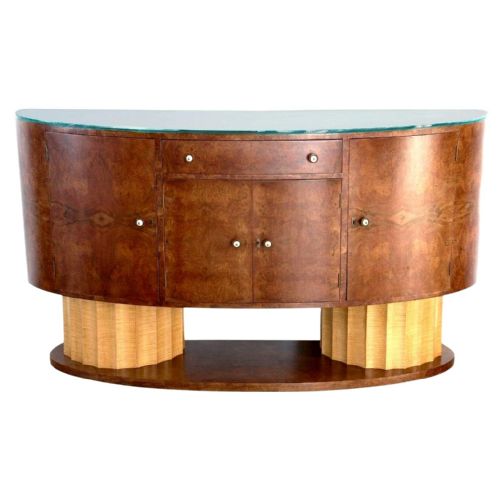
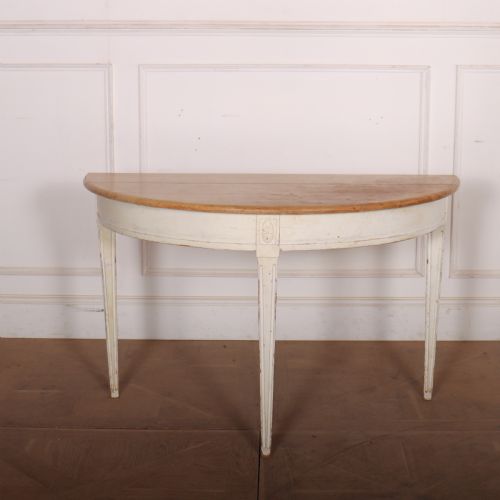
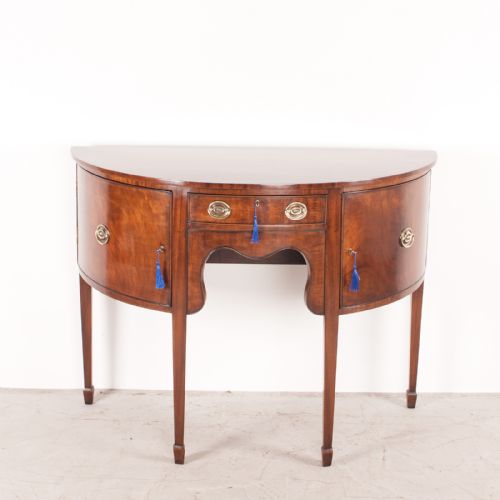

Wooden Demi Lune
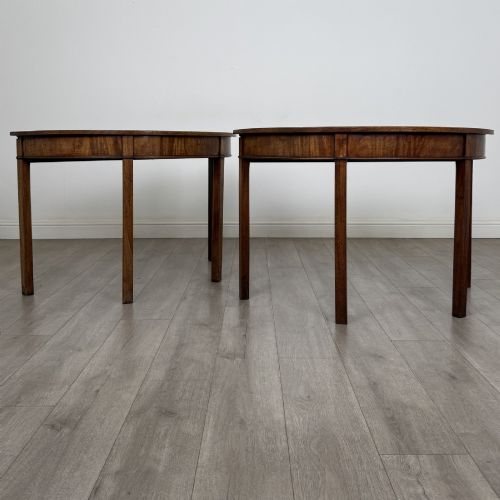
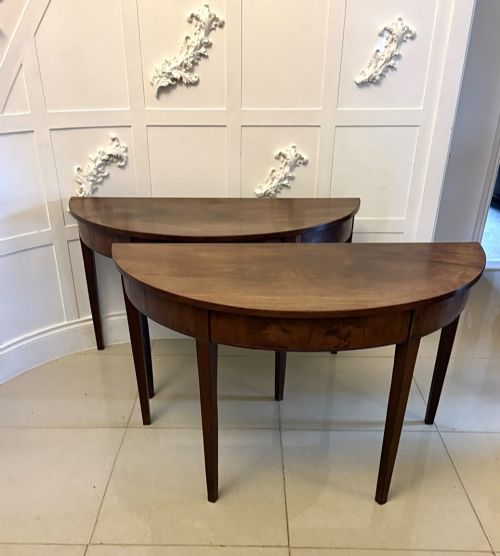
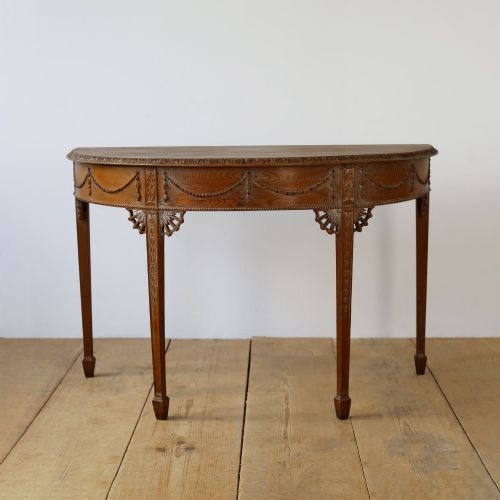
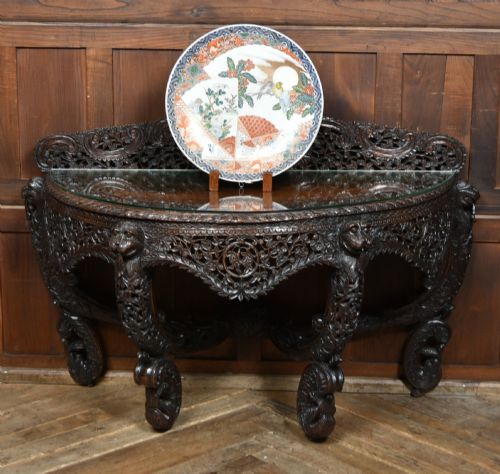
These wooden demi lune pieces bring graceful half-round shapes and classic period timber to hallways and living spaces.
Wooden Demi Lune
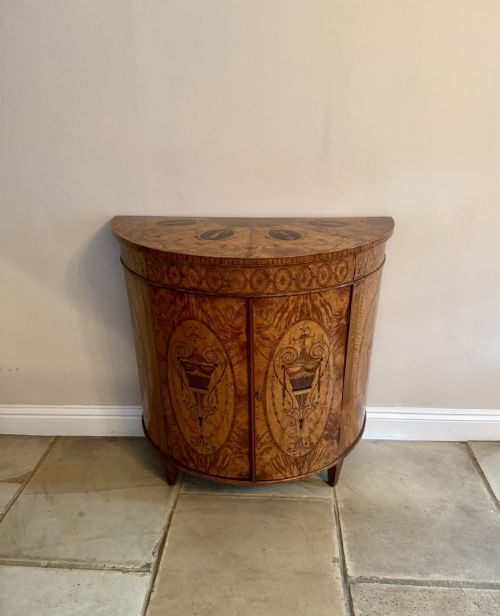
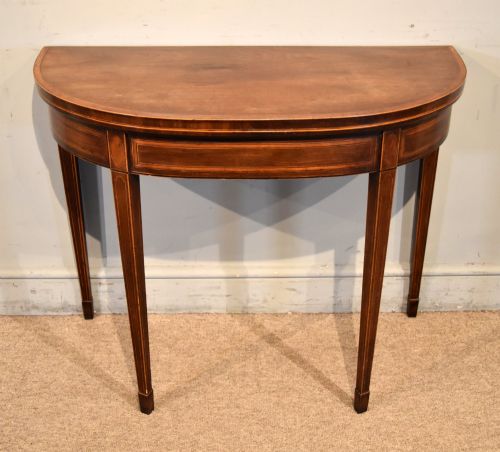
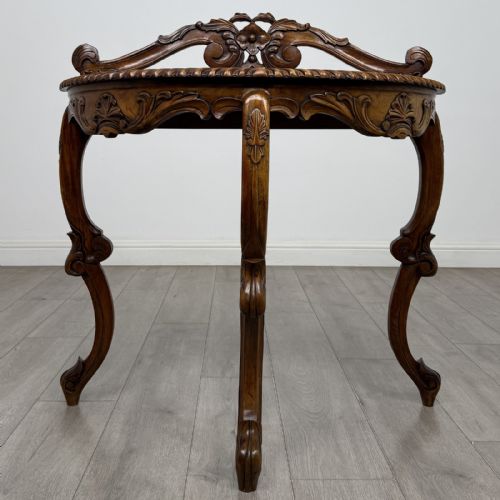
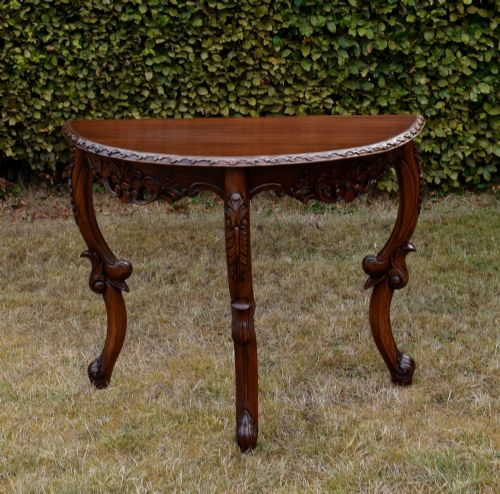
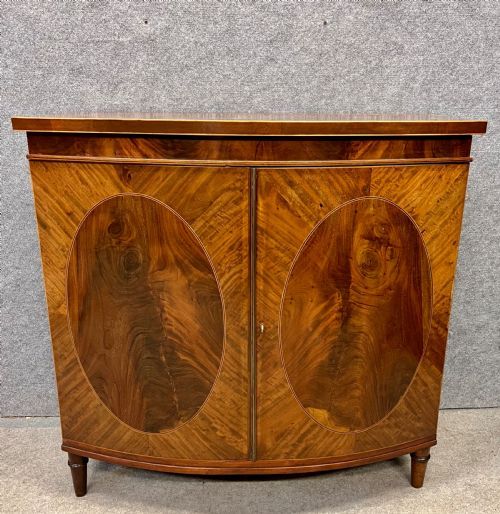
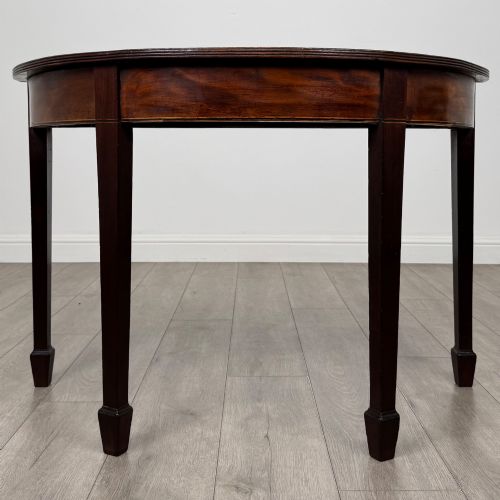
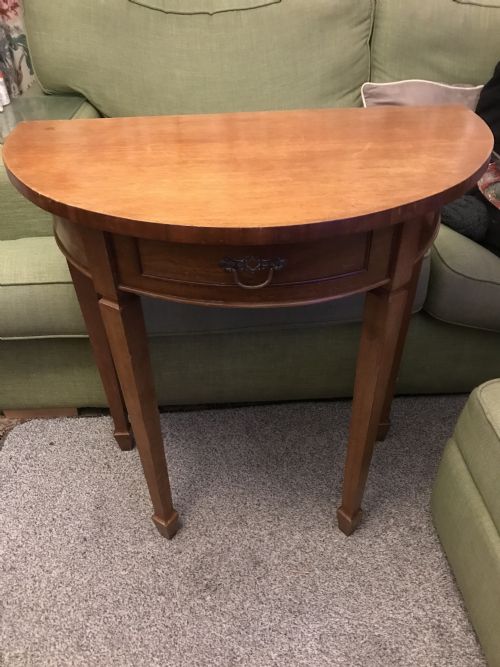
A wooden demi lune takes the form of a half-circle, designed to stand flush against a wall while saving precious floor space. When you search for wooden demi lune, you encounter a wide selection of console tables, side cabinets, tea tables, and hall stands.
The pieces span multiple periods, ranging from 17th-century carved oak bible boxes to Georgian mahogany tea tables and Edwardian inlaid cabinets. Side tables and console tables dominate the selection, often featuring flat tops and straight or tapered legs.
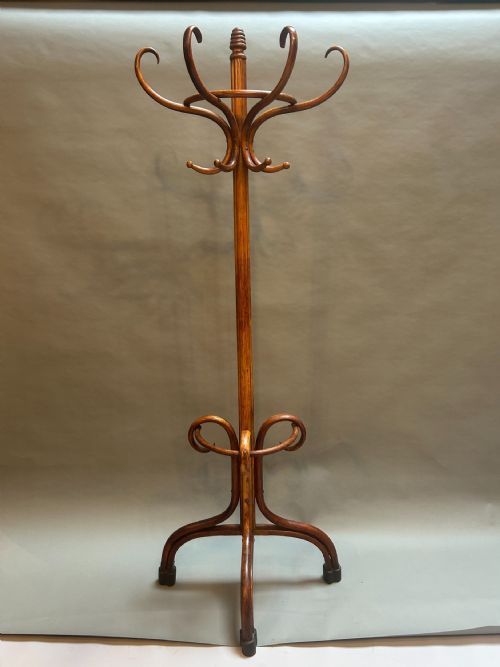
Victorian and 20th-century iterations also appear, including hatstands, umbrella stands, and French provincial styles. Each form utilises the distinct semi-circular footprint to fit narrow corridors and intimate corners.
Materials and construction
Solid woods and fine veneers form the structural backbone of these items, with mahogany, oak, and walnut appearing frequently across the centuries. Cabinet makers applied satinwood inlay, brass accents, and painted finishes to enrich the primary timber surfaces.
Curved elements required specialised joinery, such as tambour fronts, bentwood construction, and steam-bent rails to achieve the characteristic half-moon radius. Carving, reeded friezes, and spade feet complete the detailing on formal console and tea tables.
Wooden Demi Lune Retail Price Guide 2026
Typical asking prices for wooden demi lune among the pieces listed under this phrase on Sellingantiques today, from the lower quarter to the upper quarter. They describe what is for sale here now, not the wider market.
Materials represented include mahogany, oak, walnut, satinwood, brass, glass, and painted wood.
Variations in quality
The calibre of a wooden demi lune rests on the selection of timber grain and the precision of its inlaid decoration. Pieces featuring finely figured walnut, contrasting satinwood stringing, or hand-carved mouldings represent higher tiers of craftsmanship.
Structural integrity of the curved framework and the execution of secondary woods dictate long-term durability. Maker attribution, such as signed pieces from recognised workshops, elevates the standing of an individual item.
Hille·Pietro Ferrario
The Wooden Demi Lune Glossary
- Demi lune
- French for half-moon, describing any furniture piece built with a semicircular flat back and a curved front.
- Console table
- A table designed to be fixed against a wall, typically supported by two front legs and secured by brackets at the back.
- Tambour
- A flexible sliding shutter formed from narrow strips of wood glued to canvas, often found on small cupboards and desks.
- Reeded frieze
- A decorative band carved with parallel convex mouldings running horizontally beneath the tabletop.
- Spade foot
- A rectilinear foot that tapers slightly toward the base, commonly seen on late 18th-century and Edwardian furniture.
Wooden Demi Lune: Frequently Asked Questions
What is a wooden demi lune used for?
These items serve primarily as hall tables, serving surfaces, or display cabinets in narrow spaces where rectangular furniture protrudes too far into the room.
Historically, specific versions functioned as tea tables or card tables with folding tops, opening out to accommodate social gatherings.
How do I style a demi lune table?
Position the flat back flush against an entryway wall beneath a mirror or painting to create a balanced focal point.
Keep surface objects minimal to let the curved wooden top and any inlaid decoration remain visible.
Are these pieces stable on uneven floors?
Most console tables and sideboards feature two or four legs, sometimes supplemented by rear wall brackets for enhanced stability.
Older examples may require careful placement or small shims to sit level on historic flooring.
How do I identify a Georgian demi lune?
Look for characteristic timber choices such as rich mahogany, accompanied by understated proportions and fine string inlay.
Construction methods like hand-cut dovetails in the drawer construction point toward 18th-century origin.