

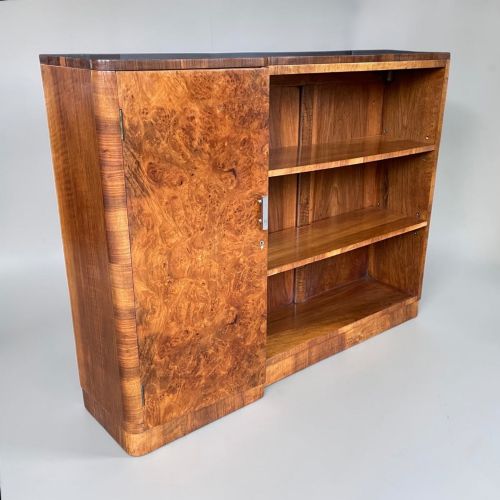
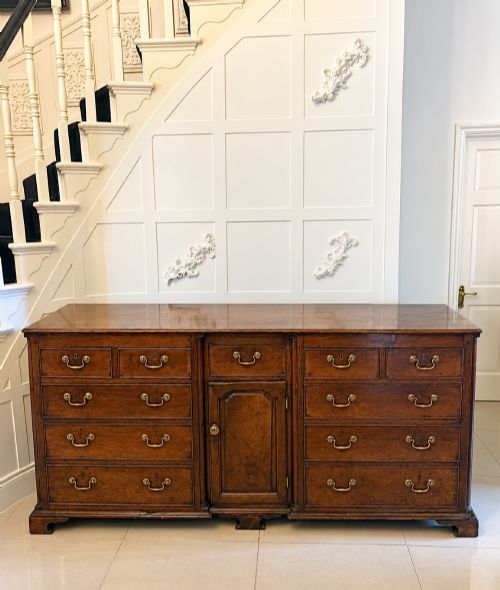
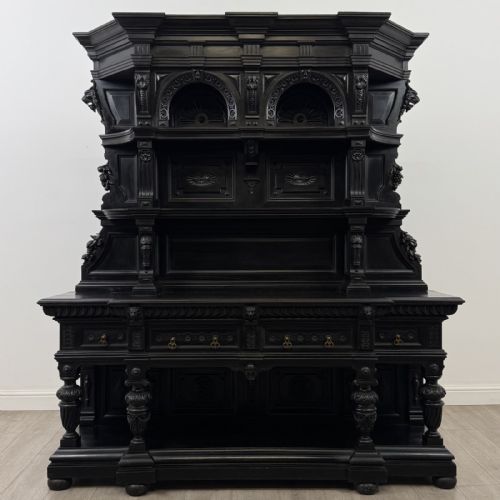

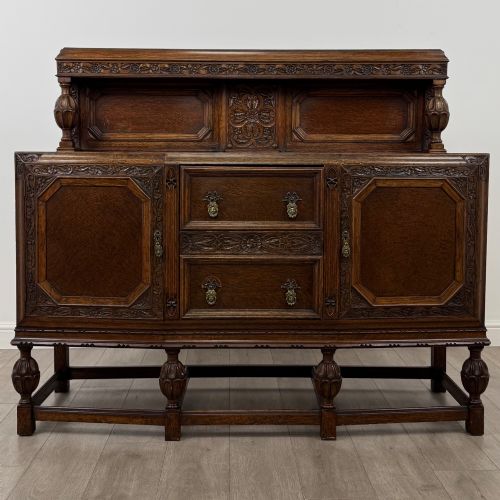


Wooden Credenza Unit
A wooden credenza unit brings solid timber storage and period character into a room, offering substantial surface space and concealed capacity.
Wooden Credenza Unit
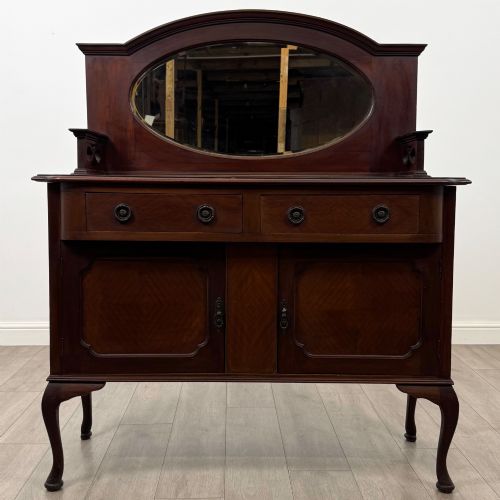
When you search for a wooden credenza unit, you encounter a range of nineteenth-century and early twentieth-century storage forms, from Victorian mahogany sideboards to Edwardian oak cupboards and light oak pieces from the 1920s.
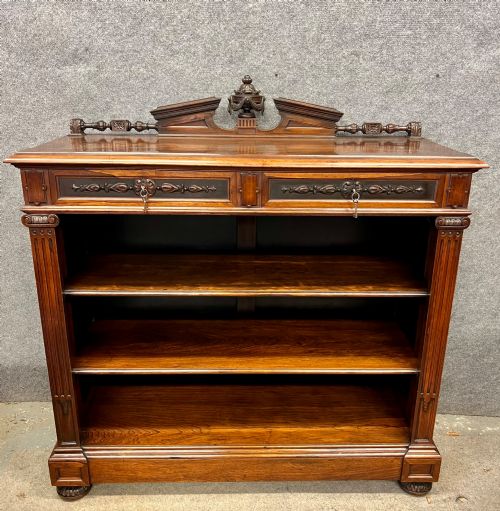
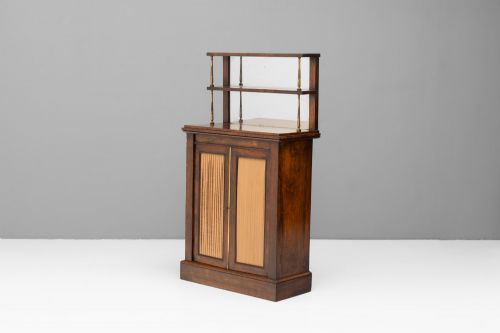
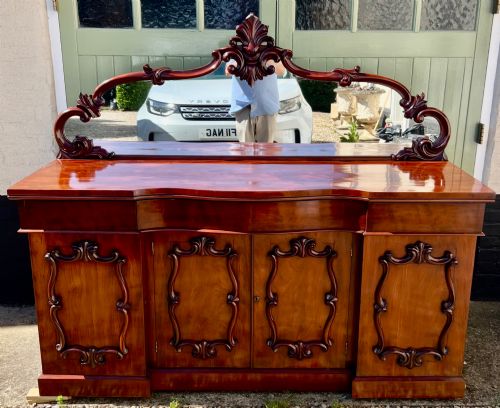
The selection on this page leans heavily towards sideboards, side cabinets, and chiffoniers originating from Victorian and Edwardian workshops, alongside earlier nineteenth-century examples.
These items function primarily as large storage cupboards and sideboards, frequently featuring carved details, mirror backs, or brass hardware.
Materials and construction
Joiners built these pieces predominantly using solid timbers such as mahogany and oak, frequently applying wood veneer or ebonised finishes to achieve darker, polished surfaces.
Craftsmen incorporated decorative elements including brass face handles, lion mask carvings, mirror glass, and satinwood inlay to enhance the appearance of the timber.
Wooden Credenza Unit Retail Price Guide 2026
Typical asking prices for wooden credenza unit among the pieces listed under this phrase on Sellingantiques today, from the lower quarter to the upper quarter. They describe what is for sale here now, not the wider market.
Listings feature timbers including mahogany, oak, pine, rosewood, and satinwood across the nineteenth century and the 1920s.
Quality variations
Differences in quality depend on the selection of timber and the precision of the cabinetmaking, with finer examples displaying carefully figured mahogany, tight joinery, and well-executed carved details.
Hardware and secondary materials also indicate grade, as pieces utilising solid brass handles, heavy mirror plates, and detailed inlay stand apart from simpler utility cupboards.
Gillows
The Wooden Credenza Unit Glossary
- Credenza
- A sideboard or cabinet used for storage and display. This form typically sits low against a wall.
- Chiffonier
- A compact sideboard popular in the nineteenth century, often featuring a raised shelf or small cupboard on top.
- Ebonised
- Wood treated with a dark finish to imitate ebony. This technique appeared frequently on Victorian furniture.
- Sideboard
- A long piece of furniture designed for dining rooms to store tableware and serve food. Many historical variants feature multiple drawers and cupboards.
- Veneer
- A thin layer of superior wood glued to a base of cheaper timber. This method created decorative grain patterns on furniture surfaces.
Wooden Credenza Unit: Frequently Asked Questions
What rooms suit a wooden credenza unit?
These pieces fit naturally into dining rooms, living spaces, and large hallways where substantial timber storage is useful.
Their broad top surfaces and internal shelving accommodate books, dinnerware, or display objects while keeping clutter out of sight.
How do I care for antique wood furniture?
Keep wooden pieces away from direct sunlight and radiators to prevent the timber and veneer from drying out or splitting.
Apply traditional wax polish occasionally and buff with a soft cloth to maintain the lustre of the finish without building up heavy residues.
What is the difference between a sideboard and a chiffonier?
Sideboards generally offer a long surface with multiple drawers and lower cupboards designed for dining room storage.
Chiffoniers are typically more compact nineteenth-century pieces that include a raised shelf or superstructure on the upper surface.