




Wooden Court Cupboard
A wooden court cupboard is a grand piece of historic storage, offering deep shelves and carved presence to anchor a formal room.
Wooden Court Cupboard
A wooden court cupboard is a traditional form of storage furniture designed with stacked upper and lower compartments, often decorated with carved panels and pillars. When searching for a wooden court cupboard, you will encounter examples stretching from the seventeenth century through to later revival periods of the nineteenth and twentieth centuries.
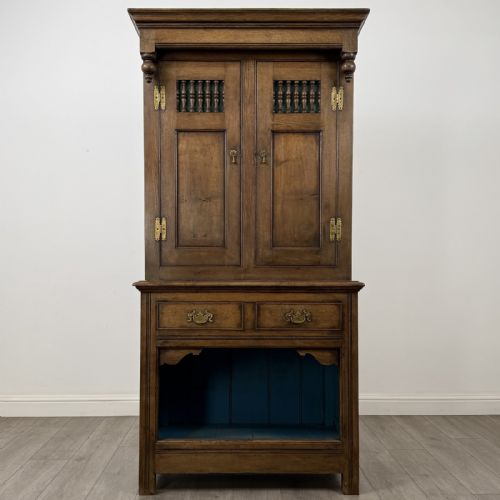
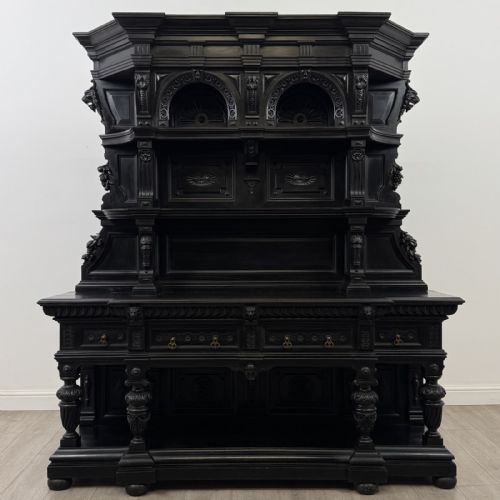
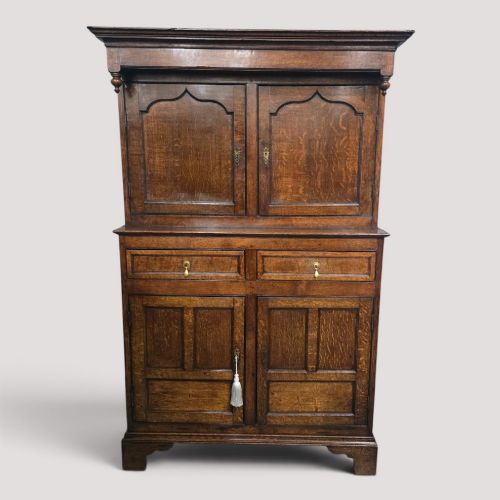
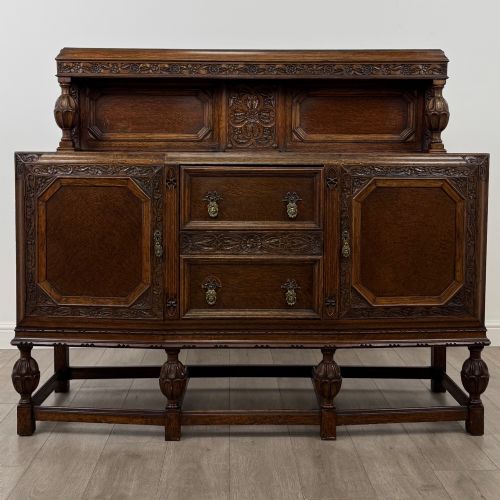
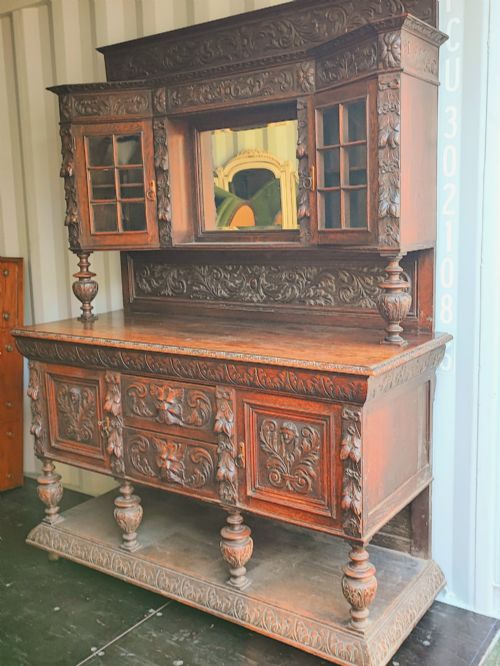
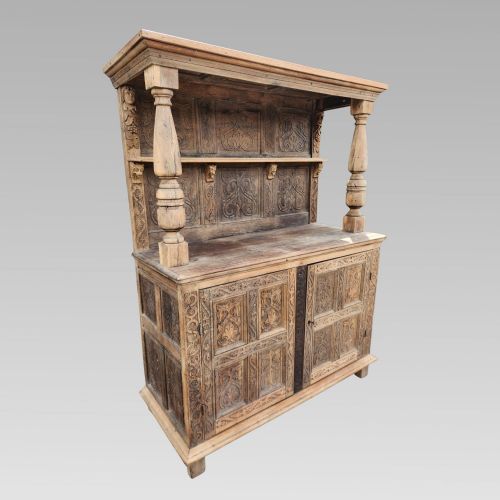
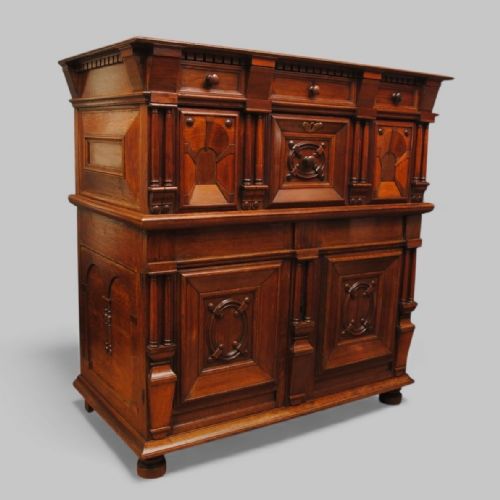
The pieces on this page range from early joined furniture in solid oak to later revival interpretations and continental buffets. Many incorporate panelled doors, turned supports, and enclosed upper stages that distinguish them from open dressers.
Materials and construction methods
Carpenters relied primarily on native timber, shaping heavy boards of oak, walnut, and elm using traditional jointing techniques. Frames were constructed with pegged mortise and tenon joints to bear the weight of heavy projecting cornices and upper tiers.
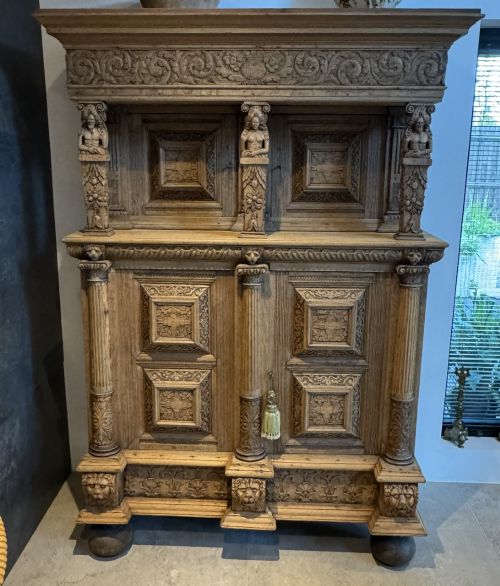
Surface enrichment involved deep relief carving, applied mouldings, and turned pillars. Hardware such as brass drop handles and iron hinges were fitted to secure panelled doors.
Wooden Court Cupboard Retail Price Guide 2026
Typical asking prices for wooden court cupboard among the pieces listed under this phrase on Sellingantiques today, from the lower quarter to the upper quarter. They describe what is for sale here now, not the wider market.
Look closely for hidden small drawers tucked beneath cornices, once used by household staff to keep the silver keys safe.
Assessing craftsmanship and proportion
Quality rests in the crispness of the hand-carved detail and the integrity of the timber selection. Superior examples display balanced proportions between the upper and lower stages, with tight joints that have settled naturally over centuries.
Lesser pieces may show coarser timber selection or later alterations to the hardware and surface finish. The depth and definition of the relief work on friezes and pillar panels separate standard vernacular items from masterworks.
James Shoolbred and Co
The Wooden Court Cupboard Glossary
- Court cupboard
- A traditional enclosed piece of storage furniture featuring multiple tiers, often with a recessed upper section sheltered by a canopy or supported by pillars.
- Joined furniture
- Construction utilising closely fitted mortise and tenon joints secured by wooden pegs rather than metal nails.
- Jacobean revival
- A nineteenth-century stylistic movement imitating the heavy turned supports, panelled doors, and geometric carvings of seventeenth-century English design.
- Frieze
- The wide horizontal band situated beneath the cornice, frequently decorated with carved scrollwork or running patterns.
- Buffet
- A low sideboard or cabinet used for serving food and displaying plate, often sharing similar proportions to larger cupboards.
Wooden Court Cupboard: Frequently Asked Questions
What is a wooden court cupboard?
A wooden court cupboard is a historic piece of dining room furniture featuring enclosed shelving compartments, typically divided into an upper and lower tier. These storage units were designed to display plate and store provisions.
They evolved from medieval boards into status symbols for wealthy households, often decorated with elaborate strapwork and carved pillar panels.
How were wooden court cupboards used?
Historically, households used these cupboards to store food, utensils, and valuable silver vessels. The open or recessed upper stage served as a station for displaying fine tableware.
In modern rooms, they function as substantial storage credenzas or focal display cabinets for dining spaces and hallways.
How do I date a wooden court cupboard?
Dating relies on examining the construction methods, tool marks, timber species, and decorative motifs. Seventeenth-century examples typically show hand-split boards, pegged joints, and vernacular oak framing.
Revival pieces from the Victorian and Edwardian eras often feature machine-sawn timber behind hand-carved facades, alongside more uniform hardware fittings.
How do I care for antique oak furniture?
Protect antique wood by keeping it away from direct heat sources and sudden humidity changes that cause timber to split. Feed the surface occasionally with traditional beeswax to maintain the natural lustre.
Avoid modern liquid polishes containing silicones, which can penetrate porous historic finishes and attract dust over time.