






Wooden Counter Display
These wooden counter display pieces are shop fittings and cases designed to present goods, bringing period character to a modern interior.
Wooden Counter Display
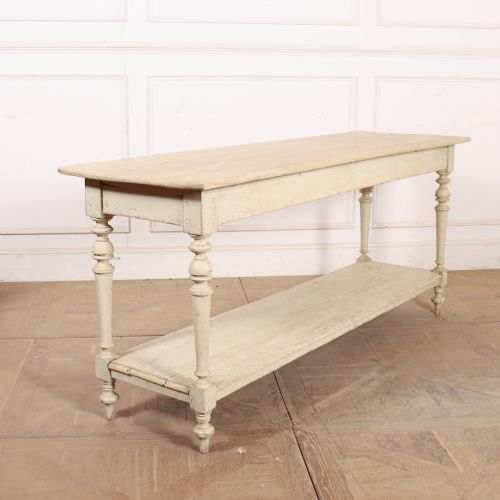
A wooden counter display encompasses shop fittings, tabletop cases, and cabinets originating from the nineteenth century into the 1930s. Buyers encounter practical items like haberdashery cases, apothecary boxes, and drapers' tables built for commercial trade.
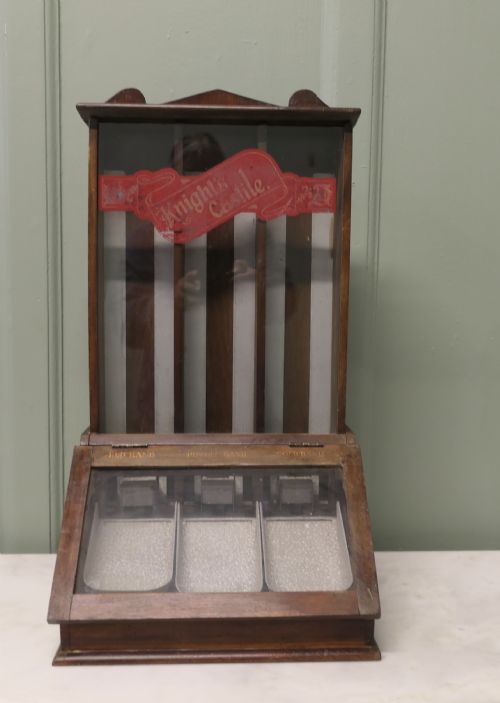
The most frequent examples on this page are oak and mahogany countertop cabinets dating from the 1920s and 1930s commercial eras. These glazed units were utilised to showcase confectionery, sewing cottons, and tobacco.
How they were made
Cabinet makers joined dense hardwoods such as oak, mahogany, and pine to build sturdy frames capable of withstanding daily retail use. Glass panels and brass fittings were integrated to protect goods while maintaining visibility for customers.
Surfaces received polished finishes or painted treatments, occasionally accompanied by paper labels or sign-written advertising for brands like Fry's, Cadbury's, and GBD. Structural integrity relied on traditional joinery suited to heavy commercial application.
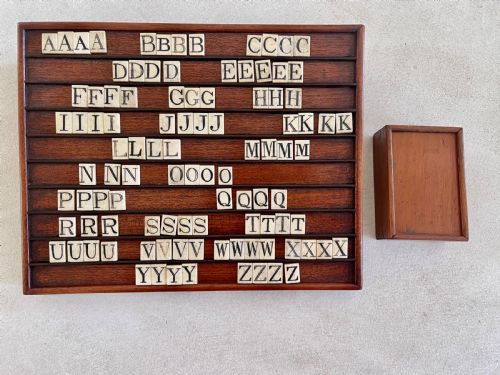
One piece includes an antique alphabet slope complete with bone letters for practicing early Victorian penmanship.
What varies in quality
Construction methods and timber selection set standard utilitarian shop pieces apart from finer display counters. Heavier framing timbers, superior glass retention, and original brass hardware elevate the standing of a piece.
Original branding, surviving advertising signage, and untouched factory finishes significantly influence desirability. Pieces retaining their specific period glass and functional drawers demonstrate greater historical integrity.
Saml. Elliott & Sons·Fry’s·Cadburys·Ermen & Roby·Chadwick’s·GBD
The Wooden Counter Display Glossary
- Haberdashery cabinet
- A set of shallow drawers with glass fronts designed for sorting and displaying small sewing items and ribbons. These units are prized for domestic storage.
- Shop fitting
- Fixtures and furniture built specifically for commercial retail environments rather than domestic use. They are constructed for heavy daily handling.
- Apothecary cabinet
- A specialist enclosure utilised by chemists for storing medicines, powders, and small implements. They often feature multiple small drawers or specialised compartments.
- Glazed display case
- A wooden framework inset with glass panels to protect merchandise from dust and handling while remaining visible. They sit atop counters or tables.
Wooden Counter Display: Frequently Asked Questions
What were wooden counter display cases used for originally?
Merchants placed these glazed cabinets and small drawers on shop counters to showcase high-value or delicate items such as tobacco, sewing cottons, and chocolates. The glass protected goods from dust and handling while allowing customers to inspect wares easily.
Over time, these commercial fittings transitioned from retail spaces into domestic settings. Collectors now utilise them to organise and display small personal possessions.
How do I date a wooden counter display?
Dating relies on timber choice, construction techniques, and the style of any integrated advertising or branding. Pieces from the Victorian era typically show denser hardwoods and hand-cut joinery.
Later examples from the 1920s and 1930s often incorporate commercial bronze or brass framing alongside specific corporate branding. Patent marks and original paper labels also help narrow the manufacturing window.
Are these display cases suitable for modern kitchens?
Countertop cabinets and small drawer units adapt well to contemporary kitchen spaces for storing dry goods or spices. Their compact proportions fit standard work surfaces without overwhelming the room.
Proper placement away from excessive moisture preserves the antique wood and historic glass panels. Regular cleaning with a soft cloth maintains the polished timber finishes.
How do I identify a haberdashery cabinet?
Haberdashery units feature banks of shallow drawers, often with glass panels on the fronts to show ribbons, buttons, and threads. These specific layouts allowed shop assistants to locate small sewing supplies quickly.
Their narrow proportions separate them from deeper general storage chests. Many retain original painted lettering or paper labels denoting the contents.