




Wooden Corner Shelving
These pieces of wooden corner shelving put dead wall space to work, bringing warmth and clean lines to any room.
Wooden Corner Shelving
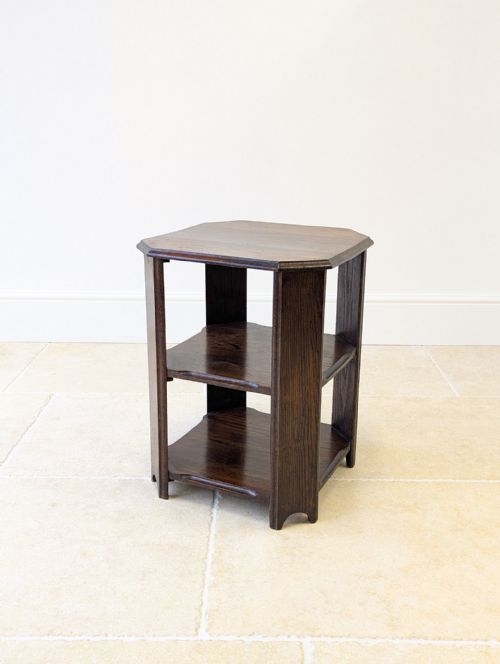
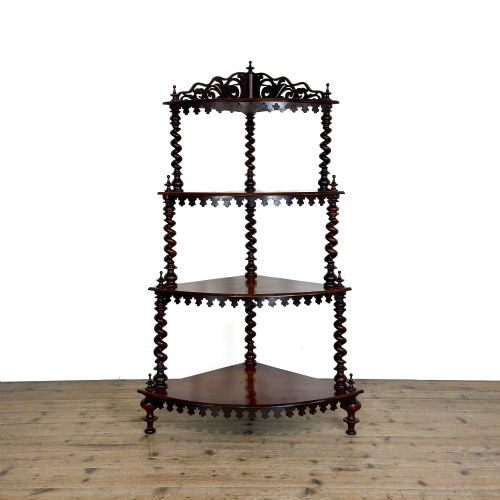
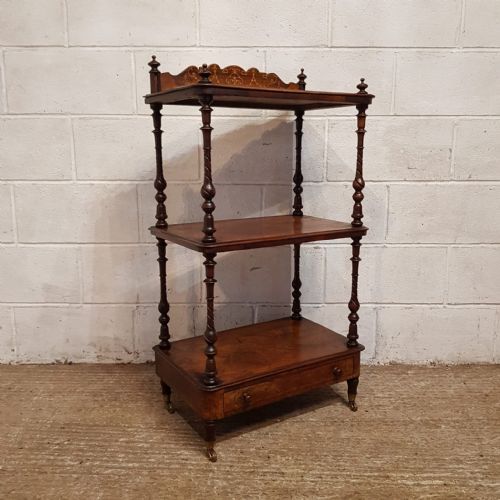
Wooden corner shelving encompasses versatile pieces designed to fit neatly into room angles, most frequently encountered as multi-tiered whatnots and open corner shelves. These fixtures range from Georgian mahogany designs to Victorian burr walnut and inlaid olive wood variations.
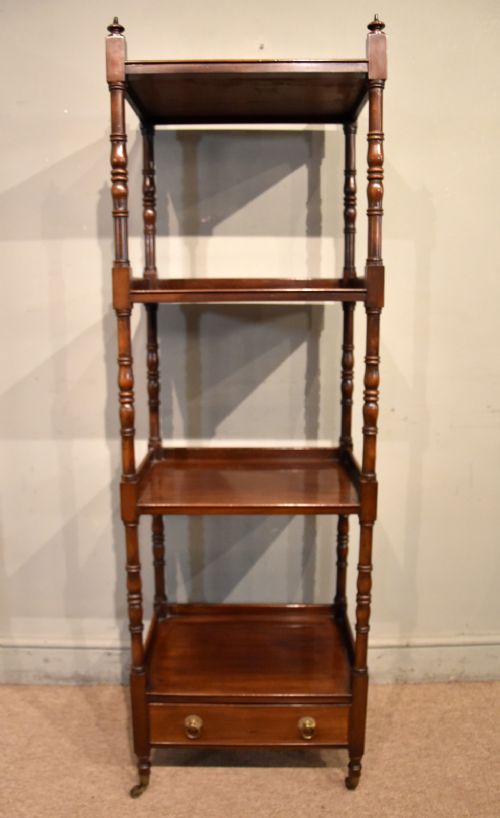
The selection here includes freestanding whatnots, wall-mounted corner units, and compact etageres that serve practical display functions. Many examples incorporate tiered platforms, mirrors, or small enclosed cupboards at the base for additional utility.
Materials and construction
Cabinetmakers utilised dense hardwoods such as mahogany, walnut, and oak to build sturdy frames capable of supporting display objects across multiple tiers. Finer pieces often feature decorative veneers like burr walnut and birdseye maple, alongside intricate marquetry and Sorrento inlays.
Structural elements frequently include turned supports, brass mounts, and carved detailing that define the aesthetic of Victorian and Georgian workshops. Joinery methods relied on precise corner fitting to ensure stability against wall angles without losing visual lightness.
Wooden Corner Shelving Retail Price Guide 2026
Typical asking prices for wooden corner shelving among the pieces listed under this phrase on Sellingantiques today, from the lower quarter to the upper quarter. They describe what is for sale here now, not the wider market.
Some Victorian whatnot shelves even included tiny cupboards for items people preferred to keep entirely out of sight.
Quality distinctions
The standard of timber selection and veneer matching dictates the visual appeal of each tier, with superior examples displaying rich grain patterns and seamless inlay work. Finer construction is evident in the crispness of turned columns and the balanced proportion of graduating shelves.
Original mounts, sound structural integrity, and well-executed carving separate standard utilitarian units from exceptional decorative pieces produced during the Georgian and Victorian periods.
The Wooden Corner Shelving Glossary
- Whatnot
- An open multi-tiered piece of furniture designed for displaying ornaments, books, or small objects. These freestanding stands became popular in the Georgian period and remained staples through the Victorian era.
- Etagere
- A set of open shelves for displaying small articles, sharing similarities with the whatnot. French in origin, these pieces often feature lighter frames and decorative wood veneers.
- Burr Walnut
- A figured wood grain obtained from walnut tree growths, prized for its swirling patterns. Cabinetmakers used it as a decorative veneer on prominent surfaces of Victorian furniture.
- Marquetry
- The art of applying pieces of veneer to a structure to form decorative patterns and pictures. This technique enhances the visual depth of inlaid olive wood and mahogany surfaces.
- Ormolu
- Gilt bronze ornamentation mounted onto furniture pieces. It adds metallic contrast to wood surfaces, particularly on finer cabinets and étageres.
Wooden Corner Shelving: Frequently Asked Questions
What is a whatnot shelf?
A whatnot is an open shelving unit with multiple tiers supported by slender columns, designed specifically for displaying ornaments and small possessions.
First appearing in the Georgian era, these practical pieces evolved through the Victorian period into elaborate focal points for corners and empty walls.
How do I style corner shelves?
Corner shelving works best when displaying collections of similar scale, such as small ceramics, stacked books, or framed photographs.
Allowing some open space between objects prevents the tiers from looking cluttered while highlighting the grain of the wood.
How do I identify Georgian pieces?
Georgian corner shelves typically feature solid mahogany construction, restrained classical proportions, and understated bracket feet or hanging fixings.
Craftsmen of this period focused on clean lines and timber quality rather than heavy applied ornamentation.