

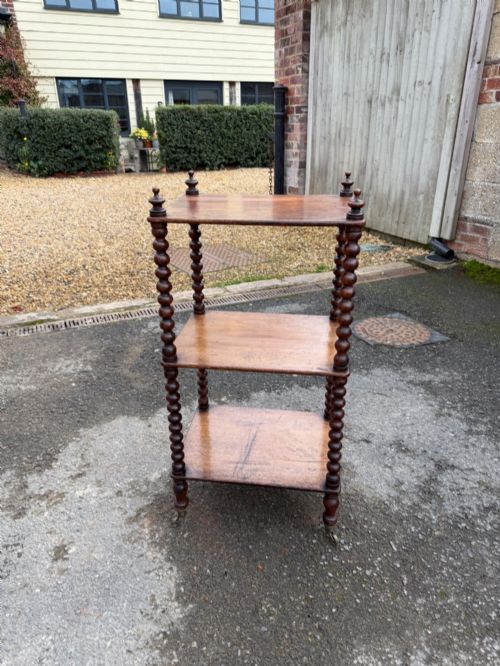
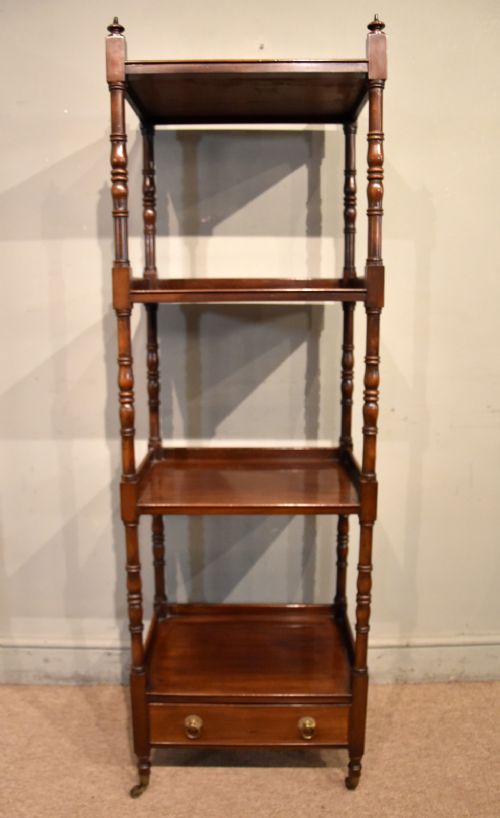



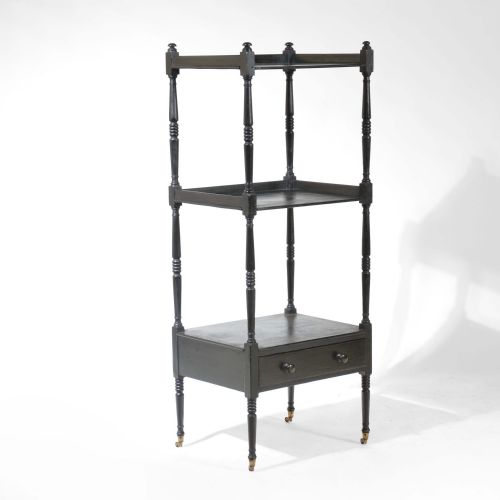


Wooden Corner Shelving Unit
These wooden corner shelving unit examples turn neglected wall angles into display space using centuries of cabinet-making skill.
Wooden Corner Shelving Unit
A wooden corner shelving unit groups multi-tiered storage built to fit right angles in a room, appearing in forms such as whatnots, etageres, and open bookcases. You will regularly encounter Georgian and Victorian variations designed to make use of awkward domestic spaces.
The selection ranges from simple mahogany tiers to inlaid or ebonised surfaces made in the eighteenth, nineteenth, and early twentieth centuries. These tier systems serve to hold books, ceramics, or ornaments without dominating the floor area of a smaller parlour or study.
How they were made
Cabinet makers relied heavily on solid mahogany, burr walnut, and rosewood, often enriching the timber with delicate boxwood inlay or marquetry details. Structural stability relies on sturdy corner uprights, sometimes supplemented by turned brass supports or A-frame bracing.
Surface treatments range from clear polish that highlights the natural grain of olive wood and birdseye maple to dark ebonised finishes and carved pine. Joints are pegged and tenoned to bear the weight of stacked shelves over generations of daily use.
Wooden Corner Shelving Unit Retail Price Guide 2026
Typical asking prices for wooden corner shelving unit among the pieces listed under this phrase on Sellingantiques today, from the lower quarter to the upper quarter. They describe what is for sale here now, not the wider market.
Listings feature mahogany, burr walnut, olive wood, and ebonised wood across eighteenth, nineteenth, and early twentieth-century periods.
What varies in quality
The standard of timber selection and complexity of the joinery define the upper tier of these pieces, separating simple utilitarian shelves from high-status drawing-room furniture. Finer examples display meticulous marquetry, matched burr veneers, and integrated cupboards with panelled doors.
Proportion and the integration of secondary woods also mark the difference between standard production and master craftsmanship. Pieces featuring specialised elements like mirrored backs or dense carved details show greater ambition in the workshop.
The Wooden Corner Shelving Unit Glossary
- Whatnot
- A movable set of open shelves used for displaying ornaments or books, developed in the eighteenth century. These typically feature three or four tiers supported by slender uprights.
- Etagere
- A piece of furniture consisting of a set of open shelves for displaying small objects. The term often overlaps with whatnot in nineteenth-century British cabinet-making.
- Marquetry
- Decorative woodwork in which pieces of fine timber, shell, or ivory are fitted into a veneer to form patterns. This technique frequently enhances the top shelves and door panels of corner units.
- Ebonised
- Wood finished with a dark stain or paint to imitate ebony. This treatment became particularly popular during the Victorian period for accentuating architectural lines.
- A-frame
- A structural support system shaped like the letter A, used in some corner furniture to distribute weight evenly across the tiers. It provides distinct lateral stability for freestanding units.
Wooden Corner Shelving Unit: Frequently Asked Questions
What is a wooden corner shelving unit?
A wooden corner shelving unit is a piece of furniture designed to fit neatly into the ninety-degree angle of a room. These constructions maximise vertical display space while keeping floor footprints minimal.
They appear in various historic styles, most commonly as multi-tiered whatnots, etageres, or open bookcases made from traditional hardwoods like mahogany and walnut.
How were these corner units used historically?
In period homes, these multi-tiered shelves served to display prized ceramics, small sculptures, and bound books in parlours and drawing rooms. The open design allowed owners to showcase collections within easy reach of seated guests.
Some variations included small cupboards at the base for concealed storage, combining display utility with practical household organisation.
How do I identify Georgian pieces?
Georgian wooden corner shelving units typically showcase restrained classical proportions, premium mahogany construction, and precise joinery without excessive ornamentation. Makers from this era favoured structural clarity, often utilising A-frame supports and bow-fronted shelves.
Surface enrichment during this period relied on the natural grain of the timber rather than heavy applied decoration or complex marquetry.
How do I care for antique wood?
Antique wooden furniture requires stable room humidity away from direct heat sources and strong sunlight to prevent the timber and veneer from splitting. Regular dusting with a soft, dry cloth maintains the finish without stripping the historic polish.
Occasional application of appropriate wax feeds the wood and preserves the sheen developed over centuries of handling.