

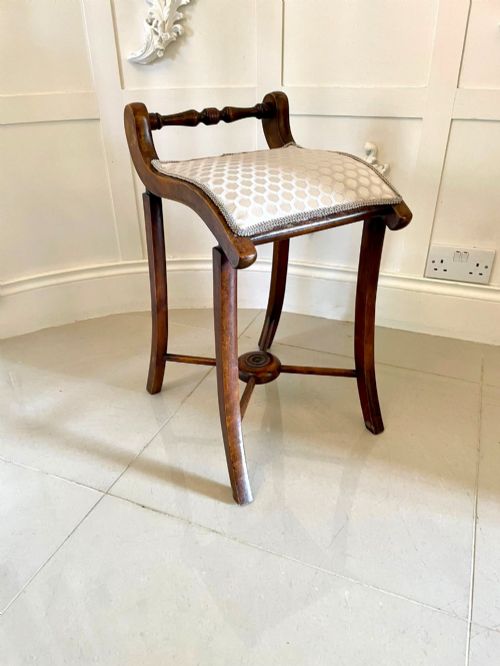
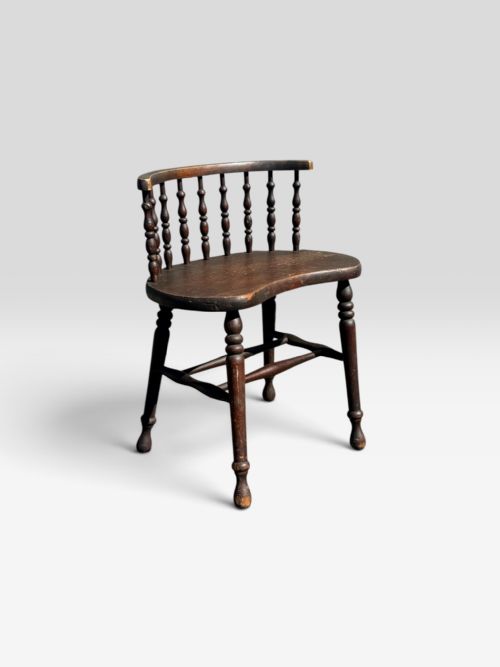
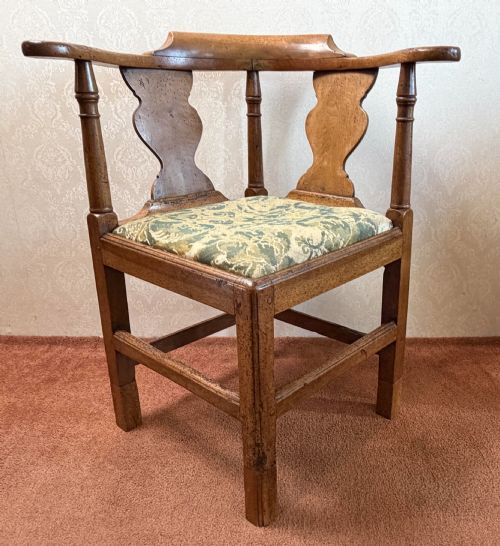
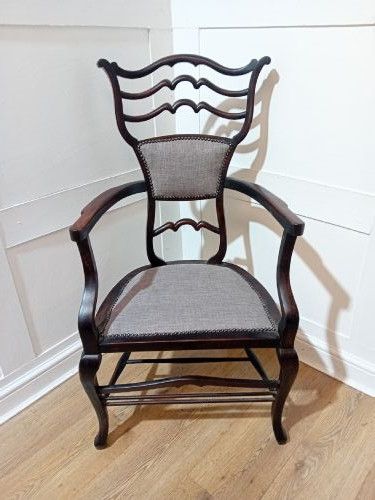


Wooden Corner Desk Chair
These sturdy wooden corner desk chair pieces turn an awkward angle into a comfortable writing spot.
Wooden Corner Desk Chair
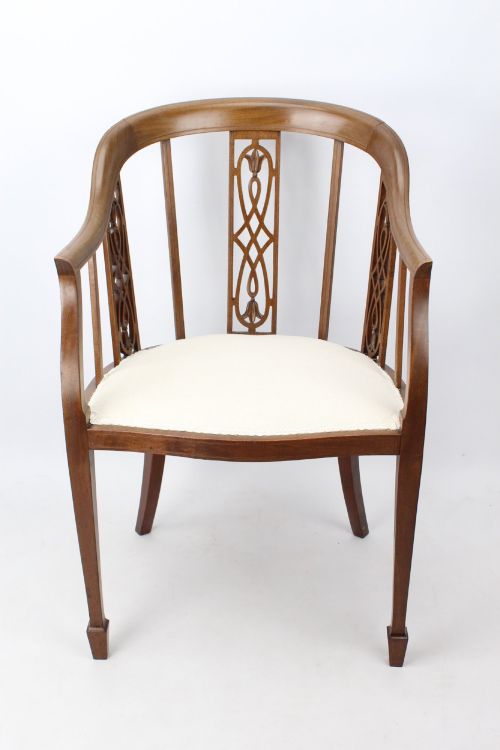
A wooden corner desk chair is designed specifically to fit into the ninety-degree angle of a room, making clever use of space that standard seating cannot reach. You will most frequently encounter Georgian and Edwardian examples on this page, alongside Victorian pieces.
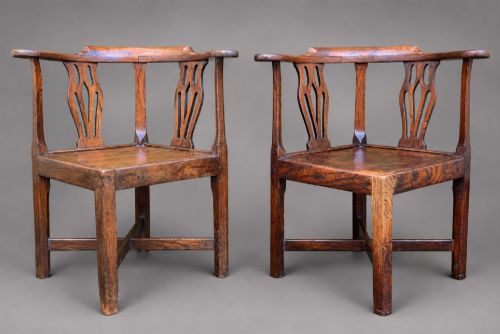
Originating primarily from British workshops, the selection spans centuries of cabinetmaking, from country elm country pieces to formal inlaid mahogany variants. Each piece retains the distinctive diagonal stance that marks out this specific seating genre.
How they were made
Cabinetmakers utilised robust native and imported timbers, selecting mahogany, walnut, oak, and elm for their structural integrity and grain pattern. The curved backrests required skilled steam-bending techniques to achieve the continuous flowing lines without fracturing the timber.
Joint construction relied heavily on mortise and tenon joinery to withstand the twisting forces inherent in a diagonal chair design. Seats were often dropped in and upholstered in fabric, leather, or tapestry, whilst others utilised solid wood or caned panels.
Wooden Corner Desk Chair Retail Price Guide 2026
Typical asking prices for wooden corner desk chair among the pieces listed under this phrase on Sellingantiques today, from the lower quarter to the upper quarter. They describe what is for sale here now, not the wider market.
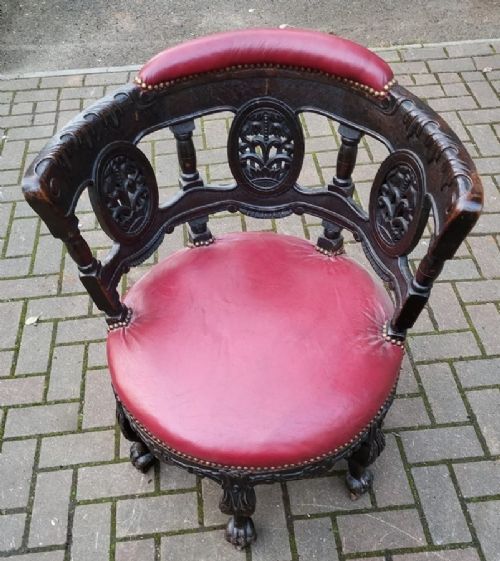
Burgermeister chairs offered civic leaders a commanding corner view during long municipal debates.
What varies in quality
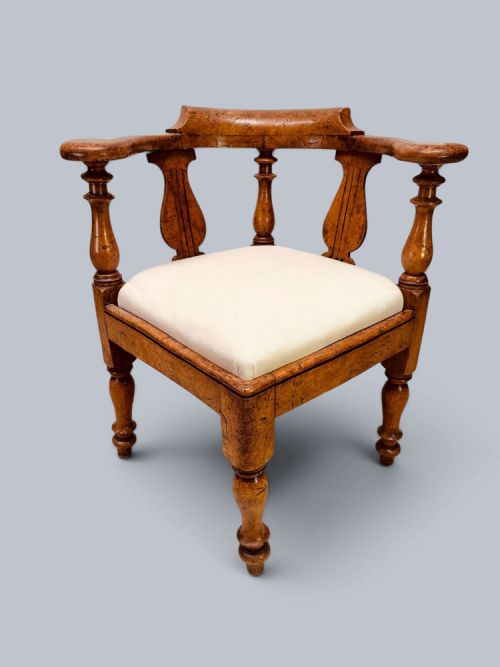
The standard of carving and the selection of timber dictate the upper tiers of quality, with burr veneers and finely figured mahogany marking out superior work. Simpler country versions in elm and oak rely on honest utility and sturdy proportions rather than decorative flourish.
Construction details such as the integrity of the under-framing and the complexity of the turning on the upright supports separate standard production from exceptional cabinetmaking. Original surface patination and minimal timber replacement preserve the historical integrity that collectors value.
S&H Jewell
The Wooden Corner Desk Chair Glossary
- Corner chair
- A seating form designed to fit into a room corner, featuring a diagonal seat plan and a continuous curved back rail supported by turned columns.
- Tub chair
- An armchair with a rounded back enclosing the sides continuously, providing a sheltered and supportive seat.
- Bergère
- An enclosed upholstered armchair with wooden framing exposed, often featuring cane work panels on the back and sides.
- Slat back
- A chair back constructed with vertical wooden slats secured between the upper rail and the seat frame.
- Inlay
- A decorative technique where contrasting woods or materials are inserted into recessed cavities within the primary timber surface to create patterns.
Wooden Corner Desk Chair: Frequently Asked Questions
Why are they shaped like diamonds?
The diagonal placement allows the seat to tuck neatly into a room corner while presenting a wide front for the user. This geometry makes them exceptionally practical for small studies or bedrooms.
Craftsmen developed this layout to maximise floor space without sacrificing seating comfort or stability.
Can I use one at a modern desk?
Many examples fit comfortably beneath standard writing tables, provided the desk clearance accommodates the corner framing. Their supportive back rails make them well suited for short periods of writing or reading.
Check the seat height and under-desk clearance before pairing an antique chair with a modern workspace.
How do I date a wooden corner desk chair?
Stylistic clues such as cabriole legs point toward the Georgian period, whereas satinwood inlay and lighter frames typically indicate Edwardian production. Elm and oak vernacular pieces often reflect regional country traditions rather than strict stylistic periods.
Examine the construction methods underneath and the timber choice to understand the era of manufacture.
Are upholstered seats original?
Drop-in seats were frequently recovered over the generations to match changing interior tastes and wear requirements. Finding period-appropriate fabric or leather adds charm, though reupholstery is common practice.
The underlying wooden frame remains the primary indicator of authenticity and age.