

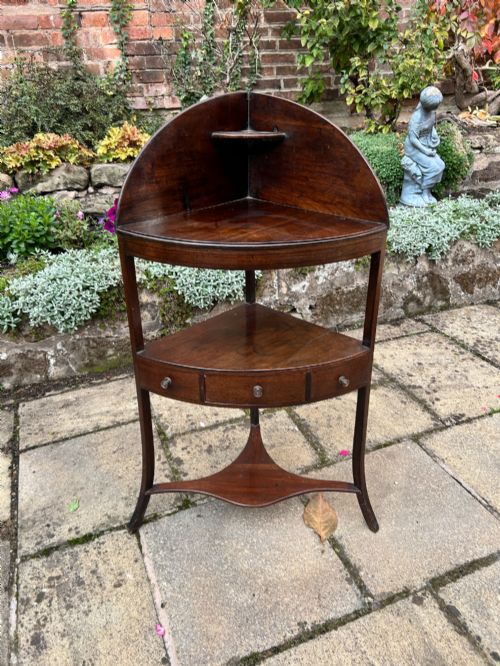
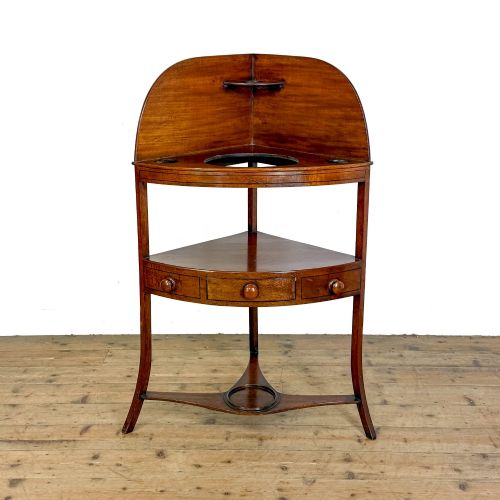


Wooden Corner Basin Table
A wooden corner basin table solves the problem of fitting functional furniture into tight spaces.
Wooden Corner Basin Table
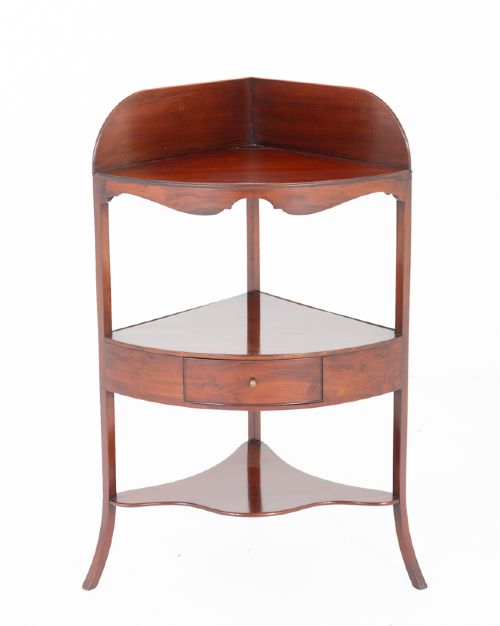
A wooden corner basin table is designed to fit snugly into the angle of a room, making efficient use of awkward domestic spaces. These pieces date across the Georgian, 18th Century, 1800, 19th Century, and Regency periods.
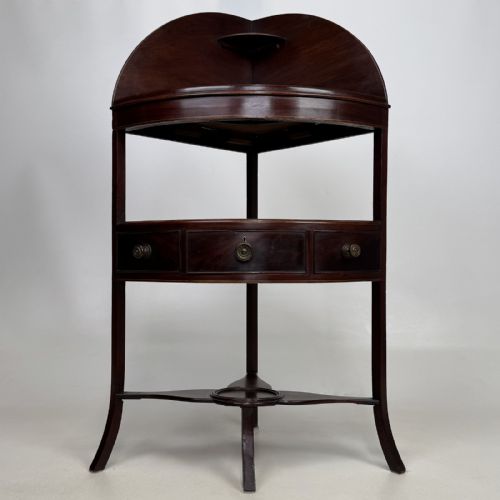
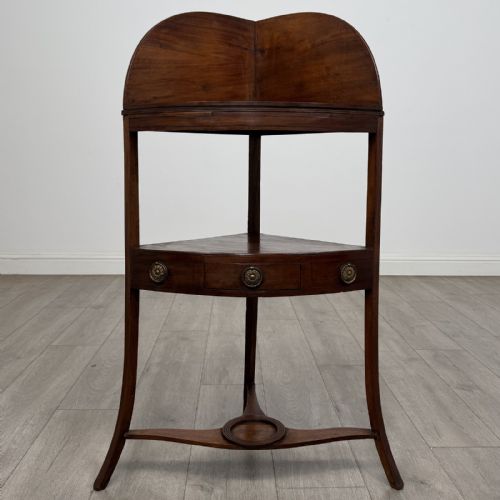
Most examples function as corner stands, washstands, or basin stands. They often feature tiered shelves and cut-outs designed originally to hold washbasins and pitchers.
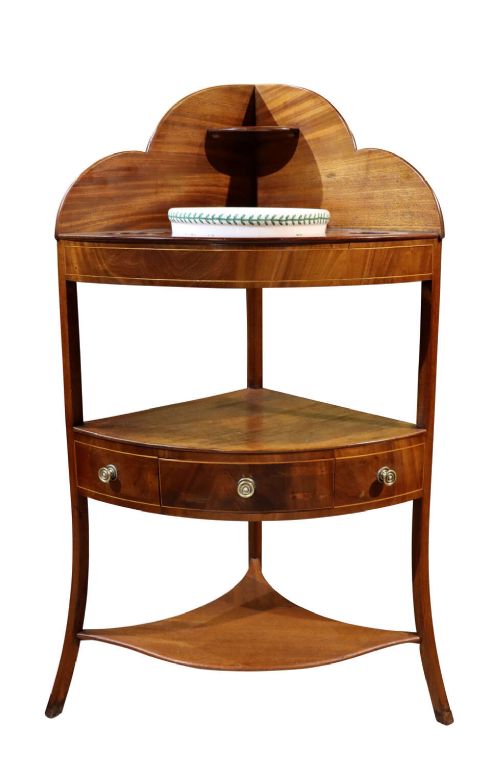
Buyers meet variations that include raised galleries and occasional adaptations used as lamp or plant tables. Mahogany is the primary wood seen across these examples, sometimes accompanied by boxwood inlay and brass details.
Materials and construction
Construction relies heavily on mahogany, selected for its rich grain and structural stability in domestic furniture. Cabinetmakers shaped solid timber and veneers to fit precise ninety-degree angles.
Secondary details involve boxwood inlay for decorative contrast and brass fittings for structural or decorative accents. Glass elements occasionally appear in related fittings or associated items within the broader category.
Wooden Corner Basin Table Retail Price Guide 2026
Typical asking prices for wooden corner basin table among the pieces listed under this phrase on Sellingantiques today, from the lower quarter to the upper quarter. They describe what is for sale here now, not the wider market.
Some washstands include a small hidden drawer once used for storing shaving powder and soap.
Assessing quality
Quality rests in the crispness of the timber selection and the subtlety of any inlay work, such as boxwood lines. Finer pieces demonstrate precise joinery where the angled sections meet the walls.
The sophistication of the tiered structure and the preservation of original galleries or basin rings separate standard examples from finer ones. The integrity of the mahogany surfaces and the depth of the finish dictate the visual appeal.
The Wooden Corner Basin Table Glossary
- Washstand
- A piece of furniture designed to hold a basin and pitcher for personal washing before plumbed bathrooms. These often feature shaped upper tiers.
- Gallery
- A raised wooden edge running along the top of a stand to prevent items from sliding off. Georgian examples frequently use this to secure basins.
- Boxwood inlay
- Contrasting pale wood inserted into dark mahogany to create decorative lines or geometric patterns. It requires high skill from the cabinetmaker.
- Regency
- A style period dating from the early nineteenth century characterised by classical restraint and influences from ancient Greece and Rome. Pieces from this era often show simpler, bolder lines.
Wooden Corner Basin Table: Frequently Asked Questions
What was a wooden corner basin table used for?
These pieces served as personal washing stations in bedrooms before fixed plumbing existed. They held a basin, water jug, and soap.
Over time, many of these stands transitioned into general household use as corner display or occasional tables.
How do I fit one in a modern room?
Their angular footprint allows them to tuck neatly into unused room corners without obstructing walkways. They work well in hallways, bedrooms, or small living spaces.
Many owners use the tiers to display plants, lamps, or small collections rather than washing equipment.
How can I tell a Georgian piece from a Regency one?
Georgian pieces often display intricate details like boxwood stringing and shaped galleries designed for specific basins. The proportions tend to reflect earlier eighteenth-century cabinetmaking traditions.
Regency examples usually feature cleaner, heavier architectural lines influenced by classical antiquity with less surface ornamentation.
What woods were used to make these stands?
Mahogany is the primary timber found across these historical pieces due to its durability and deep grain. Cabinetmakers occasionally used boxwood for contrasting stringing and inlay.
Brass fittings and glass elements appear as supplementary materials for hardware and structural support.