






Wooden Chip Boxes
These wooden chip boxes and related folk pieces bring tactile history into your home through deeply carved geometric patterns and robust vernacular construction.
Wooden Chip Boxes
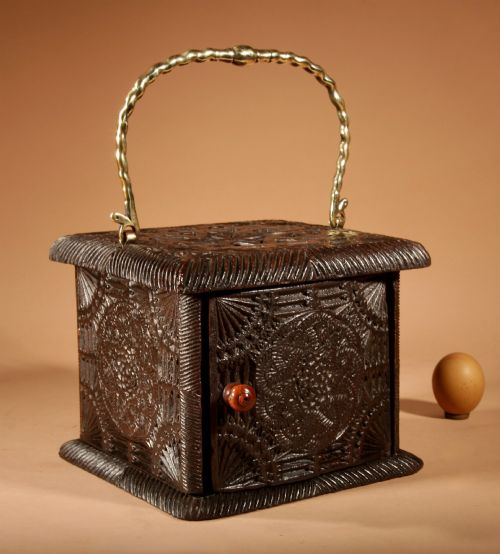
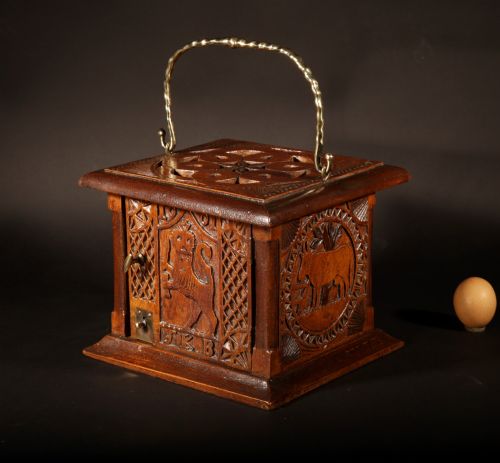
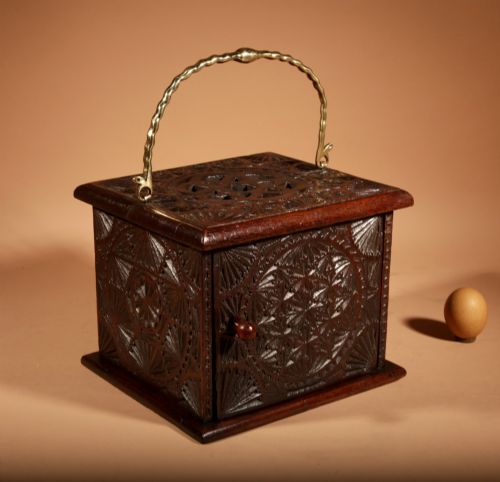
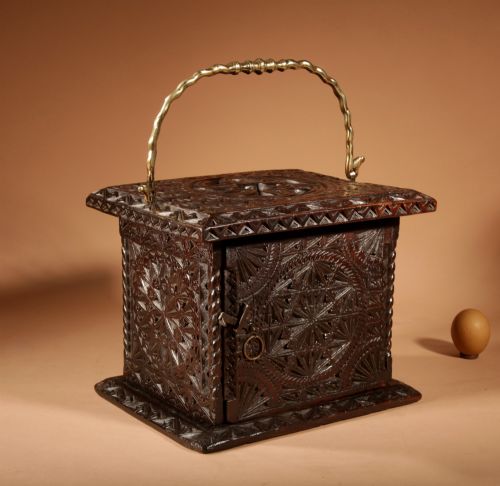
When you search for wooden chip boxes, you are looking at utilitarian items transformed by hand-carved ornamentation, most commonly represented here by foot stoves, small coffers, and snuff boxes. These objects originate from various regional traditions, spanning centuries of domestic craft from Welsh and Frisian makers.
The pieces you are most likely to encounter on this page date from the 17th century through to the late Victorian and Edwardian eras. They take the form of small storage boxes, marriage chests, and foot warmers, often enhanced with chip carving, fruitwood inlay, or painted highlights.
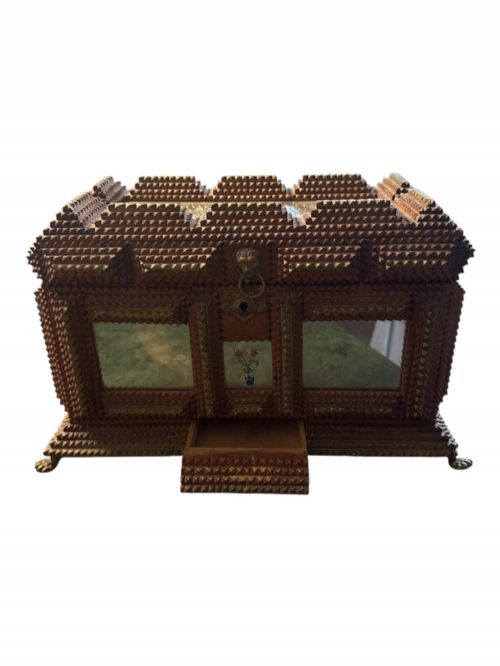
Vernacular styles dominate this category, linking everyday utility with folk art traditions across Britain and Scandinavia. Whether examining a sweetheart tramp art box or a dated 1901 foot stove, each item reveals the hand of a maker working within a distinct local idiom.
Materials and construction methods
Makers relied primarily on native timbers such as oak, pine, and assorted hardwoods, shaping them with hand tools to build robust coffers, boxes, and frames. The natural grain of the wood provided a textured background for decorative carving.
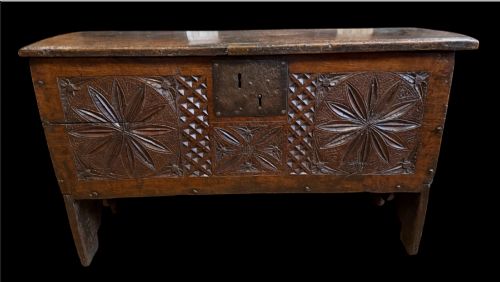
Surface ornamentation was achieved primarily through chip carving, where small chips of wood are removed with gouges and knives to create intricate geometric patterns. Additional decorative elements include fruitwood inlay, iron hardware, brass accents, and occasional partial painting.
Wooden Chip Boxes Retail Price Guide 2026
Typical asking prices for wooden chip boxes among the pieces listed under this phrase on Sellingantiques today, from the lower quarter to the upper quarter. They describe what is for sale here now, not the wider market.
One dated foot stove proudly records 1901, proving that someone was still enthusiastically chip-carving foot warmers long after central heating ought to have retired them.
Assessing quality and craftsmanship
Quality in these items rests upon the precision and depth of the chip carving relative to the scale of the object. Sharper, more confident geometric cuts demonstrate superior control by the maker, whereas hesitant or shallow incisions produce a flatter appearance.
The integrity of the original construction and the preservation of surface patination distinguish finer examples. Pieces that retain their original hinges, uncompromised timber joints, and honest wear from age command greater appreciation among collectors.
The Wooden Chip Boxes Glossary
- Chip carving
- A style of relief carving where the artisan removes small chips from a wooden surface to form geometric patterns. This technique was widely applied by rural makers to domestic objects.
- Tramp art
- A form of folk art popular in the nineteenth and early twentieth centuries, constructed by layering notched and chipped pieces of scrap wood. Boxes and picture frames were frequently made using this method.
- Vernacular
- Architecture and objects made by traditional craftsmen for everyday local use rather than high-style academic design. These pieces reflect regional materials and practical needs.
- Foot stove
- A portable box historically filled with hot embers to warm a person's feet during cold weather. Many surviving examples feature pierced lids and elaborate chip-carved decoration.
- Cofer
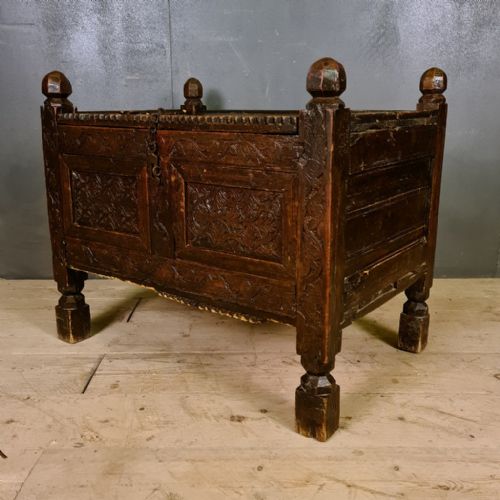
- A large wooden chest or box used for storing valuables, linens, or documents. Early examples often feature heavy plank construction and robust iron hardware.
Wooden Chip Boxes: Frequently Asked Questions
How were foot stoves used?
Foot stoves held hot embers inside a metal or earthenware container placed within the wooden housing. People used them in cold homes or unheated churches to keep their feet warm.
The pierced wooden lids allowed heat to circulate while protecting garments from direct contact with the coals.
How do I care for antique wooden boxes?
Keep these pieces away from direct sunlight and major sources of heat to prevent the wood from drying out or splitting. Maintain a stable indoor environment.
Apply a minimal amount of appropriate microcrystalline wax only when the timber appears dry, gently buffing with a soft cloth to preserve the historic patina.
How can I tell different periods apart?
Earlier pieces from the seventeenth and eighteenth centuries typically feature heavier oak plank construction, hand-forged iron hardware, and simpler, deeper gouge work. They reflect traditional vernacular joinery.
Later Victorian and 1900 examples often utilise pine or assorted hardwoods, showcasing denser tramp art layering, applied fretwork, or machine-cut elements alongside hand carving.