




Wooden Chime Stand
Wooden chime stand pieces are resonant furnishings holding brass and bronze bells, bringing deep acoustic character to a room.
Wooden Chime Stand
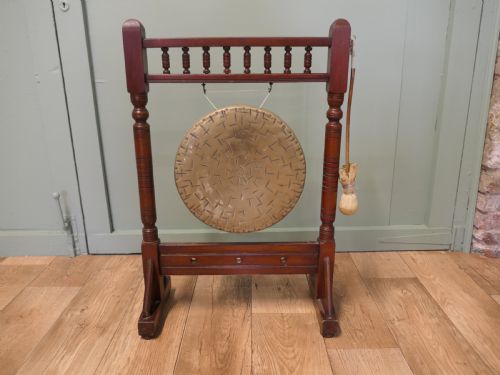
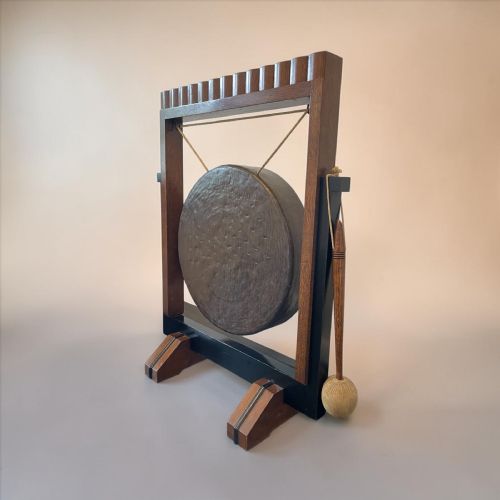
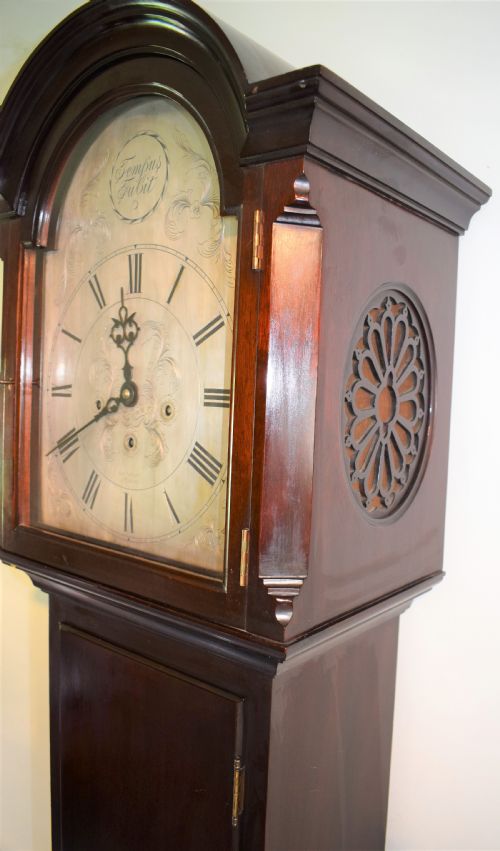
A wooden chime stand supports striking bells, gongs and clock movements, creating deep musical tones within domestic spaces. These functional items range from tall floor-standing frames to compact table versions designed for domestic use.
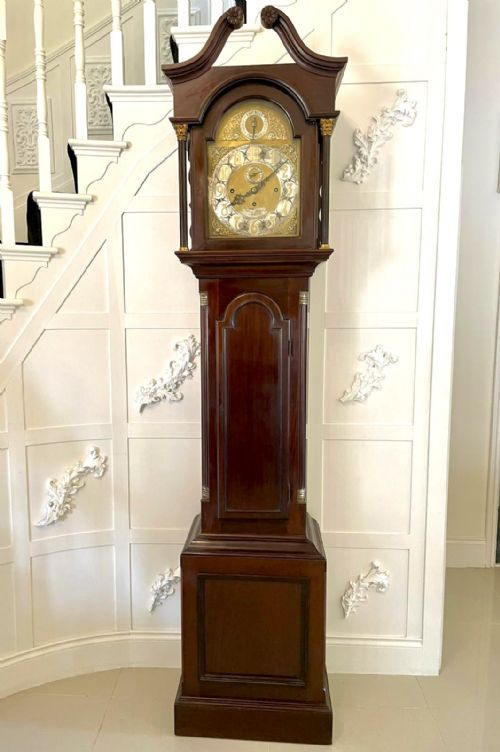
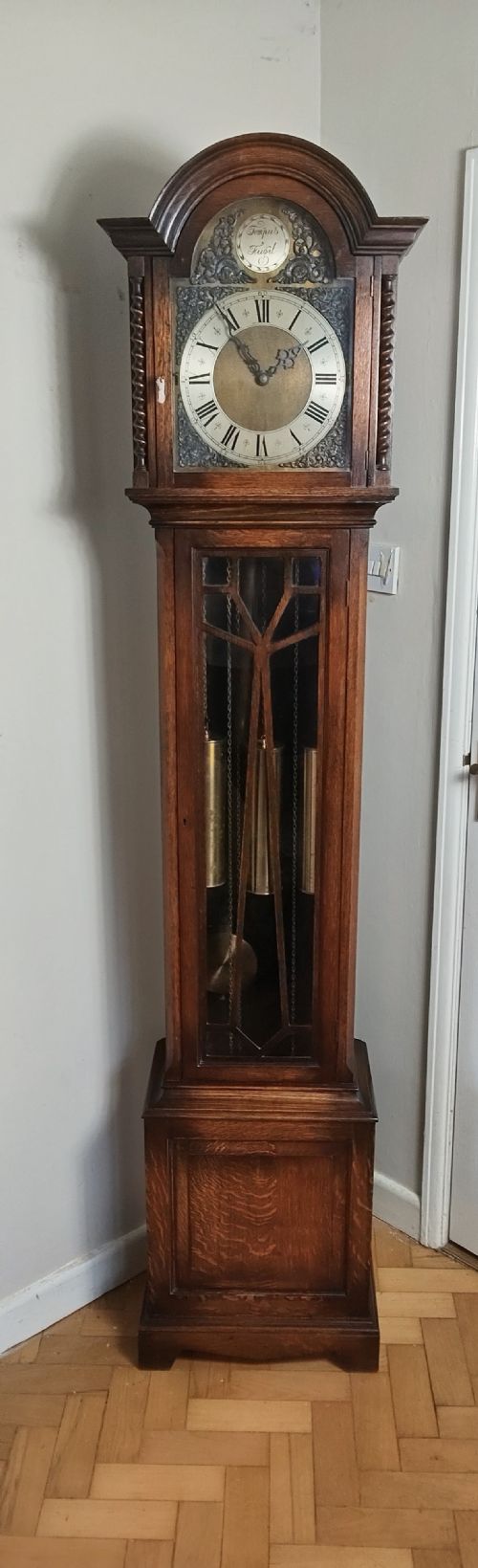
The versions most commonly met on this page include floor-standing dinner gongs and striking longcase clocks housed in traditional timber frames. Makers constructed these pieces across multiple eras, incorporating styles from the Victorian period up to the Art Deco era.
Frameworks appear in forms such as carved oriental tea ceremony stands, monumental Gothic revival structures and inlaid Edwardian housings. Each format serves to suspend a brass or bronze bell for acoustic resonance.
How they were made
Craftsmen utilised dense hardwoods including mahogany, oak, walnut and burr walnut to construct durable frames capable of supporting heavy metal bells. Timber sections were frequently quarter veneered, carved with intricate oriental motifs or inlaid with contrasting woods.
Metal components incorporate cast brass bells, bronze temple gongs and glass dial faces fitted into clock hoods. Sound is suspended using cord or fixed brackets attached directly to the timber uprights.
Wooden Chime Stand Retail Price Guide 2026
Typical asking prices for wooden chime stand among the pieces listed under this phrase on Sellingantiques today, from the lower quarter to the upper quarter. They describe what is for sale here now, not the wider market.
Listings feature timbers in mahogany, oak, walnut, burr walnut and hardwood alongside brass, bronze and glass components.
What varies in quality
Quality rests in the acoustic resonance of the suspended bell and the structural integrity of the timber frame supporting it. Heavier brass castings produce clearer tones, while dense hardwoods prevent vibration distortion during striking.
Fine craftsmanship shows in the depth of hand carving on oriental stands and the precision of quarter veneered walnut panels. Simpler utilitarian oak or mahogany models rely on sturdy joinery rather than decorative ornamentation.
Winsor Bishop Norwich·W Prior Skipton·Geo Tarratt of Leicester
The Wooden Chime Stand Glossary
- Dinner Gong
- A resonant metal bell or disk suspended within a wooden frame, struck with a mallet to announce meals.
- Grandmother Clock
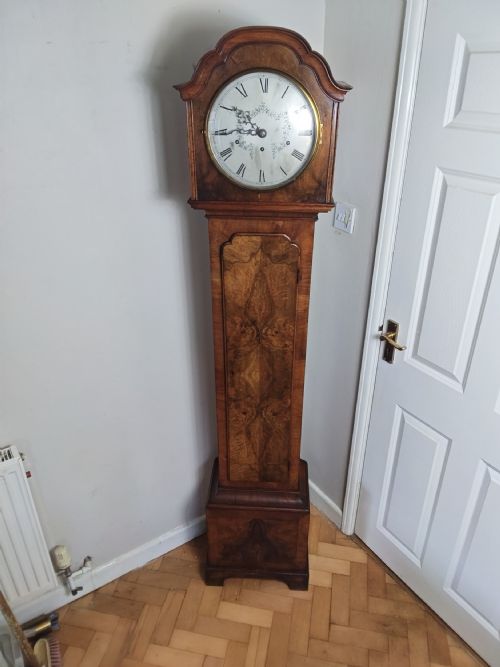
- A slender striking longcase clock standing shorter than a traditional grandfather clock, housing a chiming movement.
- Gothic Revival
- An architectural and decorative style drawing on medieval forms, featuring pointed arches and heavy carved timber.
- Chinoiserie
- European interpretation of Chinese and East Asian artistic traditions, often applied through intricate woodwork and carving.
- Quarter Veneer
- Thin slices of timber arranged symmetrically to create decorative geometric grain patterns across a wooden surface.
Wooden Chime Stand: Frequently Asked Questions
How do wooden chime stand pieces work?
These pieces use a suspended metal bell or gong struck manually with a mallet, or triggered mechanically via a clock movement. The wooden frame acts as an acoustic anchor to support the hanging weight.
Heavier timbers and solid bracing help project the sound cleanly into the room without dampening the natural resonance of the brass or bronze bell.
Where were wooden chime stand items placed?
Floor-standing dinner gongs typically stood in entrance halls or dining rooms to summon household members. Table versions sat on sideboards or dedicated ceremonial altars.
Tall clock variations stood in hallways and living rooms to mark the hours with musical chimes echoing through the timber case.
How do I identify Victorian and Edwardian periods?
Victorian examples often display heavy proportions, dark oak or mahogany timbers, and revival motifs such as Gothic arches. Edwardian pieces frequently feature lighter mahogany framing with delicate inlay work.
Art Deco and 1930s variations introduce streamlined geometric shapes and burr walnut veneers while retaining the core function of bell suspension.
What maintenance do these wooden stands require?
Timber frames benefit from occasional waxing to nourish the hardwood and preserve the grain. Metal bells and gongs require dusting and gentle cleaning to maintain their acoustic properties.
Suspension cords should be checked periodically to ensure the heavy metal components remain securely fastened to the wooden structure.