



Wooden Chessboard Table
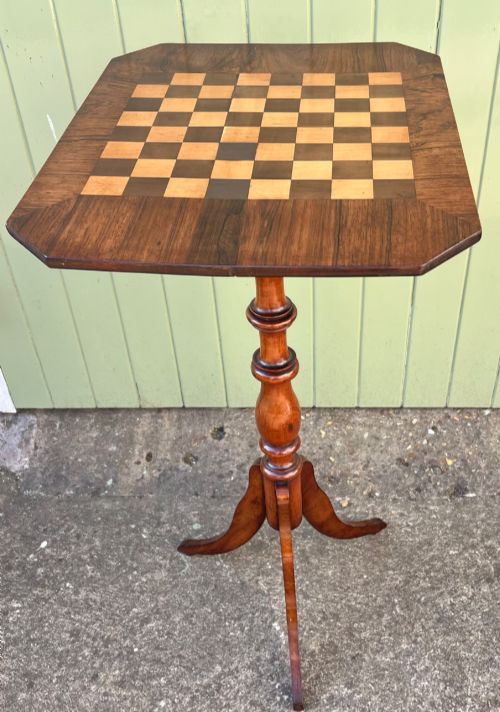
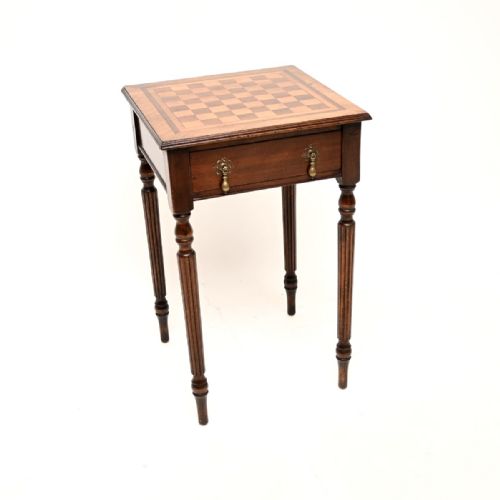
These wooden chessboard table pieces offer a practical surface for play whilst bringing period charm into a room.
Wooden Chessboard Table
A wooden chessboard table combines a traditional playing surface with a functional piece of furniture designed for the parlour or drawing room. Buyers searching this phrase will encounter various forms, including dedicated games tables and multifunctional items that double as sewing or centre tables.
The pieces on this page span the nineteenth century, the Victorian era, and the nineteen twenties. Examples range from simple British productions to imported Anglo-Indian and Swedish Biedermeier pieces.
Most items incorporate inlaid surfaces for matches alongside timber construction. Formats vary from rectangular walnut and boxwood constructions to rosewood and mahogany designs, reflecting the domestic leisure habits of past centuries.
Materials and Construction
Cabinetmakers utilised a variety of dense timbers such as mahogany, walnut, rosewood, oak, and birch to build these tables. Contrasting woods like boxwood and ebony provided the pale and dark squares required for the inlaid playing surfaces.
Intricate surface decoration often involved contrasting wood veneers and marquetry inlay techniques. Certain examples also integrated carved elements or scumbled surface treatments alongside brass details.
Wooden Chessboard Table Retail Price Guide 2026
Typical asking prices for wooden chessboard table among the pieces listed under this phrase on Sellingantiques today, from the lower quarter to the upper quarter. They describe what is for sale here now, not the wider market.
Current listings feature nineteenth-century furniture utilising boxwood, mahogany, walnut, rosewood, oak, and brass across games tables and compendiums.
Assessing Quality
Quality in these tables rests primarily upon the precision of the timber inlay and the selection of cabinet woods. Finer examples display meticulous alignment within the chessboard squares and sophisticated balancing of grain patterns across the top.
The overall architectural proportion and the choice of structural timber dictate the standing of a piece. Finer construction employs solid hardwoods and cohesive stylistic details, such as carved supports or integrated sewing compartments, which elevate the utility and visual weight of the furniture.
A British Chess Company
The Wooden Chessboard Table Glossary
- Inlay
- A technique where pieces of contrasting material are inserted into a recessed surface to form a pattern or board. This method creates the flush playing grid characteristic of these tables.
- Marquetry
- The art of applying decorative veneer pieces to a structure to form intricate designs. It frequently ornaments the borders and pedestals of nineteenth-century games furniture.
- Scumble
- A translucent layer of paint applied over a base coat to simulate wood grain or texture. It appears on specific regional pieces to achieve a decorative finish.
- Biedermeier
- A central European style characterised by utilitarian comfort and clean lines without excessive ornamentation. Swedish interpretations of this aesthetic focus on native birch timbers.
- Compendium
- A portable box or multi-use cabinet containing equipment for several different pastimes. These sets often unite chess, draughts, and other board games within a single housing.
Wooden Chessboard Table: Frequently Asked Questions
What periods do these tables come from?
The listings span the nineteenth century, including specific decades such as the eighteen fifties, seventies, eighties, and nineties, alongside Victorian and Regency periods. Later items extend into nineteen twenty.
Construction styles reflect these eras, ranging from classic Regency forms to ornate Victorian revivals and Scandinavian Biedermeier designs.
Were these tables used only for chess?
Many examples served multiple purposes within the home, doubling as sewing tables, centre tables, or general games compendiums.
Inlaid surfaces often accommodated chess alongside other pastimes, whilst internal compartments held pieces, counters, or sewing implements.
What woods were used to build them?
Cabinetmakers employed a broad selection of dense timbers including mahogany, walnut, rosewood, oak, and birch. Boxwood and ebony provided the contrasting light and dark tones for the board squares.
Selected items also incorporate alternative materials such as marble inlay or brass fittings to enhance the design.
How do I identify a Victorian games table?
Victorian examples frequently utilise walnut or rosewood combined with boxwood inlay, often featuring rectangular proportions or carved centre table supports. Stylistic markers include Rococo revival motifs and integrated compartments.
Construction from this period prioritised decorative presence in the drawing room alongside functional play space.