



Wooden Chaise Longue
These wooden chaise longue examples bring architectural grace and reclining comfort to a room.
Wooden Chaise Longue
A wooden chaise longue is a long seat for reclining, appearing across periods from Regency and William IV to the Victorian era and the early twentieth century. When searching for a wooden chaise longue, you encounter forms ranging from simple frames to fully upholstered daybeds and day beds.
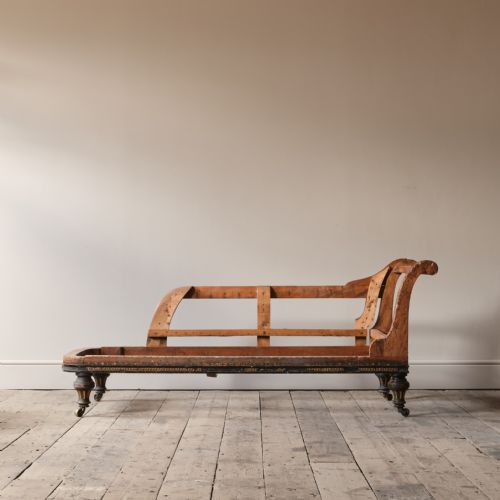
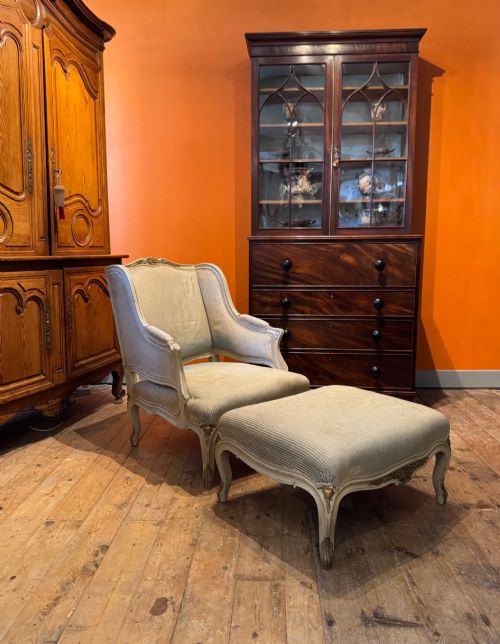
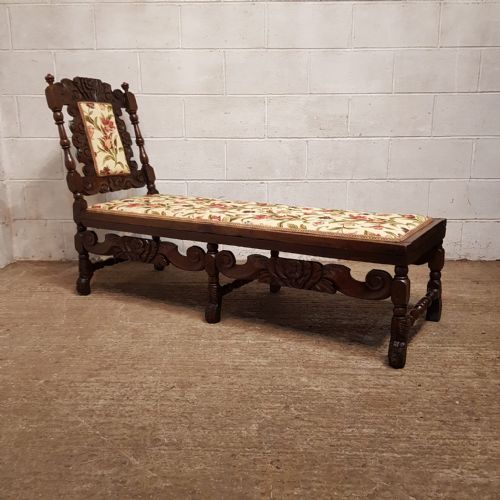
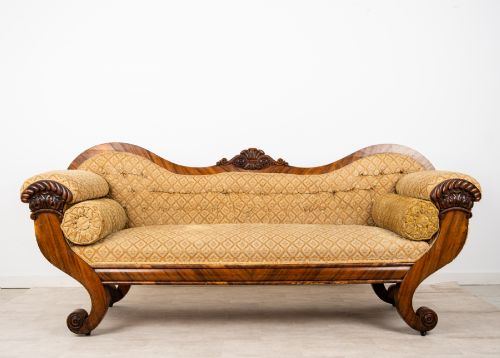
The pieces on this page include daybeds, settees, and récamier designs reflecting styles such as Colonial Campaign, Louis XV, and Victorian Colonial. Makers and origins vary, yielding both painted frames and polished timber bodies.
Victorian examples frequently showcase carved scroll ends and turned legs fitted with castors, while earlier Regency pieces lean towards classical lines in walnut or mahogany. Frames span from exposed timber structures ready for upholstery to pieces retaining original fabric.
How they were made
Makers utilised solid timbers including mahogany, walnut, rosewood, oak, pine, and ebonised wood to build the supporting frames. Brass components appear in structural details and wheel castors.
Upholstery relied on textile coverings over padded foundations, while certain pieces incorporated cane panels or survived in original paint finishes.
Wooden Chaise Longue Retail Price Guide 2026
Typical asking prices for wooden chaise longue among the pieces listed under this phrase on Sellingantiques today, from the lower quarter to the upper quarter. They describe what is for sale here now, not the wider market.
Even mid-nineteenth century frames occasionally kept their original castors, rolling smoothly into the twenty-first century.
What varies in quality
Quality rests in the crispness of timber carving, the integrity of the frame construction, and the survival of original decorative surfaces such as paint or polish. Finer examples display balanced proportions and sophisticated scrollwork on the ends.
The distinction between a standard frame and a superior piece lies in the quality of the selected hardwood, such as figured mahogany or walnut, and the sophistication of the historical style emulated.
Holland & Sons·Thomas Hope
The Wooden Chaise Longue Glossary
- Récamier
- A type of chaise longue featuring two raised ends, named after the French society figure painted by Jacques-Louis David. This form emphasises symmetry in its scrolling woodwork.
- Duchesse brisée
- A chaise longue split into two or three parts, typically a chair and one or more footstools, designed to create a continuous resting surface. The French Louis XV style pieces utilise this modular arrangement.
- Daybed
- A long seat intended for daytime reclining or sleeping, combining the functions of a sofa and a bed. The listings include examples from both the Regency and Victorian periods.
- Castor
- A small wheel mounted on a swivel assembly attached to the legs of furniture to ease movement. Late Victorian day beds frequently retain these original brass or iron fittings.
- Ebonised wood
- Timber treated with a chemical stain or finish to imitate expensive ebony. This dark surface treatment appears across several nineteenth century frames.
Wooden Chaise Longue: Frequently Asked Questions
What is a wooden chaise longue?
A wooden chaise longue is a reclining seat designed for one person, featuring an elongated body and typically one or two raised ends. These pieces function as a hybrid between a chair and a sofa.
They appear in various historical styles, ranging from Regency frames to Victorian upholstered day beds.
How do I date a chaise longue?
Dating relies on observing the timber species, turning styles on the legs, and the overall aesthetic movement of the frame. Regency pieces often show classical restraint, whereas Victorian examples favour heavier carving and scroll ends.
Hardware such as original castors also provides clues to the manufacturing decade.
Where should I place a daybed?
A daybed or chaise longue fits well in a spacious bedroom, a library, or along a large drawing room wall where it can be viewed from multiple angles. Because many designs feature only one raised end, positioning requires considering which direction the occupant faces.
Sufficient floor space allows the architectural lines of the timber frame to remain visible.
What is the difference between a daybed and a récamier?
A récamier specifically denotes a chaise longue with two raised, scrolling ends and often no backrest, following classical French furniture design. A general daybed encompasses a broader category of resting furniture, including simpler frames and campaign styles.
Both serve the purpose of daytime lounging within a formal interior.