




Wooden Canterbury Table
A wooden canterbury table is a practical stand designed to hold sheets of music, newspapers, and periodicals near the fireplace.
Wooden Canterbury Table
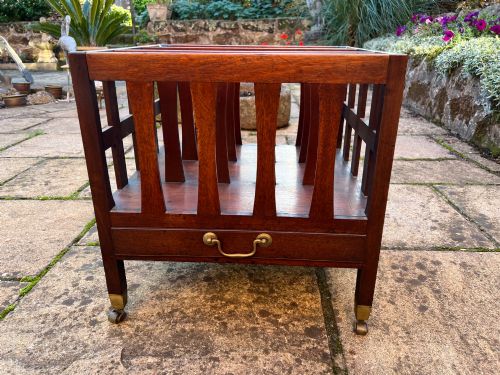
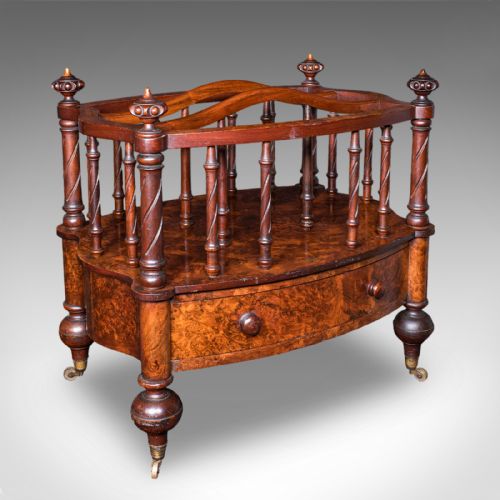
A wooden canterbury table combines the compartmentalised storage of a traditional sheet music stand with the flat top of an occasional table. Buyers searching for a wooden canterbury table will encounter pieces primarily from the Regency, Georgian, and Victorian periods.
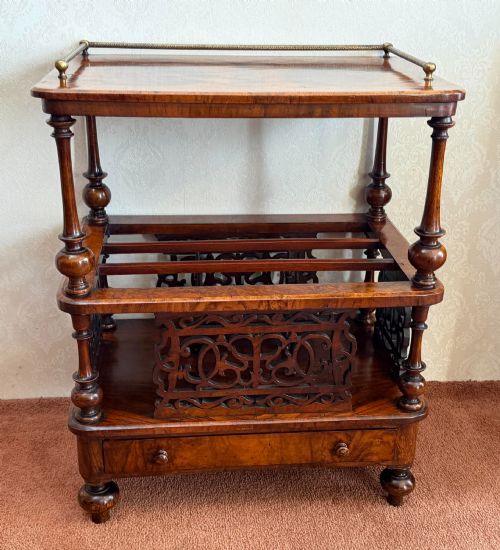
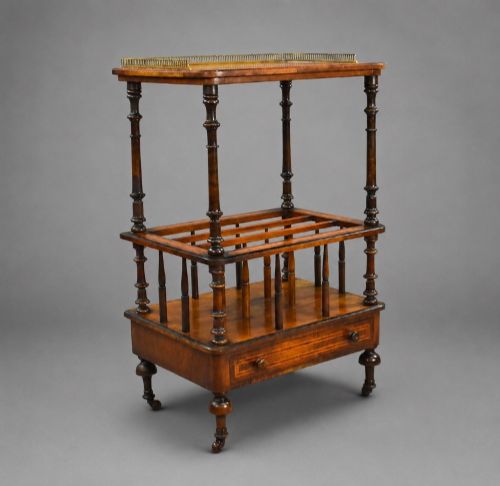
The form evolved during the nineteenth century into hybrid pieces such as canterbury whatnots and magazine racks with drawers. Walnut, burr walnut, and mahogany dominate the offerings, occasionally complemented by satinwood and rosewood.
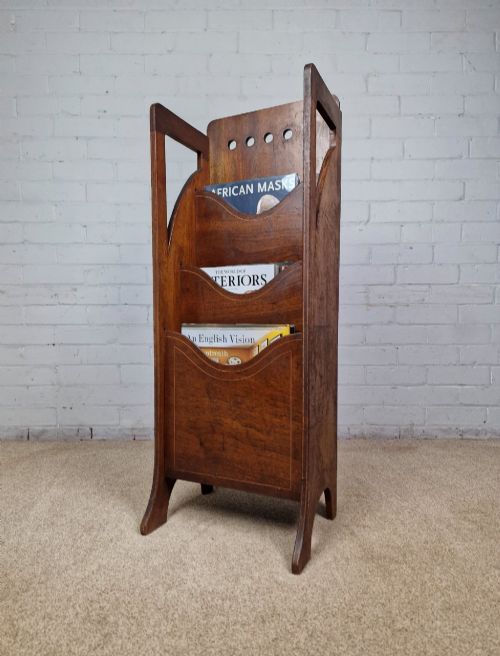
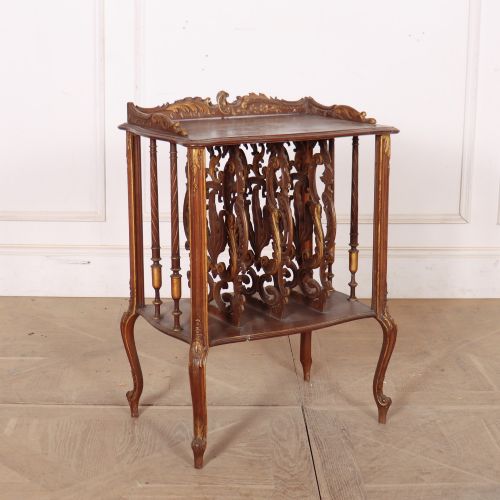
Examples range from early nineteenth-century mahogany stands to Arts and Crafts oak magazine racks from the early twentieth century. French regional variants also appear, spanning French Provincial to French Rococo Revival styles.
How they were made
Cabinet makers utilised dense hardwoods such as mahogany and walnut to construct the slatted vertical partitions and turned legs. Burr walnut veneers and fine boxwood inlay provide decorative surface detail on high-status Victorian and Regency specimens.
Cast brass castors frequently support the legs, allowing these heavy wooden pieces to move easily across carpets. Joinery methods reflect the period, incorporating fine dovetailing for drawers and carved details for French revival frames.
Wooden Canterbury Table Retail Price Guide 2026
Typical asking prices for wooden canterbury table among the pieces listed under this phrase on Sellingantiques today, from the lower quarter to the upper quarter. They describe what is for sale here now, not the wider market.
Current listings feature wooden canterbury tables spanning the Georgian, Regency, Victorian, and Arts and Crafts periods in mahogany, walnut, and oak.
What varies in quality
Quality rests upon the choice of timber figure, particularly the richness of burr walnut or the depth of mahogany grain. Finer pieces demonstrate precise boxwood stringing and crisp, hand-carved fretwork rather than mass-produced uniformity.
Structural integrity of the slatted dividers and the presence of original brass castors or working drawers distinguish superior workshop output from simpler utilitarian furniture.
Finnigans·Melissa White
The Wooden Canterbury Table Glossary
- Canterbury
- A low stand featuring vertical partitions, originally designed for holding sheet music and folios. It frequently incorporates a small drawer beneath.
- Burr Walnut
- A highly figured wood veneer taken from the burl growth of the walnut tree. It creates intricate, swirling patterns across table tops and panels.
- Whatnot
- A set of open display shelves supported by slender pillars, often combined with a canterbury base in Victorian examples.
- Boxwood Inlay
- Narrow strips of pale boxwood inserted into contrasting dark woods like mahogany or walnut to form geometric borders.
Wooden Canterbury Table: Frequently Asked Questions
What is a wooden canterbury table used for?
These versatile stands were originally built to hold sheet music, scores, and unbound folios near a piano or seating area. Today, owners utilise the vertical partitions to store current newspapers, magazines, and periodicals.
The flat upper surface also functions as an occasional table for small lamps or decorative items.
How do I date a wooden canterbury?
Dating relies on observing the timber choice, hardware, and prevailing decorative style of the era. Regency and Georgian examples tend to feature linear mahogany forms, whilst Victorian versions frequently employ burr walnut and carved details.
Arts and Crafts pieces from the early twentieth century show simpler, more robust oak construction.
Are all canterburys combined with tables?
Not every piece functions as a table, as many traditional designs consist solely of a compartmentalised rack on castors. Hybrid forms like the canterbury whatnot integrate display shelving above the rack.
Single-door cupboard variants also exist, concealing the compartments behind panelled wood.
Where should I place a canterbury in a room?
They fit naturally beside a sofa, armchair, or desk where reading materials accumulate throughout the day. Their compact footprint allows them to sit comfortably in tight spaces.
Keeping them away from direct heat sources protects the timber and delicate burr walnut veneers.