

Wooden Bureau Table
A wooden bureau table brings working order to a room, offering hidden compartments and fitted surfaces for correspondence and daily administration.
Wooden Bureau Table
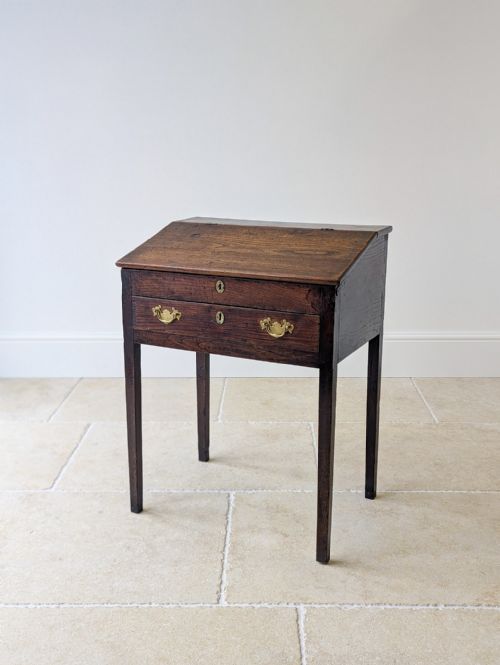
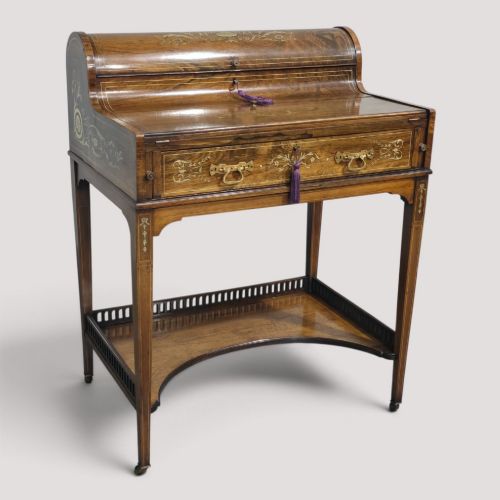
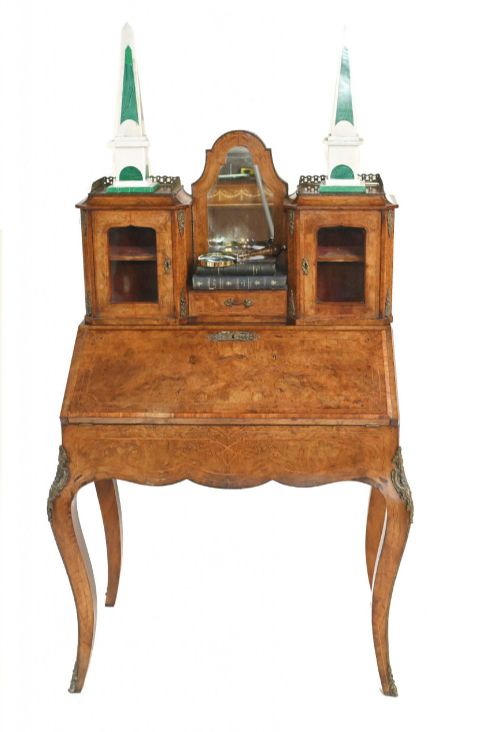
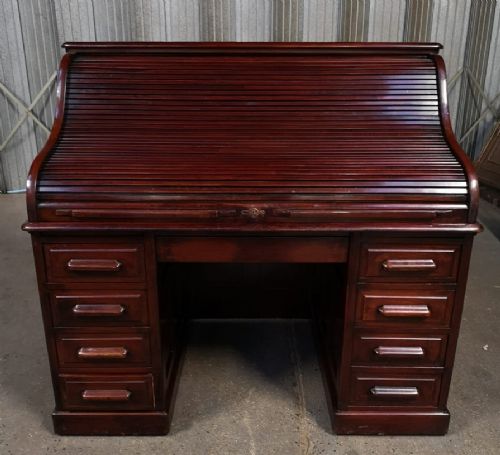
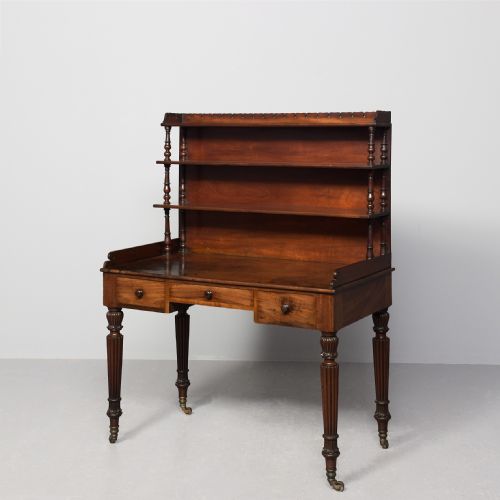
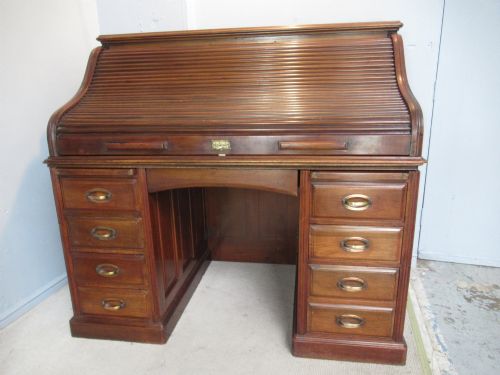
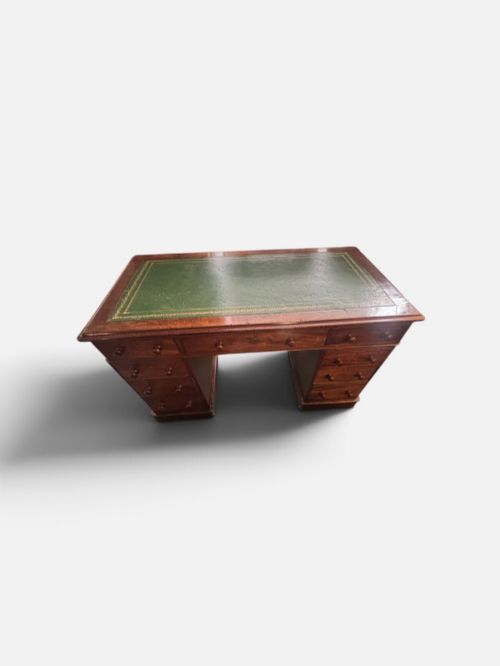
A wooden bureau table combines a writing surface with enclosed storage, taking the form of pedestal desks, cylinder desks, fall-front bureaux, and compact bonheur du jour designs. These pieces span the eighteenth, nineteenth, and early twentieth centuries, reflecting changing domestic habits from formal writing cabinets to functional home office desks.
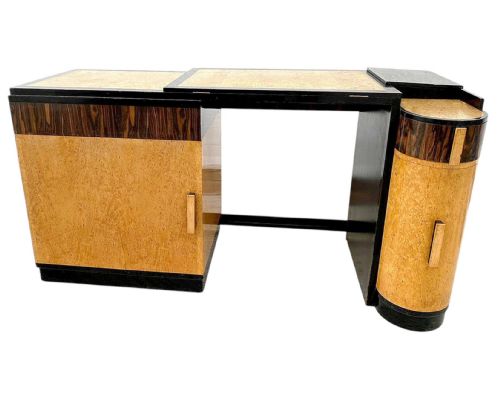
Victorian and Edwardian iterations appear frequently alongside Georgian examples and later Art Deco interpretations in maple, macassar, and walnut. Buyers encounter standard pedestal variants next to specialised ladies' writing tables and provincial hotel reception desks.
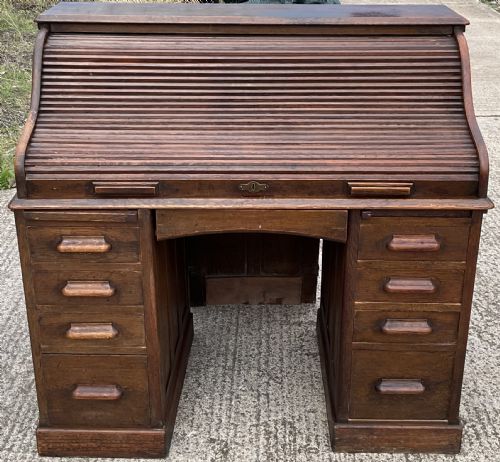
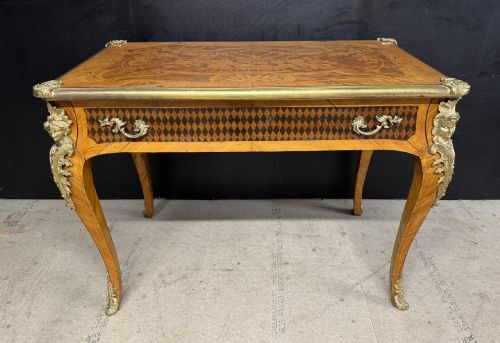
Regional variations extend from English mahogany and oak constructions to French walnut marquetry and Italian inlaid pieces. The selection ranges from robust rolltop office desks to delicate tabletop escritoires.
Materials and Construction
Cabinetmakers utilised dense hardwoods including mahogany, walnut, oak, and rosewood, often applying burr walnut or satinwood veneers to create decorative patterned surfaces. Brass fittings, leather writing inserts, and glass elements provide contrast and utility.
Joinery techniques involve dovetailing for drawer construction and precise marquetry inlay for decorative panels. Tambour slides, rolltops, and folding fall-fronts require intricate timber slats and mechanical linkages to operate smoothly.
Wooden Bureau Table Retail Price Guide 2026
Typical asking prices for wooden bureau table among the pieces listed under this phrase on Sellingantiques today, from the lower quarter to the upper quarter. They describe what is for sale here now, not the wider market.
Execution and Detail
The standard of craftsmanship shows in the selection of veneer figures, such as matching burr walnut or figured mahogany across drawer fronts, and the precision of interior satinwood compartment layouts. Superior examples feature integrated leather writing surfaces with blind tooling and solid brass hardware.
Structural integrity depends on the tightness of internal pigeonholes, the smooth travel of cylinder lids and pull-out writing slides, and the preservation of original marquetry without lifting or replacement.
James Mein of Kelso·Heal's·Étienne Kohlmann·George Faulkner Armitage
The Wooden Bureau Table Glossary
- Bureau plat
- A freestanding double-sided writing table with drawers, popular in French eighteenth and nineteenth-century cabinetmaking. These lack the sloping lid or superstructure of a traditional bureau.
- Bonheur du jour
- A small ladies' writing desk featuring a light framework with a small cabinet or shelving unit on the upper surface. These delicate pieces became fashionable during the eighteenth century and persisted through the Edwardian period.
- Tambour top
- A flexible writing surface formed of narrow strips of wood glued to canvas or leather backing, allowing the cover to slide smoothly around a curved track to conceal the desk interior.
- Pedestal desk
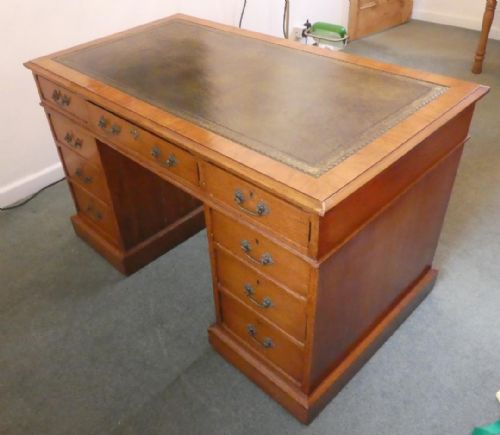
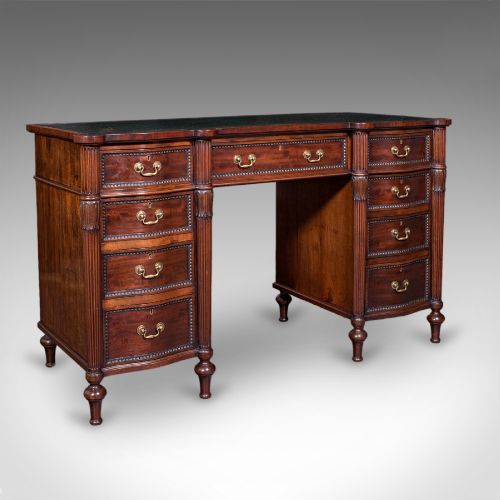
- A heavy writing desk supported by two banks of drawers resting on the floor, leaving a kneehole space in the centre.
- Carlton house desk
- A fitted writing table with a curved superstructure containing small drawers and pigeonholes, originated in the eighteenth century.
Wooden Bureau Table: Frequently Asked Questions
What is a wooden bureau table?
A wooden bureau table is a piece of furniture designed for writing and storing papers, combining a flat writing surface with drawers, pigeonholes, or a sloping lid.
These versatile forms range from compact ladies' writing tables to large partners and pedestal desks used in studies and libraries.
How do cylinder desks work?
Cylinder desks utilise a rotating quarter-circle wooden shutter that rolls back into the body of the desk to reveal an internal writing slide and pigeonholes.
When pulled forward and locked, the cylinder conceals the working surface and papers from view.
Where were these desks placed?
Historically, these desks occupied private studies, drawing rooms, libraries, and bedrooms for managing correspondence and household accounts.
Today, they function effectively in modern home offices and living spaces as statement writing furniture.
How do I distinguish Victorian from Edwardian pieces?
Victorian desks generally employ heavier timbers like solid mahogany and dark oak, featuring robust proportions and deep mouldings.
Edwardian furniture often displays lighter satinwood highlights, simpler lines, and delicate inlay work reflecting the transition towards twentieth-century aesthetic preferences.