



Wooden Bureau Bookcase
These wooden bureau bookcase examples combine a writing desk and shelved storage, offering practical workspace and display space in a single piece.
Wooden Bureau Bookcase
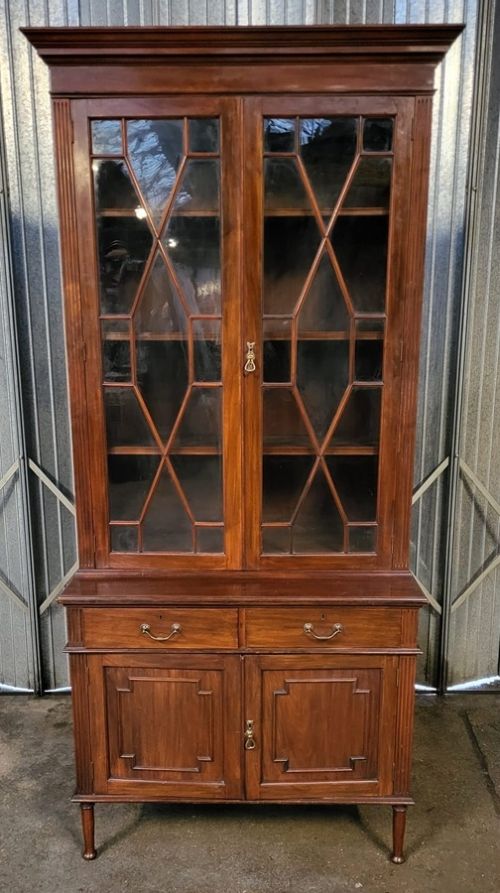
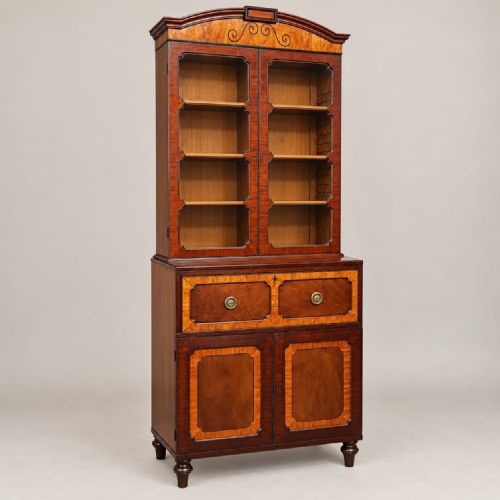
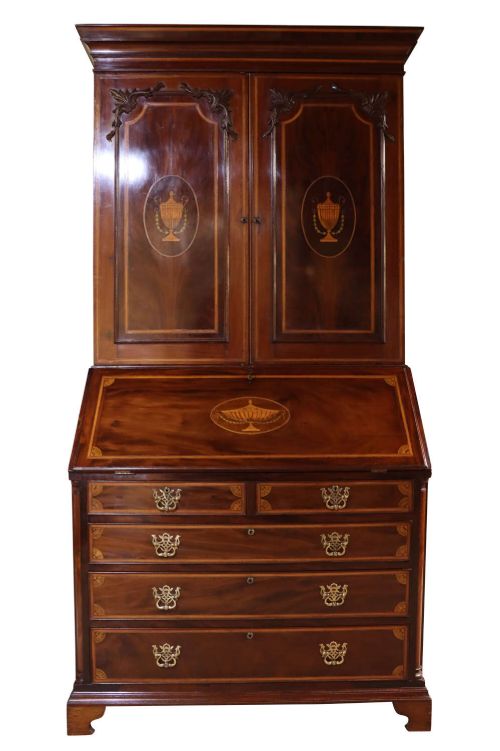
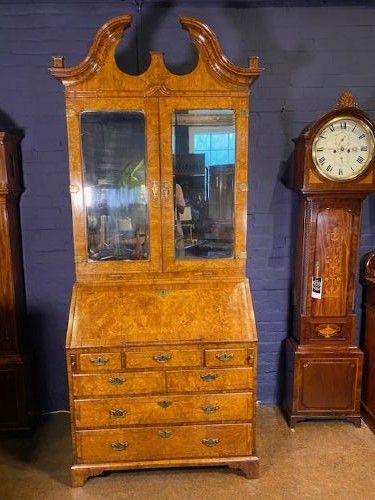
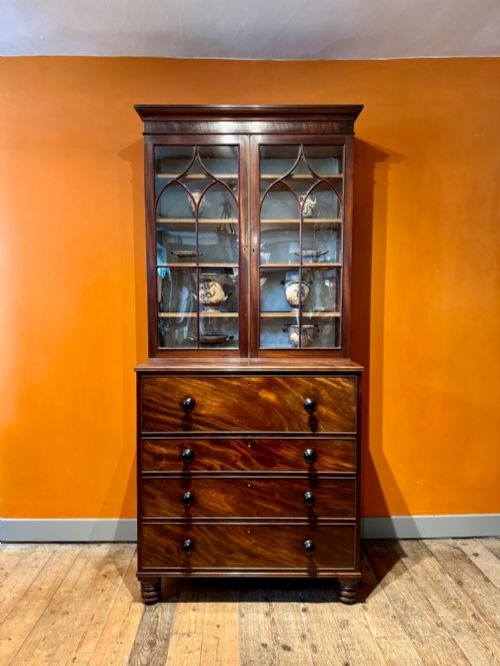
A wooden bureau bookcase combines a writing surface with enclosed upper shelving, appearing across Georgian, Regency, Victorian, Edwardian, and Art Deco periods. The most common form on this page uses figured timbers with glazed upper doors and a fall-front desk section concealing internal compartments.
Makers adapted these dual-purpose items for libraries, drawing rooms, and studies, producing everything from modest oak examples to large mahogany and satinwood library cabinets. Buyers encounter distinct regional and stylistic variations, including Danish painted surfaces, Queen Anne walnut, and Arts and Crafts oak designs.
The layout typically integrates a fitted interior inside the fall-front flap, providing small drawers and pigeonholes for correspondence alongside lower storage drawers. Structural proportions vary from slim two-part formations to dwarf cabinets and grand architectural facades.
How they were made
Cabinet makers constructed these pieces using solid timbers and decorative veneers over secondary woods, applying flame mahogany, walnut, satinwood, and oak across different periods. Wood inlay and brass hardware provided textural contrast and structural reinforcement.
Upper compartments incorporated glazed doors with timber astragals, while writing sections utilised hinged fall-front panels supported by internal brackets or pull-out lopers. Dovetail joinery secured the drawer construction, and turned bun handles or brass pulls completed the operation.
Wooden Bureau Bookcase Retail Price Guide 2026
Typical asking prices for wooden bureau bookcase among the pieces listed under this phrase on Sellingantiques today, from the lower quarter to the upper quarter. They describe what is for sale here now, not the wider market.
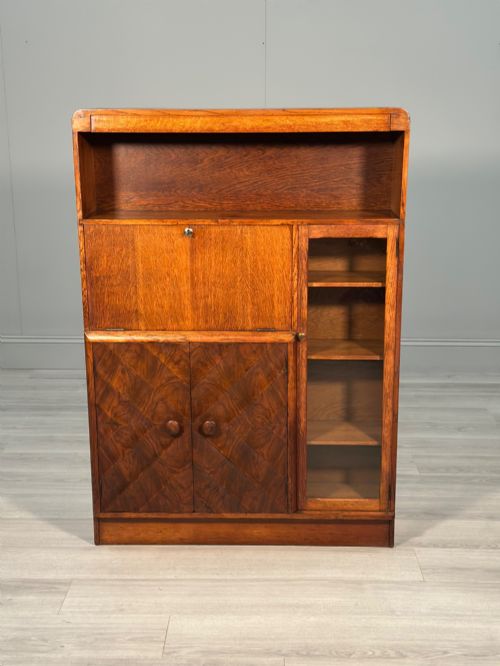
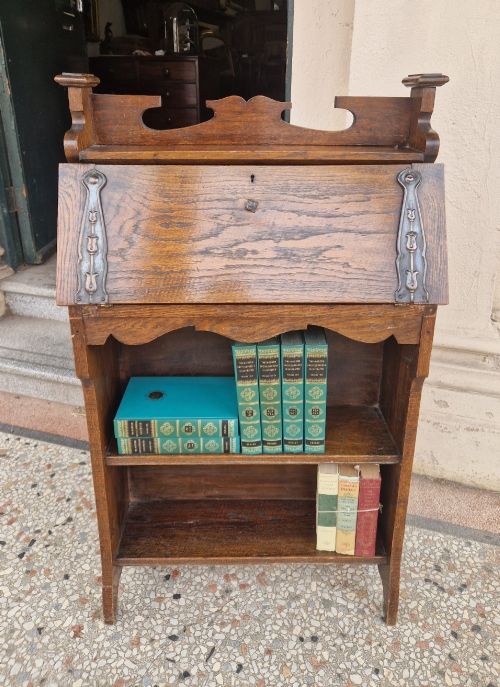
A slim Edwardian oak design manages to squeeze three bun handle drawers and a fitted interior into a compact two-part frame with its own key.
What varies in quality
The grading of quality rests on timber selection, such as the visual depth of flame mahogany or figured walnut, and the precision of inlaid decorative work. Superior examples demonstrate careful grain matching across the fall-front and drawer facades.
Internal complexity dictates distinction, separating simple shelving from elaborately fitted stationary interiors with secret compartments and miniature drawers. The integration of original glass, brass handles, and functional locks further differentiates standard production from master workshops.
E Gomme·Gillows·Maple & Co.
The Wooden Bureau Bookcase Glossary
- Secretaire bookcase
- A cabinet featuring a dedicated writing drawer or drop-front desk compartment combined with upper bookcase storage. This form provides a concealed workspace without requiring a full sloping bureau lid.
- Fall-front
- A hinged writing flap that opens downward to form a horizontal desk surface. It conceals pigeonholes and small drawers when closed.
- Astragal
- A wooden moulding profile dividing panes of glass within a bookcase door. These strips create geometric patterns across the upper cabinet.
- Flame mahogany
- A timber veneer displaying a rippled, flame-like grain pattern. Cabinet makers reserved this highly figured wood for prominent exterior surfaces.
- Loper
- A wooden slide pulled out from the cabinet frame to support an open fall-front desk. It prevents excessive strain on the hinges during writing.
Wooden Bureau Bookcase: Frequently Asked Questions
What is a wooden bureau bookcase used for?
These pieces function simultaneously as a private writing desk and a display cabinet for books or collections. The enclosed upper shelves protect volumes behind glass doors while the drop-front surface provides an active workspace.
Interior compartments organise letters and documents out of sight when the desk is closed. This dual capability made them essential furniture for domestic studies and reception rooms.
How do I identify the period of a wooden bureau bookcase?
Dating relies on stylistic markers, timber choices, and construction methods characteristic of specific eras. Georgian examples often feature rich mahogany with bracket feet, while Edwardian pieces frequently utilise inlaid satinwood and lighter proportions.
Victorian and William IV items tend toward heavier timber framing and darker walnut or mahogany finishes. Hardware styles and interior drawer construction provide additional chronological evidence.
Are these pieces suitable for modern homes?
Their vertical orientation makes efficient use of floor space while offering substantial storage capacity for both books and paperwork. The lockable fall-front desk conceals modern laptops and equipment when not in use.
Placing them requires attention to ceiling height and clearance for the drop-front desk flap. Rooms with adequate depth accommodate the open workspace comfortably without overcrowding.
What timber types should I look for?
Mahogany and oak dominate the surviving examples, supplemented by walnut, satinwood, and exotic veneers. Flame mahogany and figured walnut indicate high-status commissions from cabinet makers.
Lighter oak versions often reflect Edwardian or Arts and Crafts production values. Each wood type responds to maintenance and polishing routines differently over time.