





Wooden Bombe Commode
A wooden bombe commode brings unmistakable swell and presence to a room, offering generous storage wrapped in curved, confident lines.
Wooden Bombe Commode
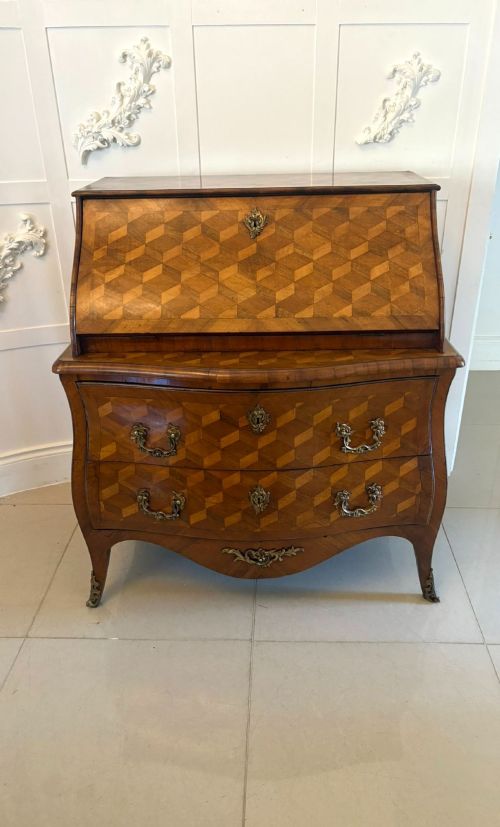
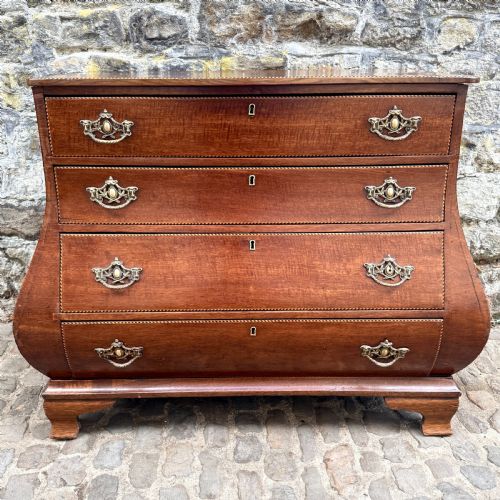
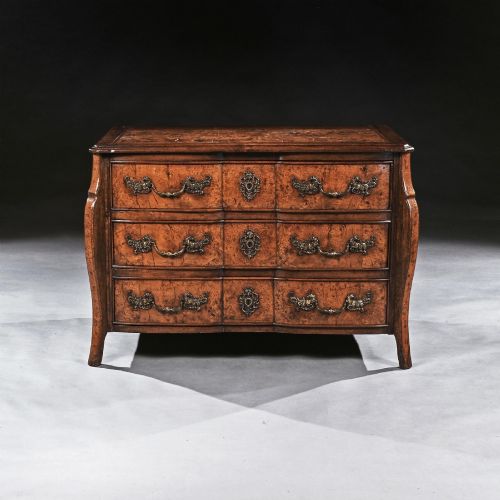
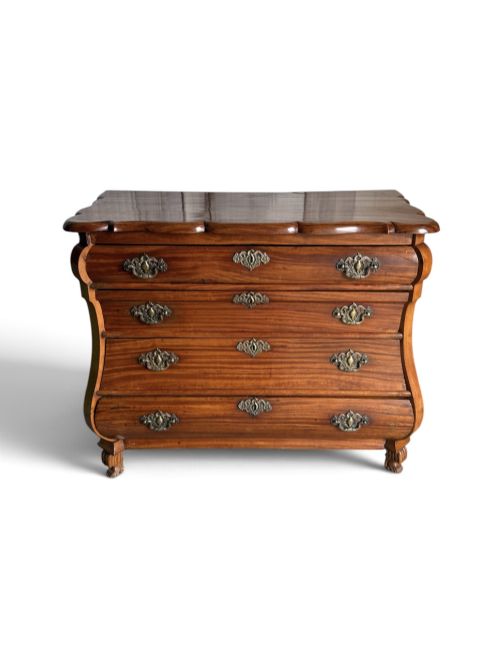
A wooden bombe commode is a drawer chest defined by its swelling, outward-curving sides and front, creating a substantial and sculptural silhouette. These pieces appear across periods from the eighteenth century through the twentieth, including Edwardian iterations and later revival works.
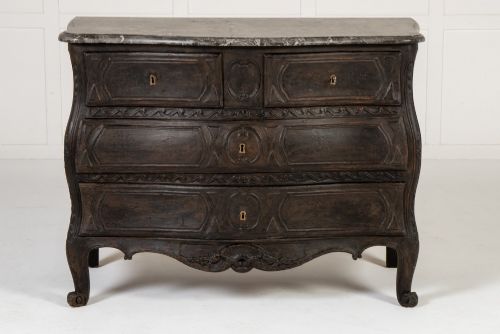
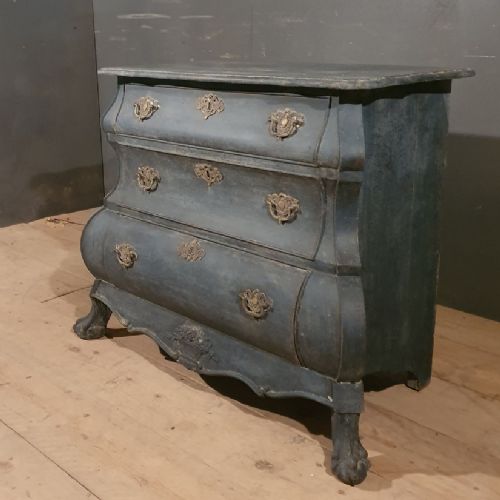
The versions met here range from French provincial and Louis XV styles to Dutch colonial and baroque revival forms. Makers utilised distinct regional profiles, from claw-footed Dutch chests to marble-topped French commodes and inlaid bureaux.
Object types span traditional commodes and chests of drawers alongside related desks and sideboards sharing the characteristic swollen form. Walnut, mahogany, and burr elm provide the primary wooden structures for these swelling bodies.
How they were made
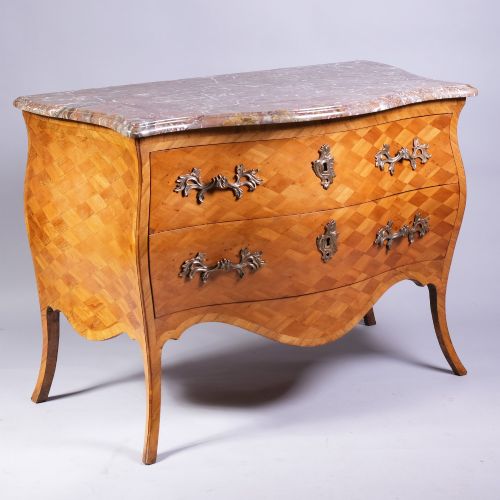
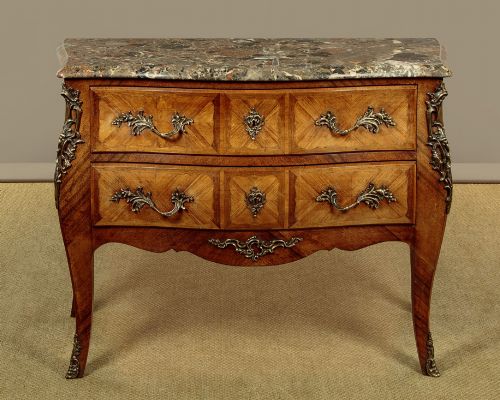
Construction relies on shaped timber frames supporting intricate veneers or solid wood panels that sweep outward. Cabinetmakers shaped the wood to achieve the signature contour, frequently applying parquetry and marquetry in walnut, satinwood, kingwood, and plum.
Mounts and surfaces receive specific decorative treatments, incorporating cast or gilt ormolu, bronze, and brass handles alongside fitted marble tops. Ebonised finishes, painted surfaces, and elaborate carving further define the exterior presentation of these chests.
Wooden Bombe Commode Retail Price Guide 2026
Typical asking prices for wooden bombe commode among the pieces listed under this phrase on Sellingantiques today, from the lower quarter to the upper quarter. They describe what is for sale here now, not the wider market.
The furniture spans French provincial, Louis XV revival, and Dutch baroque styles, taking the form of chests of drawers, desks, and sideboards.
What varies in quality
Quality rests in the precision of the curved joinery and the fluidity of the swelling profile across the front and flanks. Finer examples display masterwork parquetry or marquetry patterns that follow the difficult contours of the wood without distortion.
The integration of secondary materials dictates the tier of the piece, from the weight and chiselling of ormolu mounts to the thickness and selection of marble slab tops. Original hardware and sound structural timber elevate the standing of an individual commode.
Germain Landrin
The Wooden Bombe Commode Glossary
- Bombe
- A descriptive term for furniture with a convex, bulging outward swell on the front and sides. This bulging profile requires advanced cabinetmaking techniques to build stable curved carcasses.
- Ormolu
- Gilded bronze mounts applied to furniture for decorative accent around drawers and corners. These cast metal ornaments catch the light and emphasise the swelling contours.
- Parquetry
- Geometric wood inlay patterns assembled from small veneer pieces. Craftsmen arrange contrasting timbers like walnut and satinwood to form precise repeating motifs.
- Marquetry
- Pictorial or decorative veneer work using various coloured woods to create complex designs. This technique decorates the flat and curved surfaces alike.
- Commode
- A low chest of drawers originating in France. The form serves as both a functional storage unit and a decorative centerpiece.
Wooden Bombe Commode: Frequently Asked Questions
What is a wooden bombe commode?
A wooden bombe commode is a decorative chest of drawers characterised by its swelling, rounded sides and front. The form emerged prominently in European cabinetmaking during the eighteenth century.
Craftsmen built these chests using timbers like walnut, mahogany, and burr elm, often finished with marquetry, parquetry, or painted details.
Where were these commodes made?
These commodes originate primarily from French and Dutch workshops, with examples also appearing from German makers. Regional styles range from provincial French curves to Dutch baroque and colonial interpretations.
Each region applied distinct decorative preferences, such as marble tops in France or claw feet in Dutch variations.
How do I style a bombe commode?
A bombe commode works well as a statement piece in a hallway, living room, or bedroom due to its sculptural silhouette. The generous top surface accommodates lamps, mirrors, or display objects.
Because the sides swell outward, the piece requires adequate floor space to allow its curved profile to remain visible and unobstructed.
How do I tell periods apart?
Eighteenth-century examples often feature hand-shaped solid woods, intricate marquetry, and regional joins associated with specific European provinces. Later nineteenth-century revival pieces reflect historical Louis styles with machine-finished precision or heavier mountings.
Examining the interior timbers, backboards, and dovetailing helps distinguish period work from twentieth-century interpretations.