



Wooden Board Game Box
A wooden board game box offers a tactile piece of parlour history, housing chess, backgammon, and cribbage for fireside competition.
Wooden Board Game Box
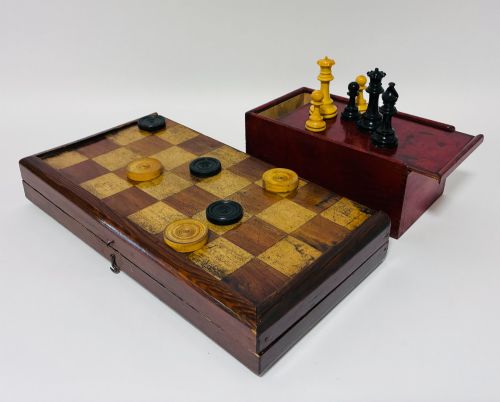
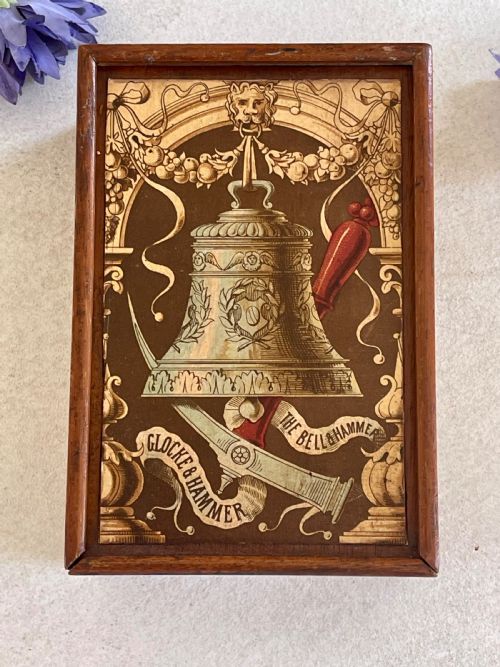
A wooden board game box serves as both a container and a playing surface for traditional pastimes, often housing pieces internally when folded or closed. The selection spans compact cribbage boxes and substantial compendiums holding multiple sets.
The materials reflect the tastes of the nineteenth century and the early twentieth century, utilising dense hardwoods like mahogany, rosewood, and walnut. Many examples incorporate specialised elements such as boxwood for chessmen or bone for scoring.
Origins range from English workshops utilising local timbers to more exotic imported pieces like Ottoman Revival designs and Republic Period Chinese mahjong sets. Folding boards and slide-lid boxes dominate the forms encountered.
Construction and materials
Cabinetmakers constructed these boxes from durable timbers such as mahogany and walnut, occasionally employing decorative veneers like burr walnut or kingwood to enhance the visual grain. Tunbridge Ware examples display intricate mosaic woodwork formed from tiny coloured wood blocks.
Inlays of boxwood and ebony define the playing squares on folding boards, while brass hinges and catches secure the lids and folding leaves. Internal compartments rely on simple wooden dividers to keep counters, dice, and playing pieces organised.
Wooden Board Game Box Retail Price Guide 2026
Typical asking prices for wooden board game box among the pieces listed under this phrase on Sellingantiques today, from the lower quarter to the upper quarter. They describe what is for sale here now, not the wider market.
Object forms span simple cribbage sliding boxes, folding chess boards, and multi-game compendiums alongside imported mahjong sets.
Judging quality and character
The standard of a box rests upon the precision of its joinery and the quality of its timber selection, where figured grains and book-matched veneers elevate a piece beyond standard utility. Finer examples integrate meticulous inlay work or specialised decorative techniques like Tunbridge mosaic.
Completeness dictates the standing of a compendium, as original fitted interiors holding matched sets of chessmen, cribbage pegs, or counters carry greater integrity than those with later replacements. The crispness of carved details on bone elements and wooden pieces further distinguishes superior examples.
The Wooden Board Game Box Glossary
- Compendium
- A single box containing the equipment for multiple different games, often arranged in fitted internal trays. These comprehensive sets typically include boards and pieces for chess, backgammon, and card games.
- Cribbage Box
- A small sliding-lid or hinged box specifically designed to hold a pack of cards and scoring pegs. They frequently feature a drilled cribbage track directly on the lid.
- Tunbridge Ware
- Ornamental woodwork decorated with mosaics made from many tiny pieces of naturally coloured woods. This technique creates detailed geometric or pictorial designs on the lid surfaces.
- Boxwood
- A dense, pale yellow wood frequently used for the lighter pieces in chess sets and for inlay work. Its fine grain allows for sharp turning on a lathe.
Wooden Board Game Box: Frequently Asked Questions
What games do these boxes contain?
These boxes typically house traditional parlour pastimes, most commonly chess, backgammon, and cribbage.
Larger compendiums may also include dominoes, draughts, and dice alongside the main boards.
How do you date a wooden game box?
Dating relies on timber choices, hinge types, and the overall style of decoration characteristic of periods like the Victorian era or the nineteenth century.
Fitted internal layouts and game instructions printed inside the lid also provide clues to the era of manufacture.
Are the playing pieces usually original?
Many boxes retain their original matched sets of carved wooden or bone pieces, particularly within fitted compendiums and travel sets.
Some examples have accumulated replacement pieces over time due to the frequent use of smaller components.
How were travel games designed differently?
Travelling sets often feature compact folding boards that secure the pieces internally during transit.
Some nineteenth-century examples incorporate clever peg-in-hole designs or magnetic elements to keep pieces stable while moving.