

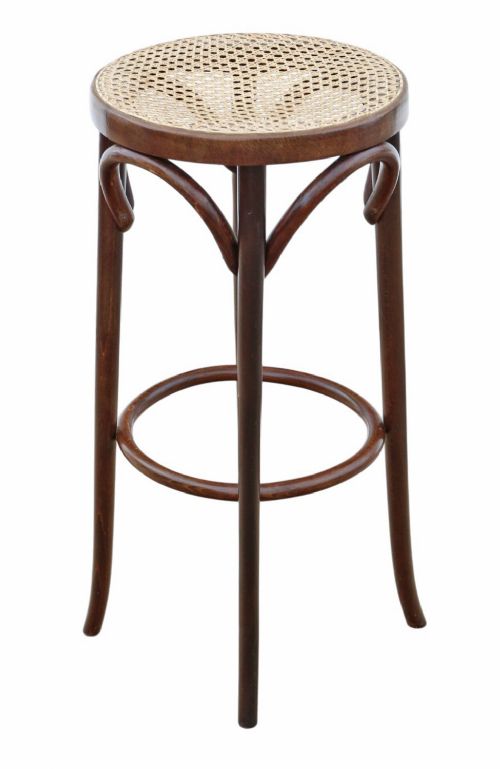


Wooden Bistro Seating
Wooden bistro seating brings practical cafe history into the home through light bentwood frames and cane or plywood seats.
Wooden Bistro Seating
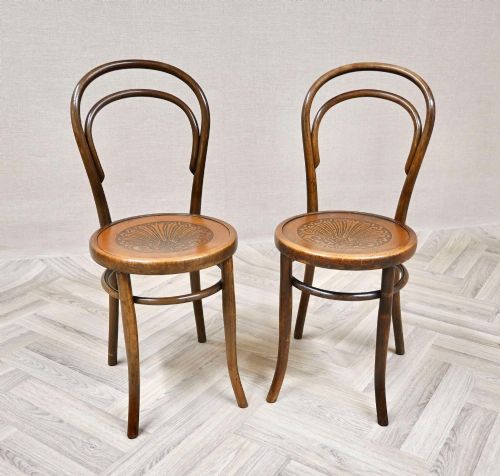
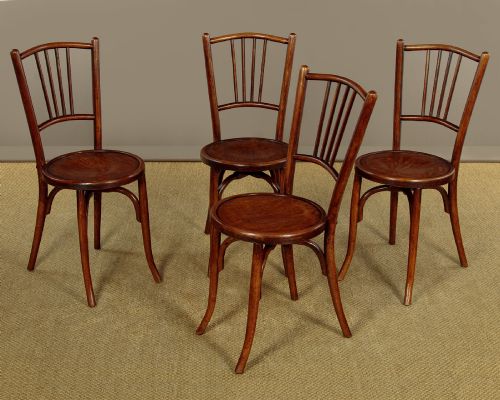
Wooden bistro seating comprises dining chairs, bar stools and stools designed for commercial hospitality spaces and domestic interiors. Buyers searching for wooden bistro seating encounter items from the Edwardian period as well as the decades spanning 1900 to 1960.
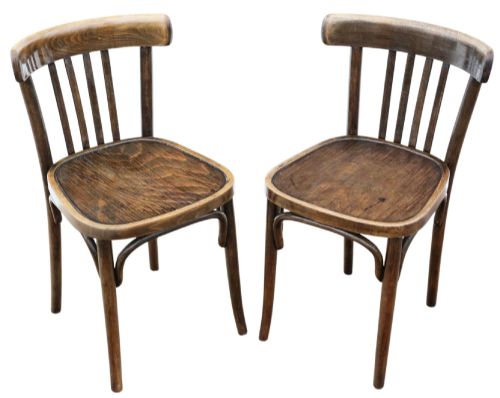
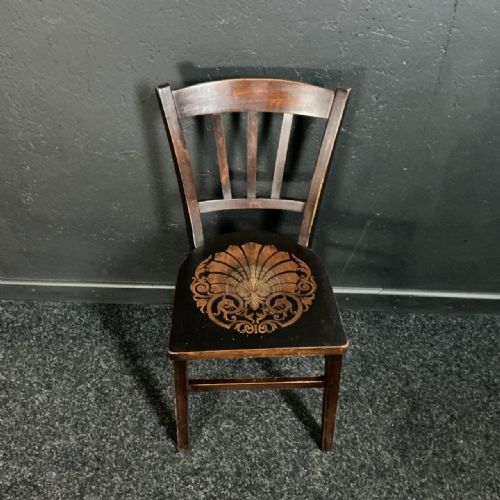
The most common form on this page is the classic side chair, often found in matched or assembled sets of various sizes. These pieces reflect European bistro, Thonet, Vienna bentwood and mid-century bentwood styles.
Origins include workshop and factory production bearing names such as Thonet and Codina, alongside broader European manufacture. Pieces range from single high stools to large dining sets suited for everyday use around a kitchen table.
How they were made
Manufacturers utilised beech and beechwood as the primary timber, taking advantage of the wood's strength and responsiveness to steam-bending techniques. This process allowed craftsmen to curve solid lengths into organic profiles for backrests and rear legs without losing structural integrity.
Seats incorporate shaped plywood or woven cane inserted into wooden frames, fastened securely to withstand the rigours of daily cafe service. Selected chairs feature upholstered fabric surfaces added during production or through later refurbishment.
Wooden Bistro Seating Retail Price Guide 2026
Typical asking prices for wooden bistro seating among the pieces listed under this phrase on Sellingantiques today, from the lower quarter to the upper quarter. They describe what is for sale here now, not the wider market.
Cafe patrons have accidentally rocked back on two legs of these chairs since the nineteenth century.
What varies in quality
Construction methods and timber selection divide standard production from finer examples, particularly in the precision of the steam-bent joints and the uniformity of the grain. Thicker gauge timber and robust internal corner blocks distinguish pieces built to endure heavy commercial environments from lighter domestic alternatives.
Original maker branding, whether stamped into the underside of the seat or paper-labeled, alters the standing of a piece within the market. The consistency across multi-item sets, where matched frames maintain identical proportions and wear patterns, also defines higher-tier groups.
Thonet·Codina
The Wooden Bistro Seating Glossary
- Bentwood
- Wood that has been heated with steam to make it pliable, allowing craftsmen to bend it into curved shapes. This technique defines the distinct profiles of traditional cafe seating.
- Beech
- A dense, hard timber commonly used for European chairs and stools because it takes steam-bending exceptionally well. Its pale grain accepts various stains and finishes.
- Cane
- Woven material made from the peeled bark of rattan palms, used historically to form lightweight, breathable chair seats. It provides flexibility and support.
- Side chair
- A chair without arms designed primarily for dining tables, making up the majority of cafe and bistro seating sets. These items save space around crowded tables.
Wooden Bistro Seating: Frequently Asked Questions
Are wooden bistro chairs sturdy?
Bentwood chairs derive remarkable strength from their steam-bent frames, which distribute weight evenly across curved structural members without relying on heavy joinery. They were engineered specifically to withstand the daily demands of bustling European cafes.
While lightweight and easy to move, these chairs remain durable through decades of regular use when the original glue and screw connections stay tight and dry.
How do I date a bentwood chair?
Dating relies on examining maker stamps, paper labels, screw types and the curvature of the backrest design. Earlier pieces from around 1900 often feature distinct manufacturer burn marks beneath the seat base.
Stylistic shifts also provide clues, moving from ornate Art Nouveau flourishes towards cleaner mid-century bentwood lines by the 1950s and 1960s.
Can I mix different bentwood chair styles?
Assembling a matched set can prove challenging due to subtle variations in seat height, backrest angles and timber tones produced by different factories. Many buyers successfully combine chairs of similar vintage around a table for a relaxed aesthetic.
Matching the overall era and wood finish helps maintain visual harmony when gathering disparate side chairs and stools into a single dining group.
How do I care for cane seats?
Cane seats require gentle cleaning with a damp cloth and occasional moistening from underneath to keep the natural rattan supple. Avoiding direct heat sources prevents the material from drying out and becoming brittle.
Weight distribution matters greatly with woven seats, so sitting properly rather than kneeling on the cane ensures the webbing lasts for many years.