



Wooden Bar Back Chairs
Wooden bar back chairs bring linear elegance and solid timber construction to the dining room, spanning the Georgian, Regency, and Victorian periods.
Wooden Bar Back Chairs
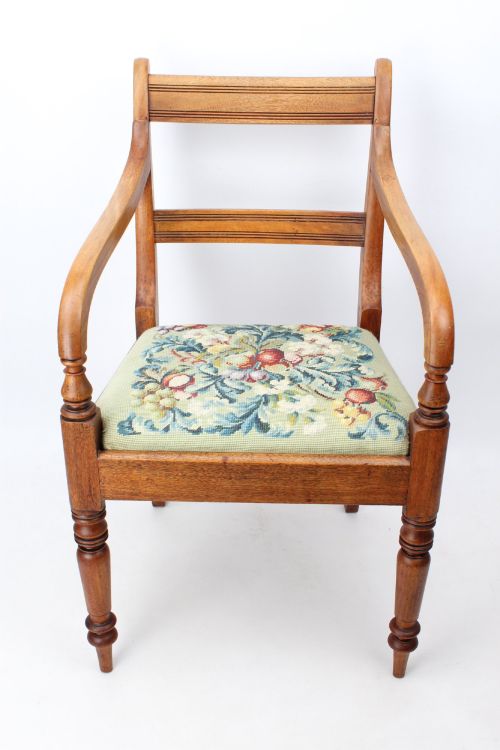
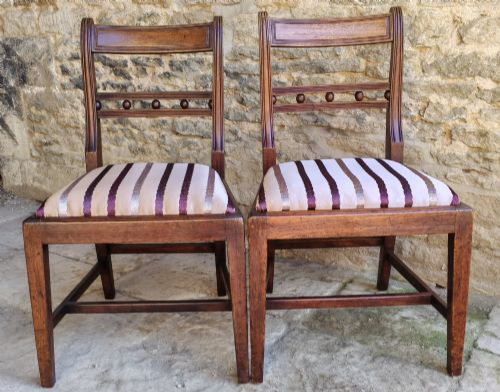
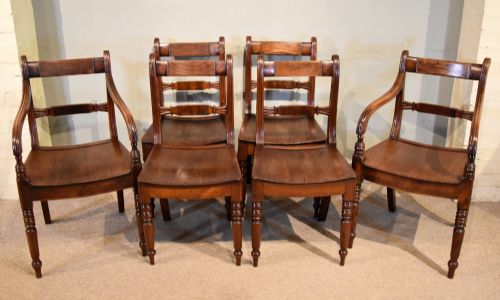
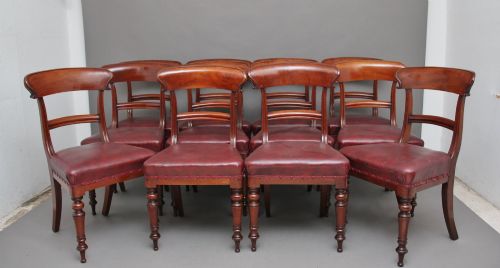
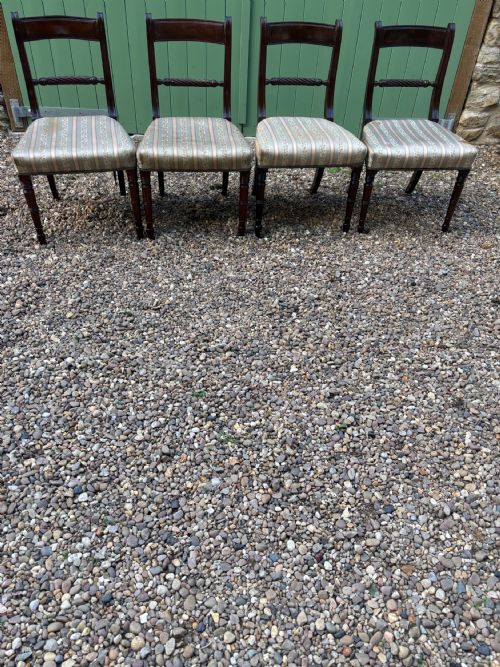
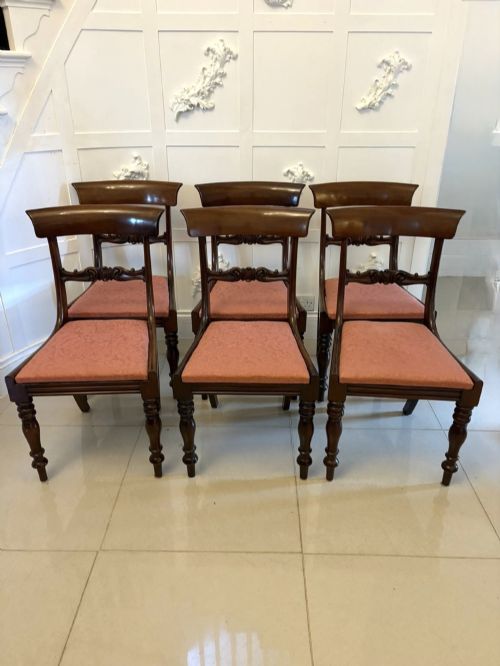
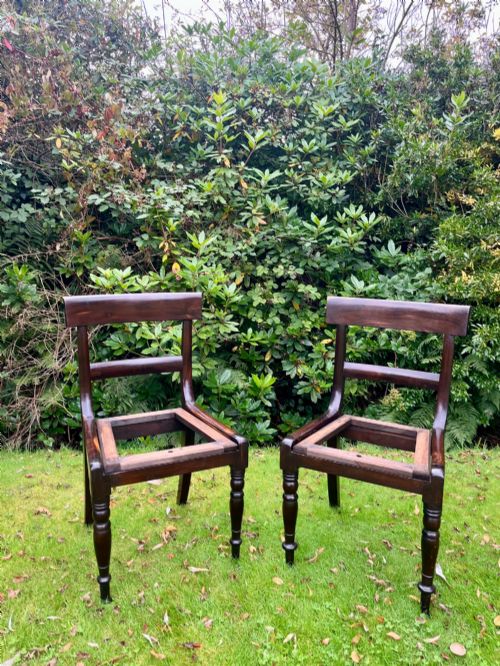
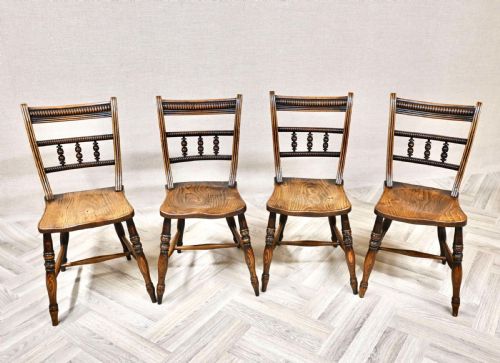
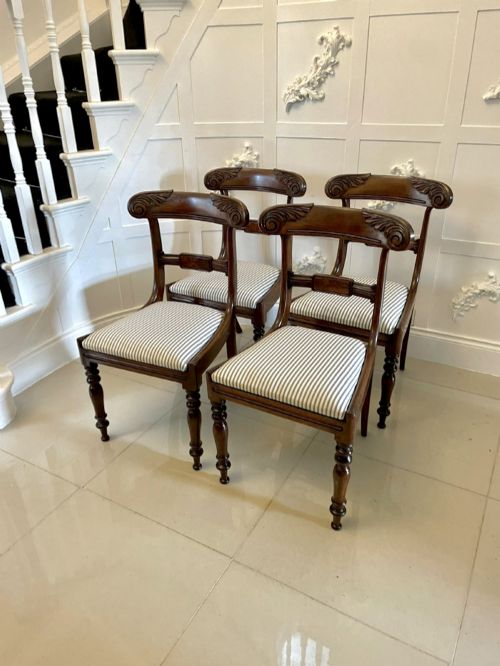
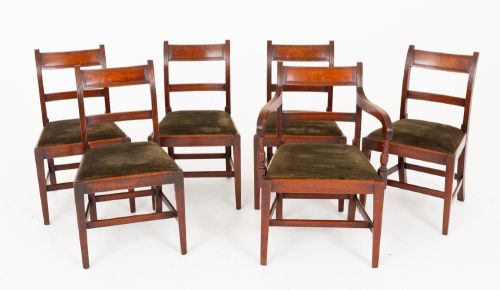
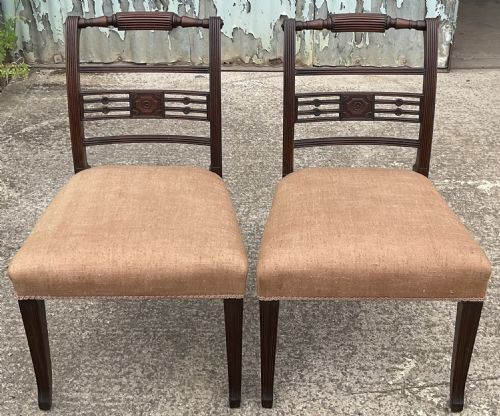
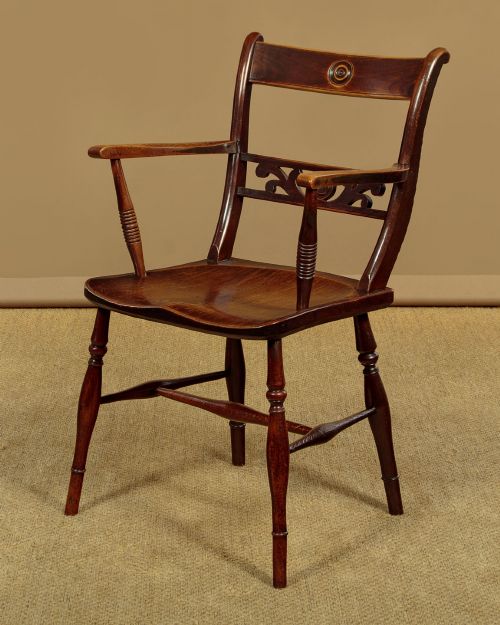
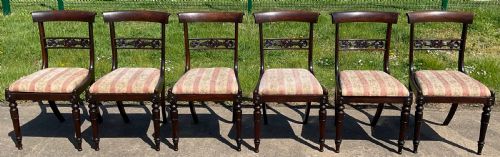
Wooden bar back chairs encompass dining chairs, armchairs, and carvers shaped by cabinet makers during the Georgian, Regency, and Victorian eras. These seats display horizontal splats or rails across the backrest, often taking the form of tablet tops or carved bar sections.
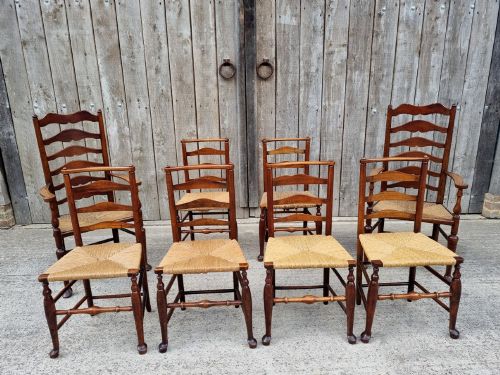
The versions most commonly met on this page are mahogany dining sets from the Regency and Georgian periods, alongside elm and beech Windsor variants from the Victorian countryside. Sets range from pairs up to ten or twelve matching seats.
Origins stretch from English workshops to Scottish cabinet makers working in laburnum, pollard oak, and birch. Forms vary from simple kitchen seating to grand dining chairs with sabre legs or inlaid details.
How they were made
Cabinet makers utilised dense hardwoods such as mahogany, rosewood, and oak for formal dining sets, relying on natural grain and subtle inlay to create visual interest. Country workshops turned to local timbers like elm, beech, birch, and laburnum for kitchen and Windsor chairs.
Construction involved robust joinery, with turned legs, overstuffed upholstery pads, and steam-bent or shaped wooden rails secured to the uprights. Seats were traditionally stuffed with horsehair and finished in fabric, velvet, or textile upholstery.
Wooden Bar Back Chairs Retail Price Guide 2026
Typical asking prices for wooden bar back chairs among the pieces listed under this phrase on Sellingantiques today, from the lower quarter to the upper quarter. They describe what is for sale here now, not the wider market.
Listings feature mahogany, elm, beech, birch, pollard oak, and laburnum across Georgian, Regency, and Victorian periods.
What varies in quality
The selection of timber dictates the baseline quality, with figured mahogany and pollard oak sitting above standard utility woods. Grain matching across a large set of dining chairs demands superior stock selection from the maker.
Refinement of carving and inlay separates standard production from high-status pieces. Crisp execution on the horizontal bar and well-proportioned legs indicate a workshop of higher standing.
The Wooden Bar Back Chairs Glossary
- Bar back
- A chair design featuring one or more horizontal wooden rails across the uprights instead of a traditional vertical splat. This form gained popularity during the Regency and Victorian periods.
- Carver chair
- An armchair designed to sit at the head of a dining table, sharing the stylistic motifs of the smaller side chairs in a set. These often feature scrolled or curved elbow supports.
- Windsor chair
- A wooden chair constructed with a solid elm or hardwood saddle seat into which the legs and back spindles are wedged directly. Regional variations include the Oxford pattern with a central bar back.
- Sabre leg
- A curving, outward- tapering chair leg that mimics the sweep of a cavalry sword. This form appears frequently on Regency dining seats.
- Pollard oak
- Timber taken from oak trees that have been pollarded, producing wood with a dense, highly decorative knotty grain. It was utilised by Regency cabinet makers for striking surface effects.
Wooden Bar Back Chairs: Frequently Asked Questions
How do I date a wooden bar back chair?
Dating relies on timber choice, leg style, and the profile of the horizontal back rail. Georgian and Regency examples often display figured mahogany with sabre or turned legs, while Victorian pieces incorporate heavier proportions or revival details.
Construction methods inside the seat frame also provide clues. Hand-cut joints and original webbing point to earlier periods, whereas later Victorian versions may show standardised machine production.
Can I mix bar back chairs with a modern table?
Wooden bar back chairs adapt well to modern interiors because their clean horizontal lines bridge traditional and contemporary aesthetics. Pairing an antique set with a simple timber or glass table highlights the warmth of the old wood.
When mixing periods, consider the wood tone and seat height to ensure comfort around the table. Mahogany and oak share neutral undertones that sit comfortably beside modern minimalist design.
What is the difference between a side chair and a carver?
Side chairs are built without arms to allow multiple seats to fit compactly along the sides of a dining table. They feature narrower proportions suited for general seating.
Carvers include supportive armrests and wider frames, traditionally placed at either end of the table for the host. They share the same decorative bar back design as the accompanying side chairs.
How should I care for antique chair wood?
Antique timber benefits from occasional application of quality beeswax to nourish the grain and protect the polish. Avoid placing chairs in direct sunlight or near heat sources that can dry out the wood.
Routine dusting with a soft, dry cloth prevents grime accumulation. Checking the joints periodically ensures the frame remains stable under daily use.