

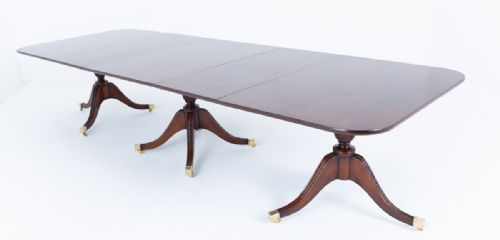
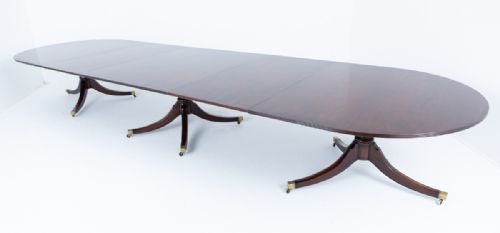


Wooden Banqueting Table
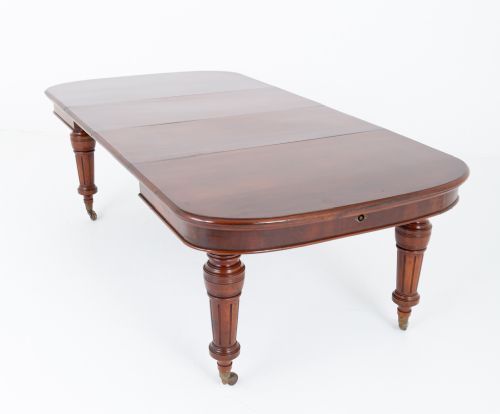
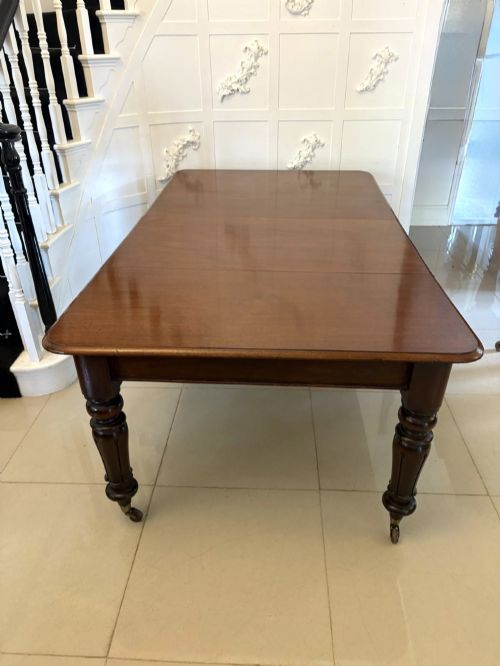
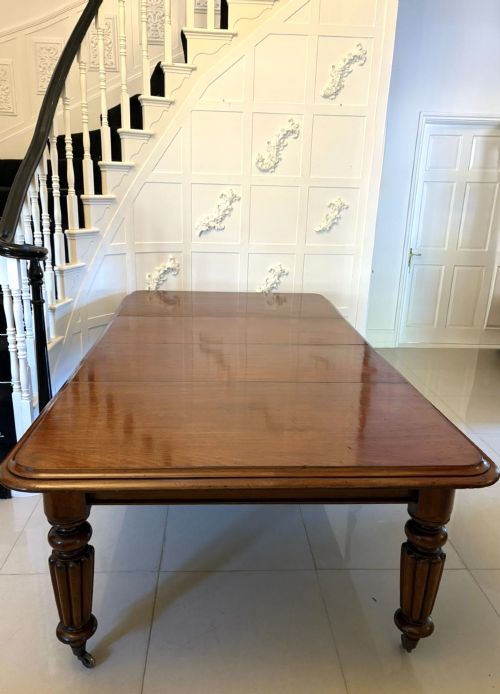
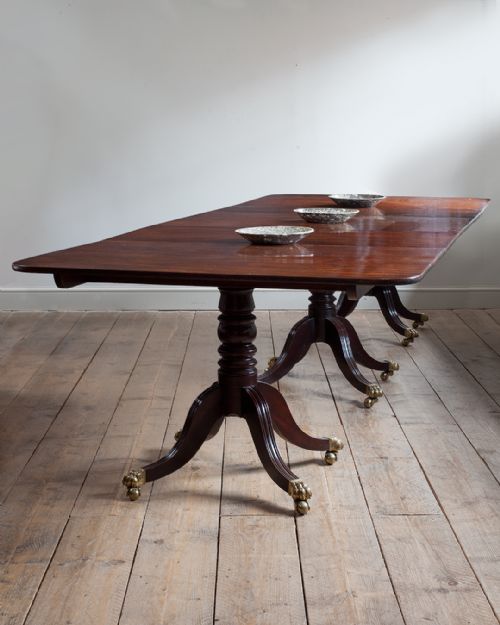
A wooden banqueting table provides the grand scale needed for large gatherings, appearing here mostly as extending forms in mahogany.
Wooden Banqueting Table
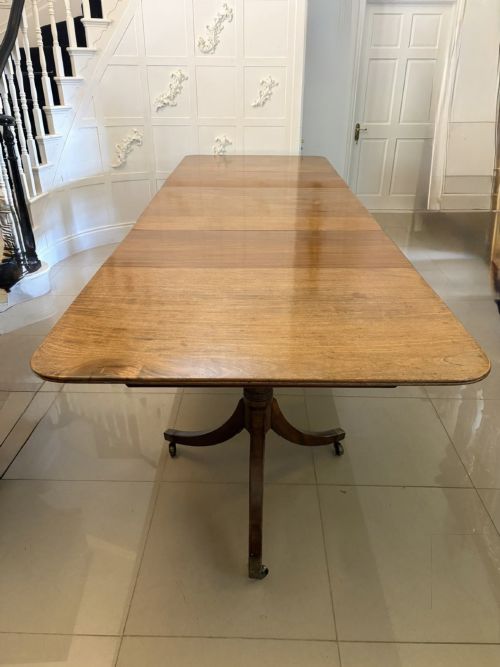
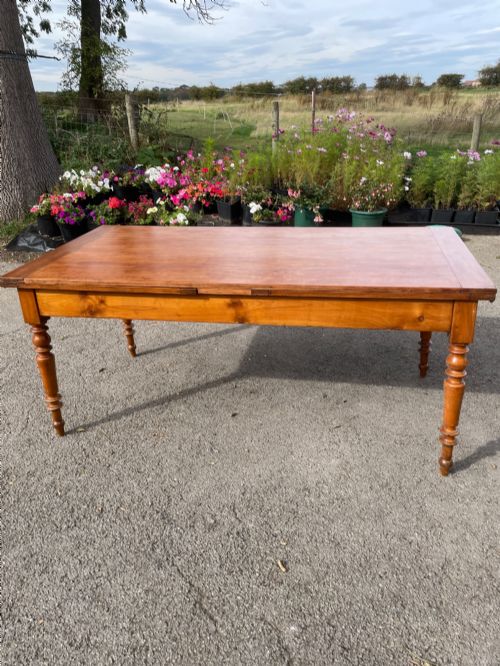
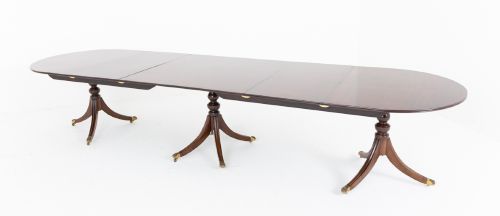
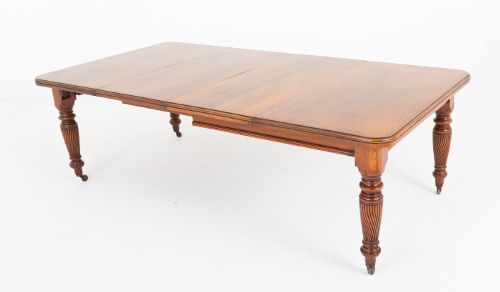
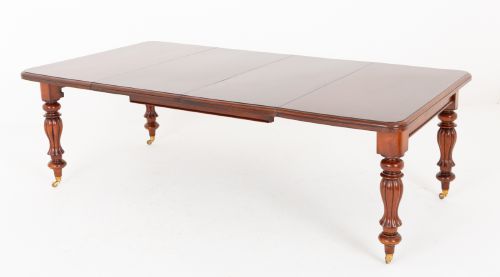
A wooden banqueting table serves large groups, frequently seating ten to twenty-two people for formal dining. Buyers seeking a wooden banqueting table encounter numerous extending formats, from multi-pedestal designs to wind-out tables fitted with extra leaves.
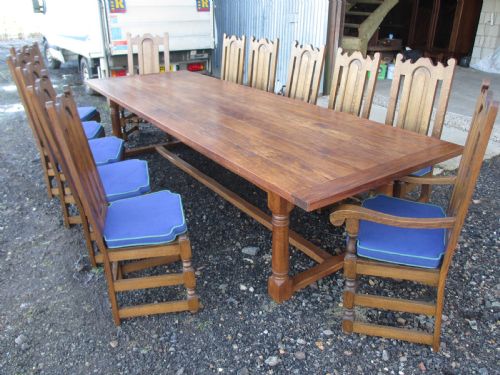
The selections span the Georgian, Regency, and Victorian eras, alongside later revival pieces. Mahogany predominates, supported by oak, walnut, cherrywood, and rosewood constructions.
Materials and Construction
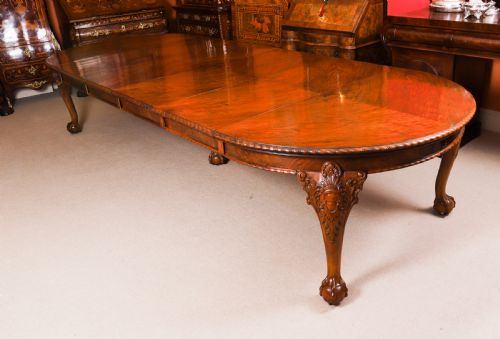
Cabinet makers utilised solid timbers alongside veneers, selecting flame mahogany, burr walnut, and pollard oak for prominent top surfaces. Brass fittings often secure pedestal bases, while internal wooden mechanisms allow leaves to expand.
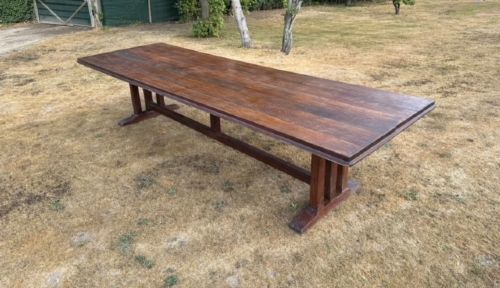
Pedestal columns rest on tripod or quadruped legs, frequently terminating in brass castors to facilitate movement. Refectory formats rely on heavy oak framing joined with traditional pegged construction.
Wooden Banqueting Table Retail Price Guide 2026
Typical asking prices for wooden banqueting table among the pieces listed under this phrase on Sellingantiques today, from the lower quarter to the upper quarter. They describe what is for sale here now, not the wider market.
Tables featuring twenty-two seats require considerable elbow grease when winding out the mahogany leaves for a feast.
Distinctions in Standard
Quality rests upon the selection of timber figure, such as well-matched Cuban mahogany or striking flame veneers across the leaves. Maker attribution, particularly to workshops like Gillows, elevates a piece through superior mechanism engineering and refined carving.
The integrity of the extending mechanism and the presence of matching original leaves determine everyday utility. Proportion, timber depth, and crispness of detail on pedestal bases differentiate standard production from exceptional examples.
Maple And Co·Gillows Lancaster
The Wooden Banqueting Table Glossary
- Extending table
- A dining table designed with a central gap to receive removable leaves, increasing overall seating capacity. This mechanism allows the furniture to adapt for daily use or large gatherings.
- Pedestal table
- A table supported by one or more central columns rather than four corner legs. These vertical supports often branch into carved legs fitted with castors.
- Wind-out table
- An extending table operated by a detachable metal crank handle that turns an internal screw mechanism. This device draws the table sections apart evenly to insert leaves.
- Refectory table
- A long, narrow dining table traditionally associated with monasteries and large halls. Early examples feature sturdy wooden stretchers running low between the legs for stability.
- Flame mahogany
- Timber cut from the branch junction where grain patterns ripple outward in a flame-like motif. Cabinet makers prized this figure for highly visible table surfaces.
Wooden Banqueting Table: Frequently Asked Questions
How do wind-out tables work?
Wind-out tables use an internal metal screw mechanism operated by a crank handle. Turning the handle draws the table halves apart to create a gap for insertion leaves.
Once the leaves are placed in position, the handle turns in reverse to lock the sections tightly together.
How many people do these seat?
These large tables commonly accommodate ten to fourteen diners, while specific grand examples seat up to twenty-two guests.
Capacity depends on the length of the main frame and the number of leaves deployed.
Are original leaves important?
Original leaves ensure consistent timber ageing, colour matching, and grain alignment across the entire top surface.
Replacement leaves manufactured later can disrupt the visual harmony when the table is fully extended.