

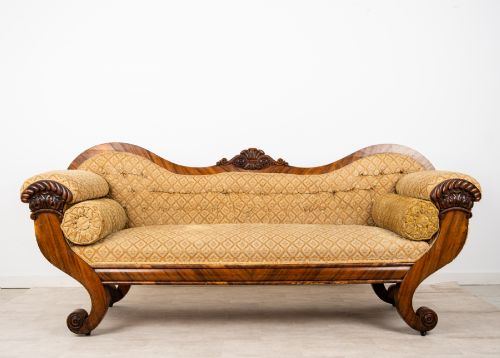


Wooden Arm Sofa
These wooden arm sofa pieces bring nineteenth-century craft into modern rooms, offering period seating built from rich timbers.
Wooden Arm Sofa
A wooden arm sofa combines exposed timber frames with upholstered seating, appearing in forms from chair-back settees to chaise longues. You will frequently encounter nineteenth-century examples spanning the Regency, Victorian, and Edwardian periods.
Makers utilised various traditional seating formats, producing both scroll-end couches and structured chair-back settees. Each piece demonstrates the prevalent cabinet-making aesthetics of its specific decade.
How they were made
Workshops constructed the structural frames primarily using solid mahogany, walnut, and maple timbers, often enhancing surfaces with ebonised finishes or satinwood inlay. Craftsmen shaped these woods through steam-bending, carving, and turning to form distinct scroll ends and exposed wooden arms.
Upholstered sections relied on traditional stuffing techniques enclosed within heavy textiles such as hessian and decorative top fabrics. Brass accents and detailed wood carving completed the decorative scheme of the frame.
Wooden Arm Sofa Retail Price Guide 2026
Typical asking prices for wooden arm sofa among the pieces listed under this phrase on Sellingantiques today, from the lower quarter to the upper quarter. They describe what is for sale here now, not the wider market.
What varies in quality
Excellence in these seating pieces rests upon the crispness of the timber carving and the architectural proportion of the frame. Superior examples display sophisticated timber selection, such as burr-walnut veneers or finely figured mahogany.
The integration of the exposed wooden arms with the upholstered body dictates the overall structural integrity. Finer pieces maintain rigid joinery and fluent lines across both the show-wood and the upholstered components.
Thonet
The Wooden Arm Sofa Glossary
- Chaise Longue
- An upholstered sofa in the form of a chair with a seat long enough for the legs. These pieces typically feature a single raised end for reclining.
- Biedermeier
- A central European style dating from the nineteenth century prioritising utilitarian comfort and clean architectural lines. Pieces from this aesthetic utilise domestic woods without excessive ornamentation.
- Bentwood
- A manufacturing technique involving the steam-heating of wood to render it pliable for curving into rounded forms. This process defines the lighter seating structures produced by specialised factories.
- Shield Back
- A chair or settee back shaped in the outline of a heraldic shield, popularised during the eighteenth century and revisited later. This design incorporates carved openwork wooden splats within the frame.
- Scroll End
- A furniture terminal shaped in a spiral scroll profile, frequently seen on the arms or ends of nineteenth-century couches. This feature highlights the carved wooden elements of the design.
Wooden Arm Sofa: Frequently Asked Questions
How do I date a wooden arm sofa?
Dating relies upon observing the timber choices, stylistic motifs, and construction methods visible in the frame. Early nineteenth-century pieces often display Regency or Biedermeier characteristics, while later examples show Victorian or Edwardian revivals.
Examining the underside and joinery provides further clues regarding the manufacturing period. Secondary woods and upholstery foundations help confirm the era of production.
Where should I place a settee?
These pieces suit living rooms, large hallways, or bedrooms where the exposed wooden frame and upholstery can be appreciated from multiple angles. Freestanding placement highlights the carved arms and back designs.
Ensure the room humidity remains stable to protect the antique timber and internal webbing. Positioning away from direct heat sources preserves the finish of the wood.
How do I care for the wood?
Maintain the polished timber surfaces by dusting gently with a dry, soft cloth on a regular basis. Avoid applying modern silicone sprays that can penetrate the historic finish and attract dust.
Feed dry mahogany or walnut occasionally with appropriate furniture wax if the timber appears parched. Keep the room climate consistent to prevent the wood from splitting.