



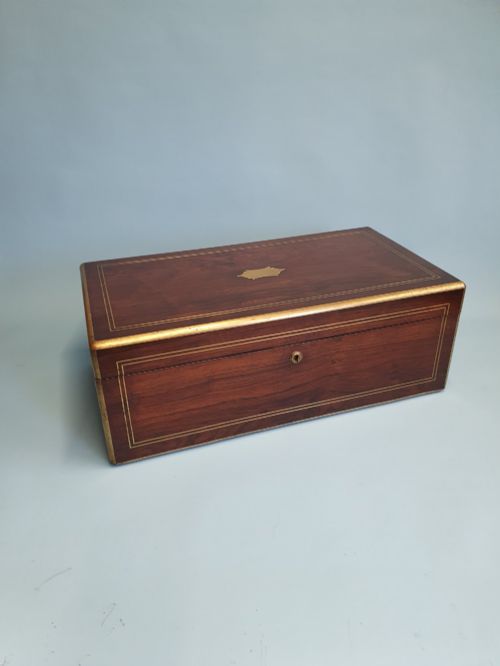

Wood Writing Desk Box
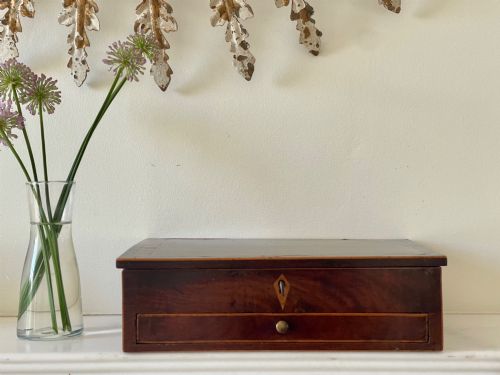
These wood writing desk box pieces are portable writing companions designed to hold correspondence, ink, and papers securely during travel or at home.
Wood Writing Desk Box
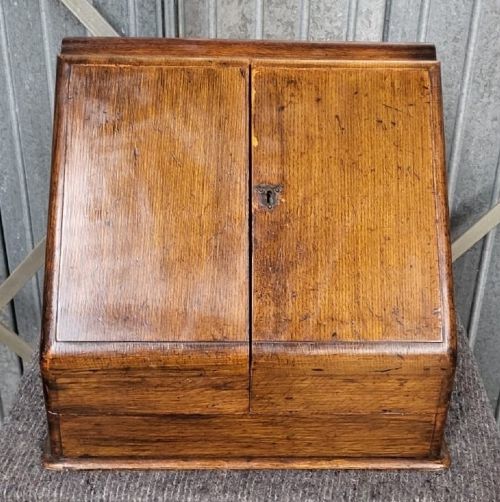
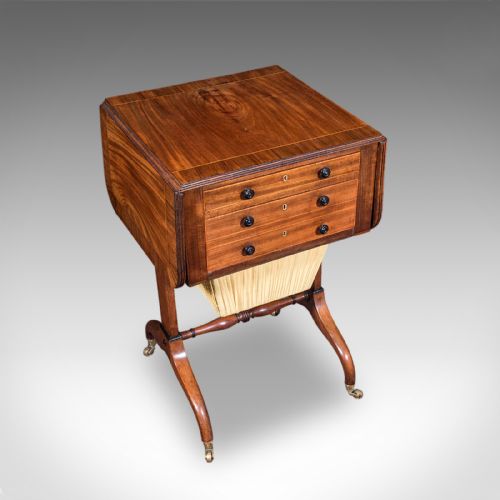
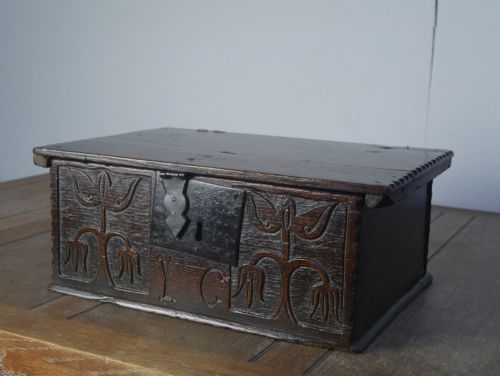
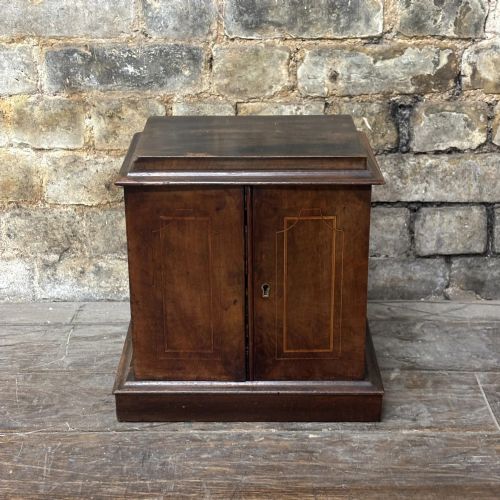
A wood writing desk box serves as a portable desk and storage chest, encompassing folding writing slopes, stationery cabinets, and flat-lidded boxes. These objects date primarily from the Georgian, Regency, William IV, and Victorian periods, reflecting changing domestic habits across the nineteenth century.
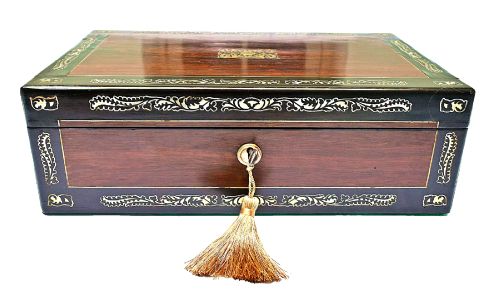
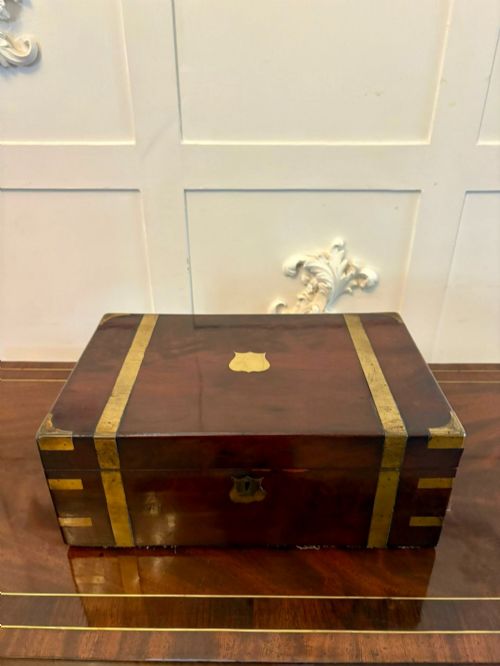
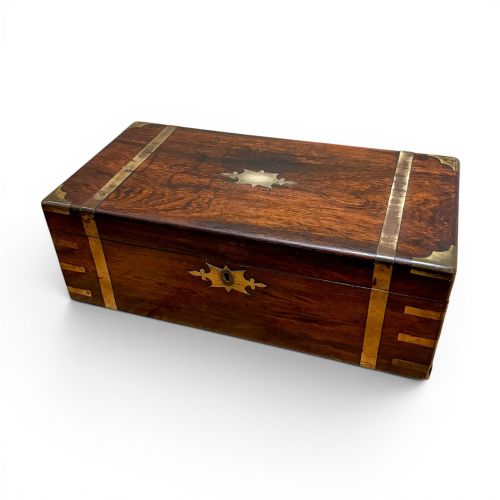
The most common form encountered on this page is the Victorian rosewood or mahogany writing slope, which opens to reveal a sloping writing surface lined with leather or velvet. Alongside these slope forms appear stationary cabinets, campaign boxes, and specialised presentation caskets.
Origins stretch from English workshops to regional centres such as Tunbridge Wells, alongside colonial production including Anglo-Indian, Ceylonese, and Chinese export pieces. Each regional variation utilises native timbers and local decorative traditions while retaining the standard hinged-box architecture.
Materials and Technique
Cabinetmakers constructed these boxes using dense hardwoods such as mahogany, rosewood, coromandel, and walnut, frequently selecting flame veneers for visual depth. Subframes were often secondary softwoods, lined inside with cedar or oak compartments.
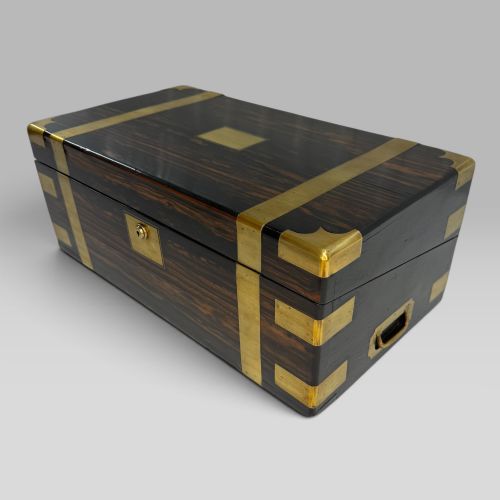
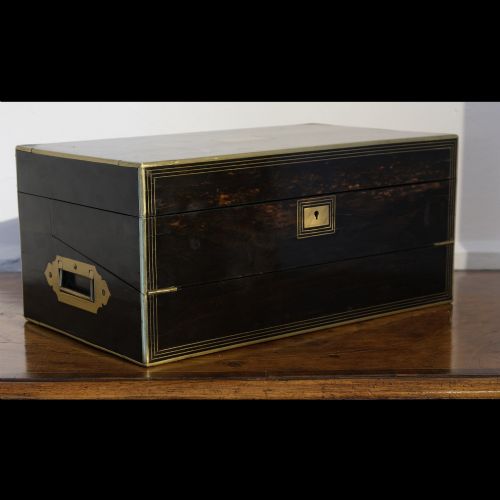
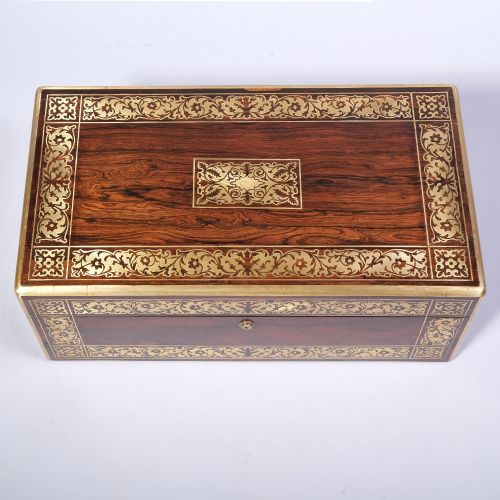
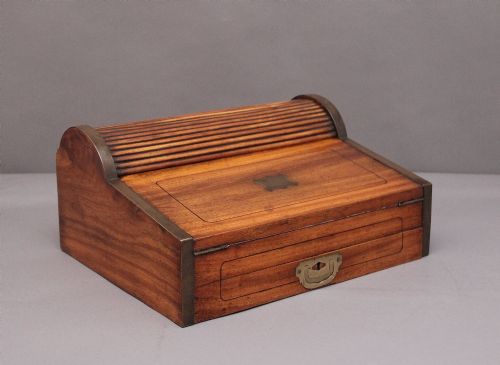
Decoration relied on contrasting inlays of brass, boxwood, mother of pearl, and carved bone, embedded flush into the timber surface. Brass bound corners and inset carrying handles reinforced the structural integrity of pieces intended for travel.
Interior architecture utilised secret drawers released by hidden spring mechanisms, alongside fitted compartments for glass inkwells, pen trays, and stamp boxes. Dovetail joinery secured the main carcase, while brass quadrant hinges supported the folding writing flaps.
Wood Writing Desk Box Retail Price Guide 2026
Typical asking prices for wood writing desk box among the pieces listed under this phrase on Sellingantiques today, from the lower quarter to the upper quarter. They describe what is for sale here now, not the wider market.
Some nineteenth-century writers relied on secret spring-loaded drawers to hide love letters from curious housemaids.
Quality and Construction
Quality reveals itself in the selection of timbers and the precision of the veneer matching across the exterior surfaces. Finer examples employ solid coromandel or richly figured rosewood with continuous grain patterns wrapping around the corners.
Internal engineering distinguishes standard production from superior workshop output. Smoothly operating secret drawer mechanisms, well-fitted pen trays, and original cut-glass inkwells with matching silver-plated or brass mounts elevate a piece.
The finesse of the decorative enrichment matters greatly, separating mechanical production from master craftsmanship. Hand-engraved brass strapwork, intricate Tunbridge ware mosaic marquetry, and finely carved bone or ivory details indicate higher status manufacture.
Edmund Nye·Briggs
The Wood Writing Desk Box Glossary
- Writing slope
- A portable box with a hinged, slanted lid that folds down to provide an angled writing surface. Inside compartments store stationery, inkwells, and nibs.
- Campaign box
- A piece of furniture built for military use during travel, typically reinforced with brass corners, flush handles, and robust locking mechanisms to withstand transit.
- Tunbridge ware
- A form of decorative woodworking originating from Kent, characterised by intricate mosaic designs assembled from thousands of tiny dyed wood prisms to form pictorial scenes or geometric bands.
- Coromandel
- A dense, heavy exotic timber imported from Asia, featuring dark brown heartwood with dramatic black grain streaks. It was frequently utilised for luxury nineteenth-century boxes.
- Secret drawers
- Concealed compartments hidden behind false partitions or released by subtle internal wooden spring catches within the box interior.
Wood Writing Desk Box: Frequently Asked Questions
What is inside a writing slope?
Inside a writing slope, you typically find a folding leather-lined writing surface, partitioned wells for glass inkwells, and small compartments for pens, nibs, and wax seals.
Many examples also contain concealed secret drawers hidden behind removable panels or beneath the stationery dividers.
How do you use a campaign box?
A campaign box is designed to sit on a table or desk, offering a portable writing desk that packs flat for travel. The hinged lid opens to form the writing plane while securing all ink and paper within.
Flush brass handles and reinforced corners protect the timber during movement, reflecting its origins as military baggage.
How do I date a wooden box?
Dating relies on timber choices, construction methods, and hardware styles. Regency and Georgian boxes often feature flame mahogany or rosewood with simple brass stringing, while mid-Victorian pieces frequently incorporate coromandel, mother of pearl, and complex secret mechanisms.
Boxwood stringing and brass corner brackets also shift in profile across the decades from flush cartouches to heavier strapping.
Are inkwells usually original?
Original inkwells are uncommon because glass components suffered frequent breakage or loss over centuries of use. Many surviving boxes contain replacement inkwells that match the period style and fit the original apertures.
Cut-glass bottles with matching brass or silver-plated collars represent the standard original pairing for luxury Victorian slopes.