





Wood Weather Station
A wood weather station brings domestic observation of the atmosphere into the room through carved mahogany, oak, and walnut housings.
Wood Weather Station
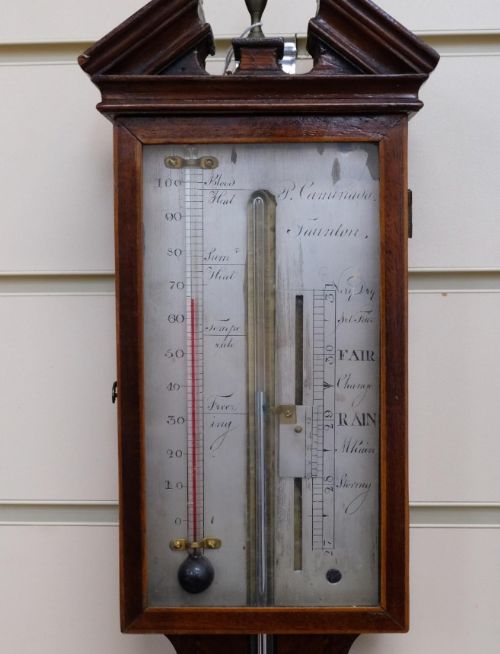
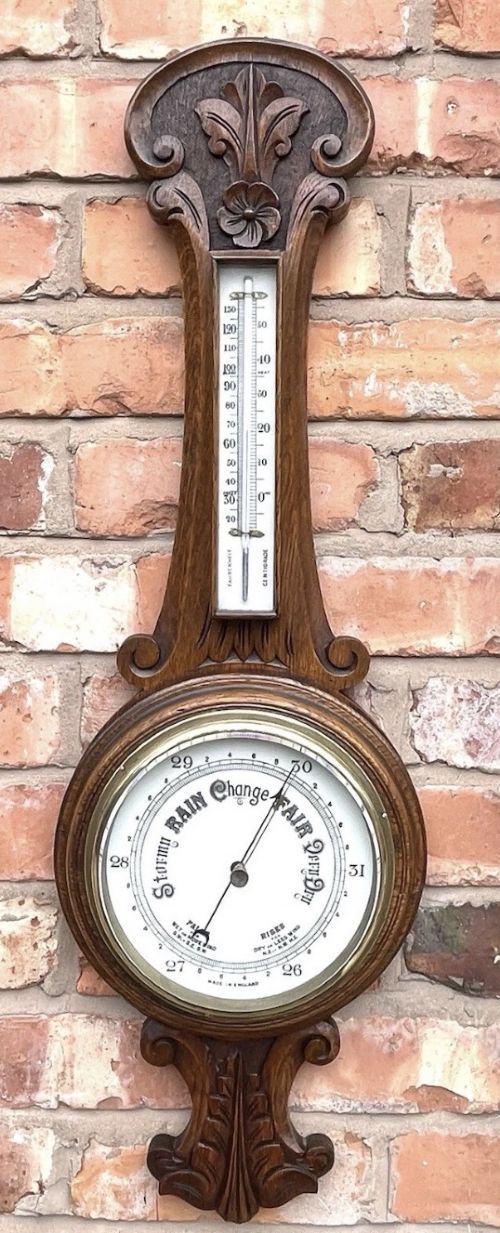
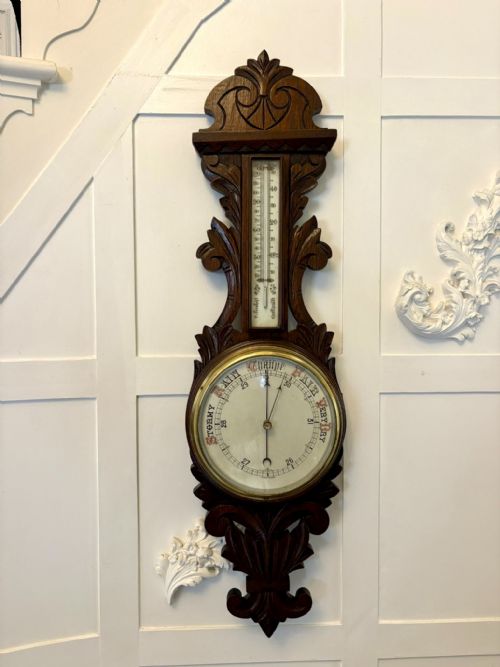
A wood weather station combines atmospheric measurement instruments within a timber case, spanning banjos, stick forms, and wall panels. When you search for wood weather station, you encounter domestic instruments designed to record barometric pressure, temperature, and sometimes time.
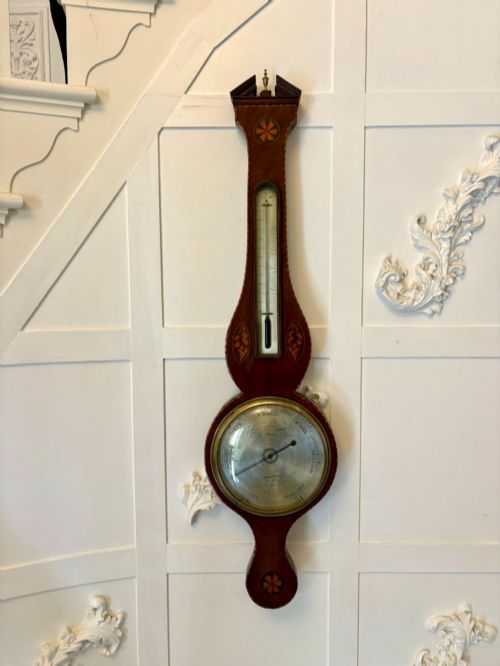
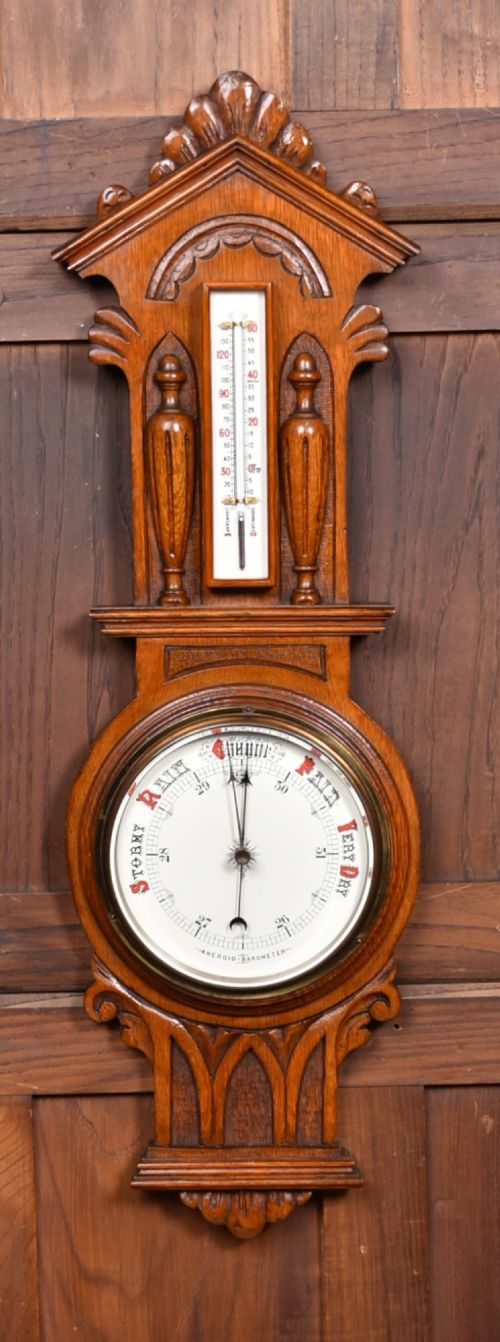
The pieces on this page lean heavily toward Victorian and Edwardian carved oak banjo barometers alongside earlier Georgian and Regency mahogany stick instruments. Makers housed these dials and tubes in woods such as walnut, beechwood, and satinwood, often decorated with shell inlay or marquetry.
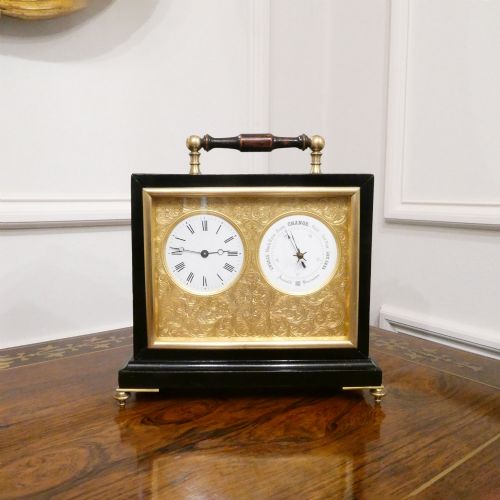
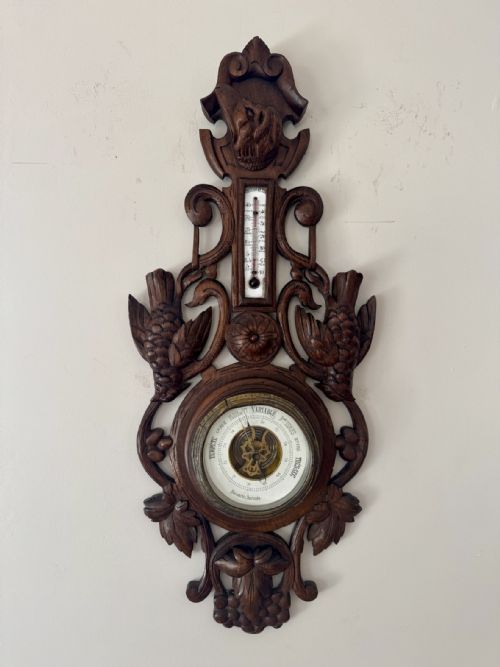
Beyond standard domestic barometers, the selection includes Black Forest carvings and combined mantel clock units. These objects served both a practical domestic purpose and a decorative function in nineteenth-century interiors.
Materials and construction methods
Cabinetmakers constructed the main housings from dense hardwoods like mahogany, oak, and walnut, selecting them for stability and grain figure. Carved wood details, marquetry, and shell inlay appeared on finer banjo and wall panel models.
Instrument makers integrated brass bezels, silvered dials, glass faceplates, and mercury or aneroid movements into the timber frames. These delicate brass and glass components required precise fitting within the heavy wood surrounds to function correctly.
Wood Weather Station Retail Price Guide 2026
Typical asking prices for wood weather station among the pieces listed under this phrase on Sellingantiques today, from the lower quarter to the upper quarter. They describe what is for sale here now, not the wider market.
One exceptional Victorian wall piece is shaped directly like a caduceus, proving that science and ancient mythology made unusual bedfellows.
Judging quality in barometer construction
Quality rests in the crispness of the wood carving, the depth of the mahogany or oak figuring, and the integration of the instrument face. Pieces signed by known makers such as Negretti & Zambra or James Pitkin demonstrate superior workshop standards.
The sophistication of the movement and the legibility of the engraved brass or porcelain scales elevate an instrument above standard production. Well-executed marquetry and intact glass or mercury tubes distinguish the upper tier of surviving examples.
P. Caminada·JB Bergna·W Watson & Sons·Maple & Co·Blake & Son·James Pitkin·Gilbert London·S&B Solomons·Luisetti of London·Negretti & Zambra
The Wood Weather Station Glossary
- Aneroid barometer
- An instrument that measures atmospheric pressure using a flexible metal box without liquid. It contracts or expands with pressure changes, moving a needle across a dial face.
- Stick barometer
- A tall, narrow instrument containing an open column of mercury in a glass tube. It offers a direct and sensitive reading of barometric pressure fluctuations.
- Banjo barometer
- A household wall instrument shaped somewhat like a banjo, featuring a circular dial at the base and a long trunk holding a thermometer or hygrometer.
- Marquetry
- The art of applying decorative veneer pieces of different woods to a structure to form geometric or pictorial designs. It appears on selected nineteenth-century instrument cases.
- Black Forest
- A style of wood carving originating from a mountainous region in Germany, known for deep, naturalistic foliage and animal motifs applied to barometer frames.
Wood Weather Station: Frequently Asked Questions
What is a wood weather station?
A wood weather station is a domestic instrument housed in timber that displays barometric pressure, temperature, or time. These pieces range from simple mercury stick barometers to elaborate carved oak banjo formats.
Cabinetmakers and opticians produced them to help households monitor daily atmospheric changes indoors. They combined scientific utility with the prevailing furniture styles of their respective periods.
Where were these instruments placed in the home?
These instruments typically hung on hallway walls or sat on mantelpieces where household members could consult them regularly. Hallways provided steady ambient temperatures away from direct hearth heat, ensuring more reliable barometer readings.
Their decorative wood cases ensured they complemented the domestic interior rather than appearing purely scientific. Wall panels and banjo barometers suited narrow vertical spaces in Victorian and Edwardian rooms.
How do I care for an antique wood barometer?
Keep the timber case away from direct sunlight, central heating sources, and damp environments to protect the wood and glue joints. Dust the carved surfaces gently with a dry cloth and avoid harsh chemical polishes.
If the instrument contains mercury, ensure it remains undisturbed on its wall mount to prevent the glass tube from shifting. Aneroid movements can be adjusted gently via a screw on the back if local calibration is required.