
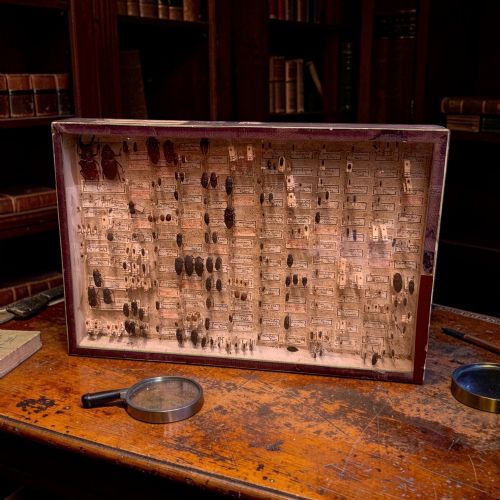


Wood Taxidermy Display Case
These wood taxidermy display cases preserve natural history specimens behind glass for domestic study and interior decoration.
Wood Taxidermy Display Case
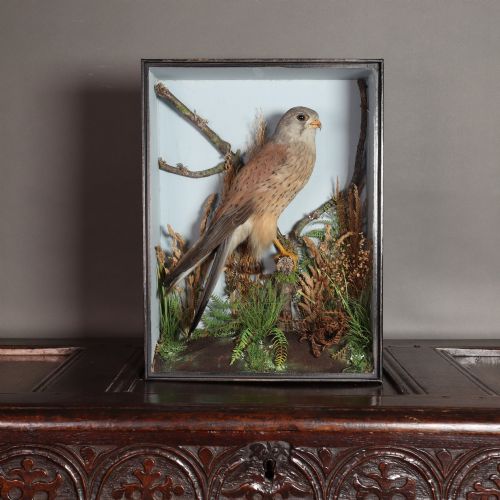
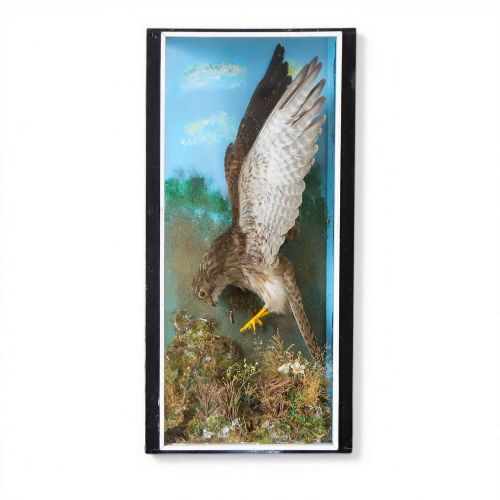
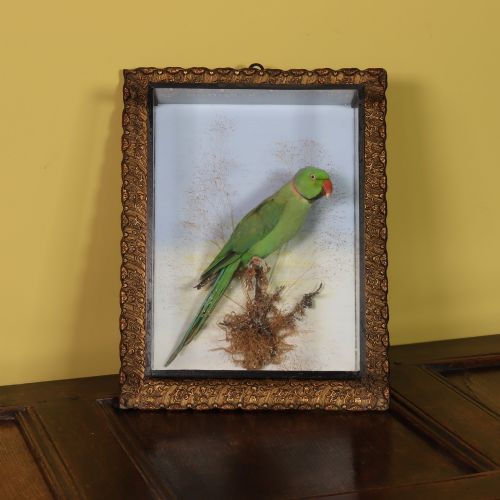
A wood taxidermy display case brings preserved birds, fish, and insects into domestic interiors through wall cabinets, picture frame cases, and table enclosures. These pieces range from compact single-specimen boxes to large dioramas depicting natural scenes.
The selections span the Victorian, Edwardian, and early twentieth-century periods, capturing a distinct era of natural history collecting. Makers house specimens in mahogany, oak, pine, and ebonised wood fitted with protective glass panes or blown domes.
Materials and Construction
Carpenters build the wooden frames and backings using timber such as mahogany, oak, pine, and ebonised wood, often incorporating painted backgrounds or natural elements like snow scenes inside. Glass panels, blown domes, and cloches mount securely into these timber structures to shield the delicate contents.
Internal arrangements integrate preserved specimens alongside paper, felt, fabric, and feathers to recreate natural habitats for birds, fish, and insects.
Early naturalists occasionally added miniature painted snow scenes inside bird display cases to keep winter taxidermy looking seasonally appropriate year-round.
Evaluating Quality
Quality rests in the precision of the cabinetwork and the artistic composition of the diorama within. Superior pieces display harmonious proportions between the timber housing, the clarity of the glass, and the lifelike arrangement of the preserved specimens.
Signatures or paper labels from recognised practitioners elevate a piece, as do complex multi-specimen compositions placed within well-proportioned glazed wooden enclosures.
T. E. Gunn·William Bazeley & Sons·James Jones·James Gardner
The Wood Taxidermy Display Case Glossary
- Taxidermy
- The art of preparing, stuffing, and mounting the skins of animals for display. This practice creates the central specimens housed within the wooden cases.
- Dome
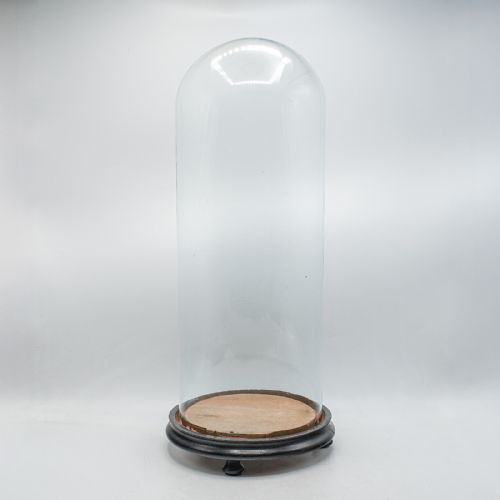
- A rounded glass cover set upon a wooden base to protect delicate displays. These circular or oval covers allow clear viewing from all angles.
- Diorama
- A three-dimensional scene depicting animals in a simulated natural environment. Painted backdrops and artificial snow often accompany the specimens inside the wooden box.
- Entomology case
- A specialised wooden box utilised for the display and study of preserved insects. These shallow drawers or cabinets organise specimens systematically.
- Ebonised wood
- Timber treated to resemble ebony through a dark staining or finishing process. This dark wood provides a contrasting frame for colourful plumage.
Wood Taxidermy Display Case: Frequently Asked Questions
What goes inside a taxidermy case?
These enclosures house preserved birds, fish, and insects arranged alongside natural elements such as branches, painted backgrounds, and snow scenes.
The interior composition aims to replicate the natural habitat of the specimen for scientific study and domestic display.
How do I date an antique display case?
Dating relies upon the construction timber, the style of the wooden housing, and any accompanying maker labels or inscriptions.
Victorian and Edwardian examples often feature distinct joinery methods and glass-blowing techniques characteristic of their respective decades.
Are glass domes removable?
Most glass domes and cloches lift away from their wooden bases to allow access to the interior display.
Care is required when lifting the glass to avoid disturbing the delicate preserved specimens mounted inside.
Where were these cabinets placed?
Victorians and Edwardians positioned these display cases on mantelpieces, tabletops, or hung them directly onto walls.
They served as decorative conversation pieces and educational curiosities within studies, parlours, and drawing rooms.