



Wood Sewing Caddy
These wood sewing caddy pieces are practical nineteenth century organisers that collectors prize for their rich rosewood and clever compartments.
Wood Sewing Caddy
A wood sewing caddy brings together nineteenth century needlework containers and small stands, ranging from portable work boxes to tiered stands and occasional tables. Buyers searching for a wood sewing caddy will most frequently encounter rosewood examples from the Victorian and Regency periods, alongside turned wood treen and pine tiered stands.
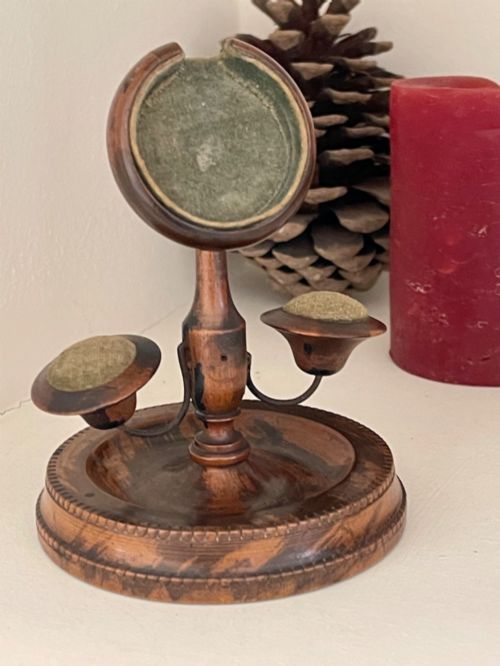
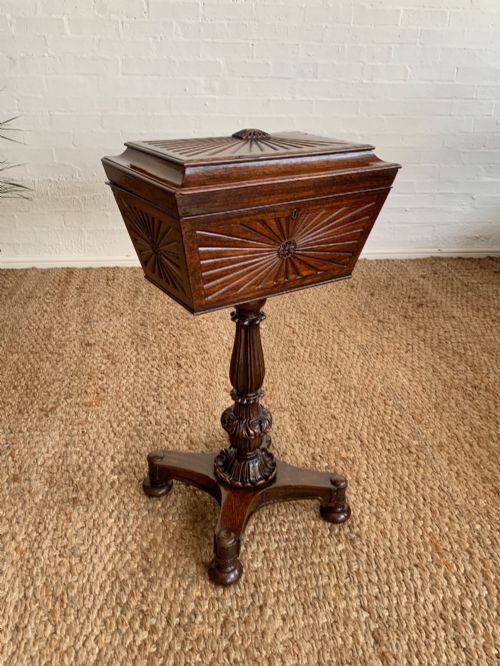
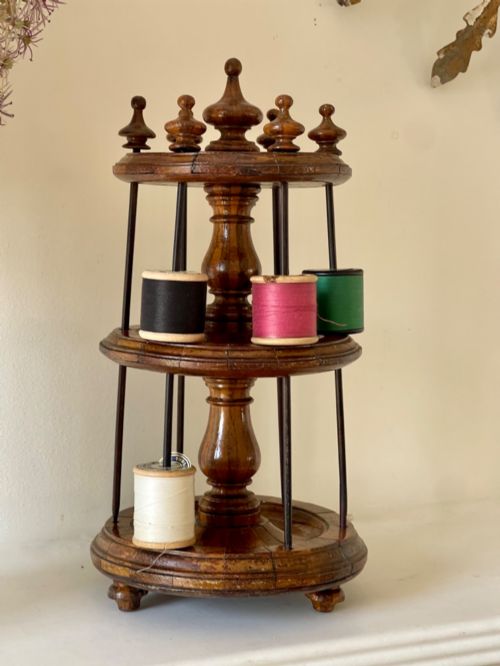
The selection includes specialised forms such as cotton reel and pin cushion stands, pocket watch and sewing combinations, and sarcophagus shaped boxes. Many feature fitted interiors designed to hold threads, needles, and sewing accessories in an orderly fashion.
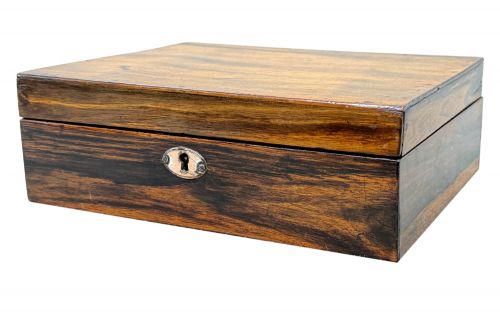
Origins span English workshops, Scottish pieces, and French examples, demonstrating how domestic sewing was organised across different regions. Whether choosing a simple woven pine stand or an inlaid coromandel box, these objects reflect the prominence of needlework in past households.
Materials and construction methods
Cabinetmakers utilised dense tropical hardwoods such as rosewood and coromandel, often finishing surfaces with sunburst carving or specialised decoration like Tunbridge Ware. These timbers provided both durability and a handsome appearance suitable for domestic display.
Secondary materials included brass for hardware and fittings, alongside delicate fabrics and velvet to line the interior compartments. Turned wood and woven pine appear in more rustic or specialised utilitarian forms, showing varied carpentry traditions.
Wood Sewing Caddy Retail Price Guide 2026
Typical asking prices for wood sewing caddy among the pieces listed under this phrase on Sellingantiques today, from the lower quarter to the upper quarter. They describe what is for sale here now, not the wider market.
Object forms on this page include work tables, teapoys, pocket watch stands, and sarcophagus shaped sewing boxes.
Distinctions in quality
Quality rests upon the selection of timber and the precision of the cabinetwork, particularly in the joinery of complex box lids and tiered structures. Pieces featuring decorative techniques like Tunbridge Ware or sunburst carving demonstrate higher levels of artisan skill.
The integrity of the interior fittings and the retention of original brass elements significantly influence the standing of an individual piece. Finer examples balance robust construction with refined surface details.
The Wood Sewing Caddy Glossary
- Treen
- Small handmade wooden objects for domestic use. Turned treen items show the marks of the lathe.
- Tunbridge Ware
- Woodworking technique involving minuscule mosaic tiles made from natural woods to create pictorial designs. It is characteristic of nineteenth century decorative boxes.
- Teapoy
- A small stand or table fitted with boxes for holding tea, which frequently overlap in form with work boxes and caddies. They often rest on central pedestals.
- Sarcophagus
- A box shape featuring a domed or peaked lid reminiscent of ancient stone coffins. This silhouette was popular for larger sewing boxes in the nineteenth century.
- Work Box
- A portable container outfitted for sewing and needlework. These boxes typically contain lift-out trays and specialised compartments.
Wood Sewing Caddy: Frequently Asked Questions
What is a wood sewing caddy?
A wood sewing caddy is a nineteenth century container or small stand designed to hold needles, threads, and sewing accessories. They range from portable work boxes to tiered stands.
Cabinetmakers constructed them from timbers like rosewood and pine, incorporating fitted compartments to keep tools organised during domestic needlework.
How were these boxes used?
These pieces served as portable or stationary storage for sewing equipment, allowing makers to keep their cotton reels, pins, and fabrics together. Many included specialised stands for pocket watches or cotton reels.
They sat on tables or floors in nineteenth century homes, keeping delicate sewing work clean and ordered between uses.
How do I care for rosewood and coromandel?
These dense hardwoods require stable indoor humidity away from direct sunlight to prevent the timber from drying or cracking. Gentle dusting with a dry cloth maintains the polished surface.
Avoid using harsh modern polishes, as traditional wax finishes respond best to minimal intervention and gentle care.