

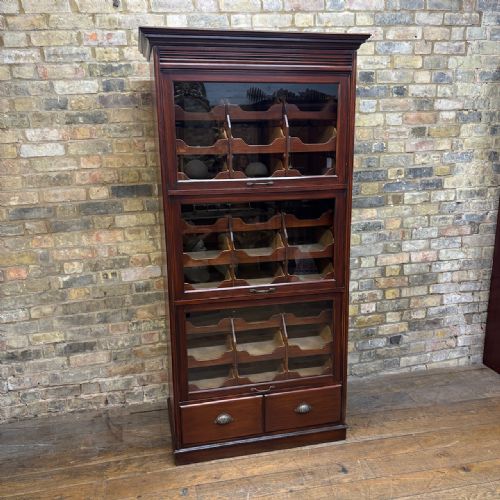
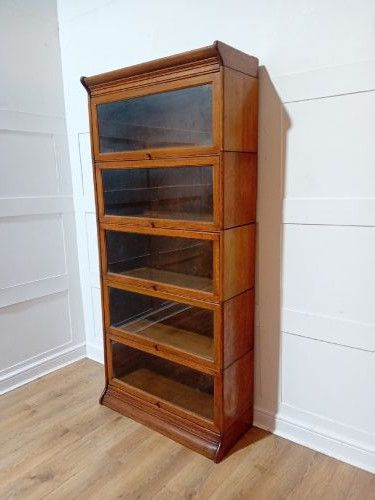
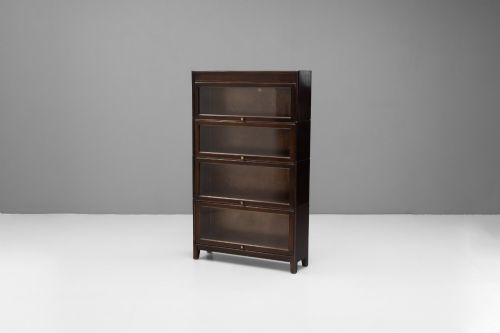
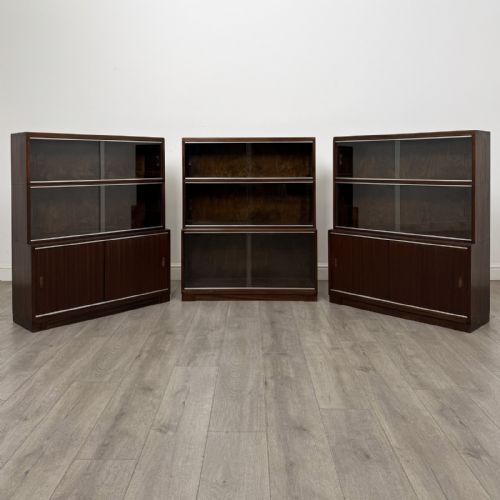
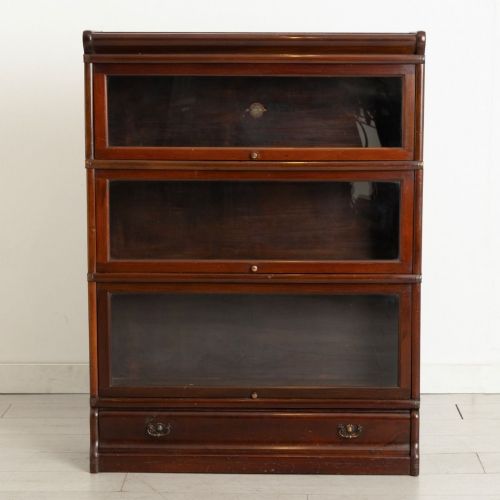
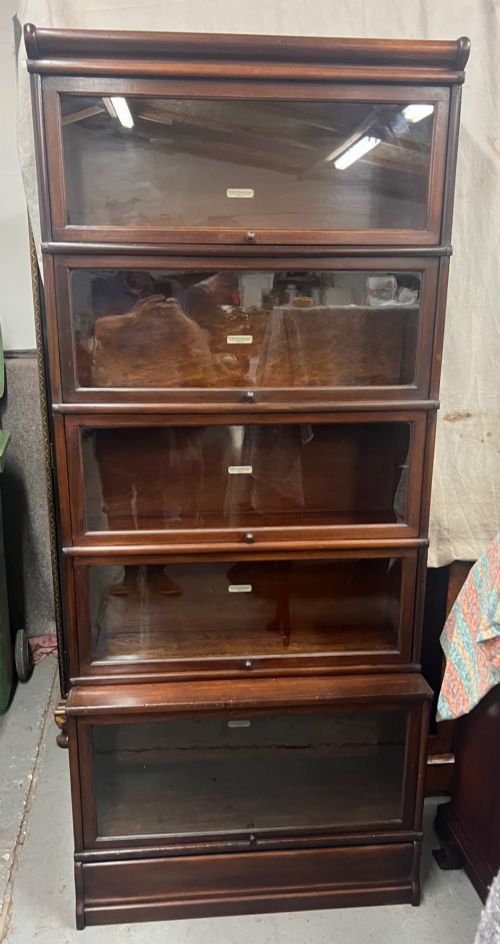


Wood Sectional Bookcase
These wood sectional bookcase pieces give you modular storage that adapts to your library, combining timber frames with glazed compartments.
Wood Sectional Bookcase
A wood sectional bookcase provides modular shelving through stacked tiers or cabinets that house growing book collections. These pieces range from Edwardian and Georgian examples to 1920s commercial units and Art Deco designs.
Most pieces on this page appear in oak or mahogany, often built with glazed doors or sliding glass panels. You will find stacking barrister styles alongside double sectional cabinets and multi-tiered modular cases.
How wood sectional bookcase items were made
Makers constructed these modular units primarily using solid oak and mahogany timber frames. Brass and metal hardware frequently support the mechanical movement of up and over doors or sliding glass panels.
Wood Sectional Bookcase Retail Price Guide 2026
Typical asking prices for wood sectional bookcase among the pieces listed under this phrase on Sellingantiques today, from the lower quarter to the upper quarter. They describe what is for sale here now, not the wider market.
Early lawyers valued these stacking cases because they could haul their entire legal library to court one box at a time.
What varies in quality
Quality rests in the precision of the modular joints and the clarity of the original glass panels. Superior examples exhibit smooth operation in the stacking mechanisms and well-figured timber grain across matching tiers.
Construction methods distinguish standard commercial production from workshop pieces by named makers. The integrity of the brass fittings and the exact alignment of the sectional boxes dictate the overall standard.
Gunn Furniture·Macey·Globe Wernicke·Heal's
The Wood Sectional Bookcase Glossary
- Barrister bookcase
- A stacking sectional bookcase designed with glazed up and over doors. These units allowed lawyers to transport and protect their library volumes easily.
- Sectional bookcase
- A modular piece of furniture built from separate tiers that stack together. This design lets owners add or remove shelves as their collection changes.
- Up and over door
- A glass-fronted cabinet door featuring a mechanical scissor arm that lifts and slides into the bookcase cavity. It allows the door to remain open while reading.
- Tier
- An individual stackable section of a modular bookcase containing its own shelf and door. Multiple tiers combine to create a tall shelving unit.
Wood Sectional Bookcase: Frequently Asked Questions
How do sectional bookcases work?
These bookcases consist of separate wooden tiers that stack directly on top of one another to form a tall storage unit. Each individual section usually contains its own glass door and shelf, allowing the entire structure to be disassembled for transport.
The modular design means you can add extra tiers as your book collection grows over time. The interlocking boxes sit securely without permanent fixings.
What are up and over doors?
Up and over doors are glazed panels fitted with internal metal or brass mechanisms that lift upwards and slide into the top of the shelf compartment. This clever movement keeps the door out of the way while you access your books.
This specific hardware is characteristic of stacking barrister bookcases from the early twentieth century. It requires smooth alignment of the timber frame to operate correctly.
Can I separate the stacked tiers?
Yes, the individual sections are designed to lift apart once you remove any top cornice or base plinth. This makes moving large modular bookcases through narrow doorways much easier than handling a single rigid cabinet.
When rearranging the tiers, ensure the sections remain level so the glass doors align properly within their frames. Each box is built to bear the weight of the sections stacked above it.
How do I date an oak stacking bookcase?
Dating relies on examining the timber, the hardware, and the construction methods used in the stacking frames. Pieces produced in the early decades of the twentieth century often feature specific maker stamps and patented mechanical door arms.
Art Deco and Edwardian examples display distinct stylistic traits in their cornices and timber finishes. Comparing the brass fittings to known manufacturer catalogues helps narrow down the production period.