





Wood Rolltop Desk
These pieces of wood rolltop desk offer clever fitted interiors and sliding shutters, keeping workspace tidy with traditional charm.
Wood Rolltop Desk
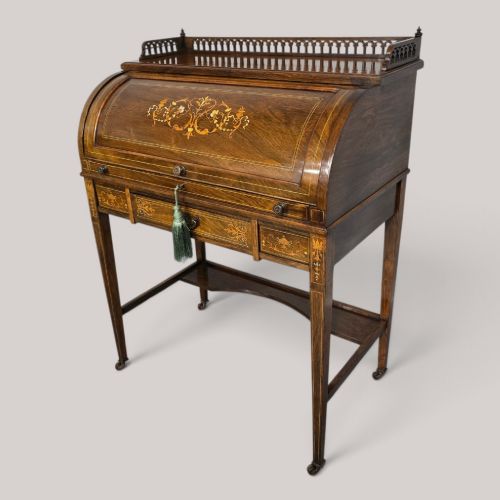
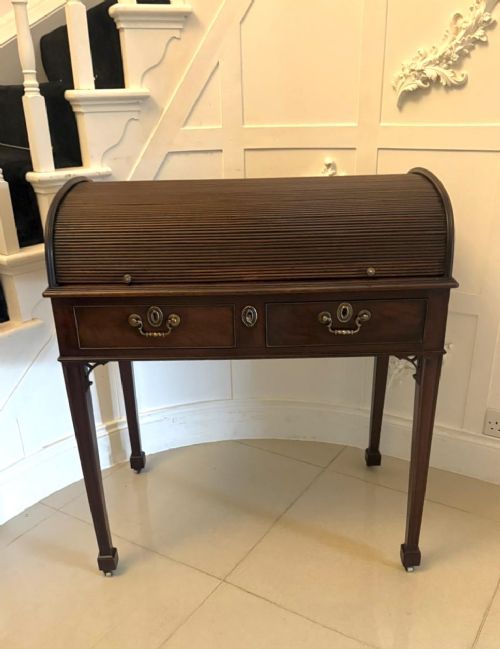
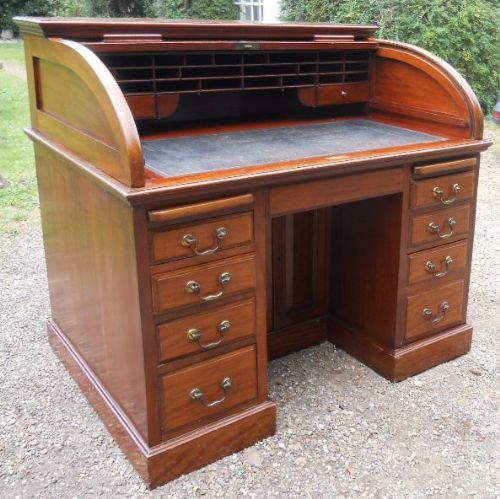
A wood rolltop desk provides a practical workspace enclosed by a slatted tambour shutter or a solid curved cylinder, concealing papers and pigeonholes when closed. These items span periods from the eighteenth century through the Edwardian era, taking forms such as compact bureau bookcases, pedestal units, and miniature writing tables.
You are most likely to encounter mahogany and walnut versions on this page, alongside occasional satinwood, fruitwood, and marquetry examples. The construction ranges from large kneehole configurations down to small Georgian and Edwardian writing desks equipped with pull-out slides.
Origin and period shape the character of each piece, uniting Georgian elegance with Victorian utility and Edwardian craftsmanship. The listings demonstrate considerable variety in scale, from tall bureau cabinets to low home office desks.
Construction and materials
Cabinetmakers built these desks using sturdy timbers like mahogany and walnut, often complemented by satinwood, boxwood, and fruitwood stringing or marquetry inlay. Brass handles and leather writing surfaces frequently complete the fittings of the interior compartments.
The defining mechanism relies on narrow wooden slats glued to a flexible canvas backing to form the rolling tambour or cylinder. This flexible shutter travels smoothly within grooved tracks to secure the desk surface.
Wood Rolltop Desk Retail Price Guide 2026
Typical asking prices for wood rolltop desk among the pieces listed under this phrase on Sellingantiques today, from the lower quarter to the upper quarter. They describe what is for sale here now, not the wider market.
Listings feature mahogany, walnut, satinwood, and fruitwood desks spanning the eighteenth century to the Edwardian period.
Judging quality and execution
The smoothness of the tambour action distinguishes superior examples, requiring precise joinery so the wooden slats glide without binding in their tracks. Timbers selected for the outer surfaces and interior pigeonholes also reveal the maker's dedication to fine grain and finish.
Proportion and secondary detailing separate standard production from exceptional cabinetwork. Inlaid stringing, marquetry panels, and well-organized internal drawers elevate the status of a desk considerably.
Boston Chair Company
The Wood Rolltop Desk Glossary
- Tambour
- Flexible shutter formed of narrow wooden strips glued to canvas. This mechanism slides along curved tracks to cover the desk interior.
- Cylinder desk
- Writing table featuring a solid quarter-circle revolving lid rather than slatted tambour strips. It serves a similar enclosing function.
- Bureau bookcase
- Tall cabinet combining a writing desk compartment below with shelving enclosed by glass doors above. It represents a larger form of study furniture.
- Pedestal desk
- Form featuring two separate banks of drawers supporting the main writing top. The rolltop version adds the upper enclosing shutter.
- Kneehole
- Central recessed space beneath the desk surface designed to accommodate the user's legs. It typically sits between flanking banks of drawers.
Wood Rolltop Desk: Frequently Asked Questions
What is a tambour?
A tambour is a flexible shutter made from narrow strips of wood attached to a canvas backing. It slides along curved grooves to open and close the desk.
This clever mechanism allows the user to secure the writing surface and pigeonholes without needing a hinged lid that swings outward into the room.
Where did these desks originate?
The pieces seen here stem from English, American, and European workshops operating across the eighteenth, nineteenth, and early twentieth centuries. Cabinetmakers adapted the form to suit changing domestic and office needs.
Regional preferences influenced the choice of timbers, leading to mahogany and walnut standards alongside Dutch marquetry and satinwood decorative treatments.
How do I care for the wood?
Keep wooden surfaces away from direct heat sources and strong sunlight to prevent the timber from drying out or splitting. Gentle dusting and occasional polishing maintain the finish.
Ensure the tambour tracks remain free from dust and debris so the flexible shutter continues to glide smoothly within its grooves.