

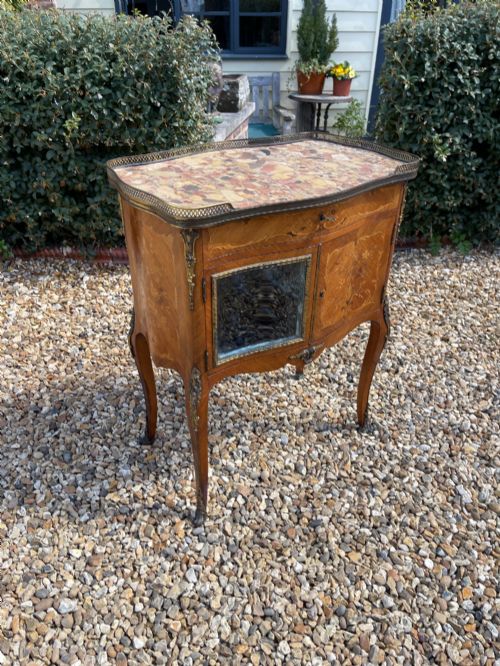


Wood Marquetry Nightstand
A wood marquetry nightstand brings intricate floral and geometric veneers to the bedside, offering hidden storage alongside decorative presence.
Wood Marquetry Nightstand
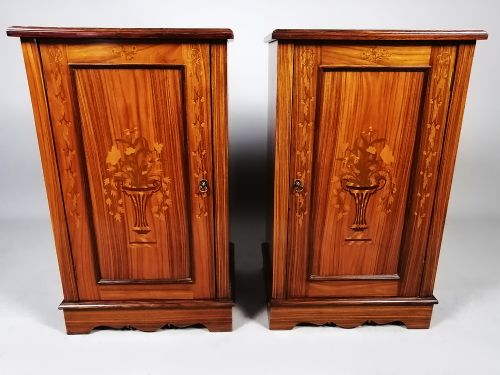
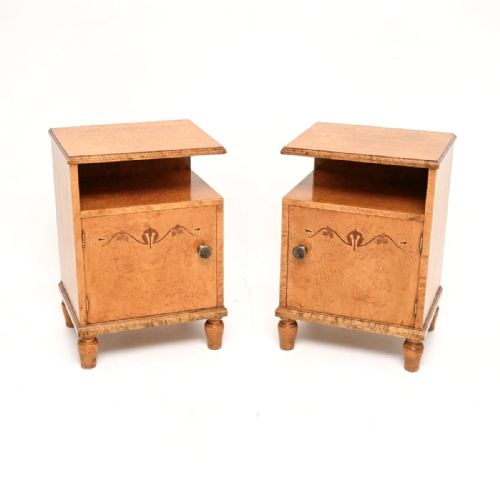
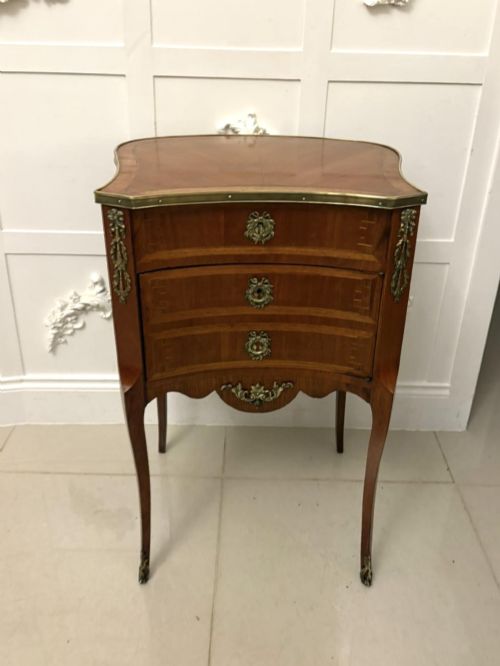
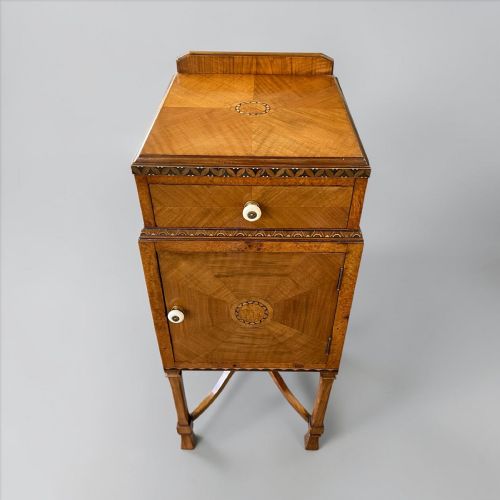
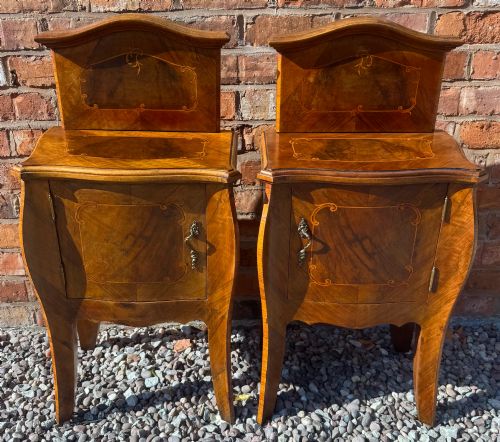
When buyers search for a wood marquetry nightstand, they encounter a range of bedside furniture spanning the Victorian, Edwardian, and Art Deco periods, alongside French revival styles. The most common form on this page is the compact bedside cabinet or cupboard, often constructed with a marble top, door enclosing a compartment, and elaborate wood inlays.
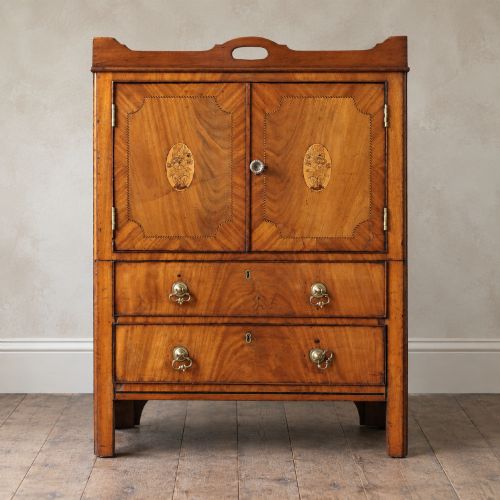
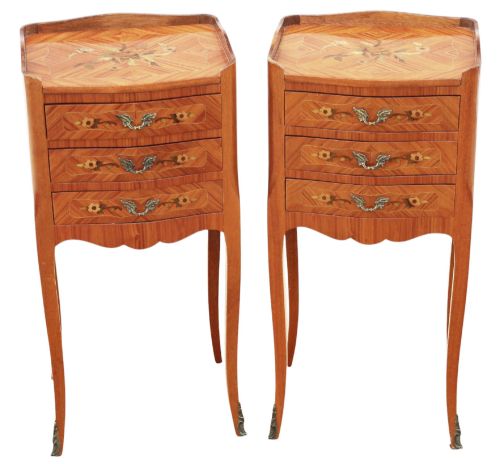
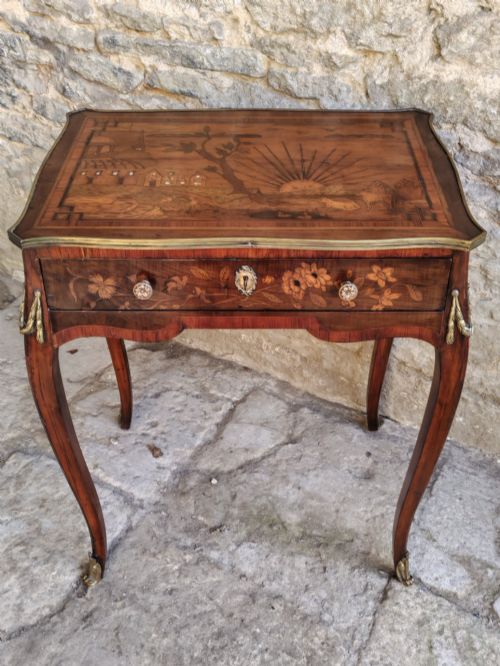
Originating largely from French, English, and Scandinavian workshops, these tables appear in forms such as tray-top commodes, kidney-shaped side tables, and bombe chests. Makers utilised diverse periods from the eighteenth through the early twentieth centuries to inspire designs featuring floral motifs and contrasting timber veneers.
How they were made
Craftsmen built these cabinets using solid secondary timbers as carcases, applied with decorative face veneers of walnut, satinwood, rosewood, kingwood, or mahogany. Marquetry cutters sliced thin botanical or geometric sections from contrasting woods, assembling the pictorial veneers by hand before gluing them to the surface.
Metal components such as brass handles, gilt bronze ormolu mounts, and marble slabs completed the assemblies. Many examples incorporate intricate parquetry geometric patterns alongside hand-fitted doors and secret compartments.
Wood Marquetry Nightstand Retail Price Guide 2026
Typical asking prices for wood marquetry nightstand among the pieces listed under this phrase on Sellingantiques today, from the lower quarter to the upper quarter. They describe what is for sale here now, not the wider market.
Listings feature satinwood, rosewood, kingwood, mahogany, and walnut veneers paired with marble tops and brass mounts across the nineteenth and early twentieth centuries.
What varies in quality
Quality rests in the precision of the veneer cutting and the natural depth of the timber figuring. Superior pieces display seamless junctions in multi-wood floral marquetry and well-selected grain patterns that catch the light.
Construction standards separate standard production from masterwork output, visible in the snugness of cabinet doors, the thickness of genuine marble tops, and the casting quality of applied ormolu mounts.
Francois Linke·Gillows
The Wood Marquetry Nightstand Glossary
- Marquetry
- Decorative veneer work forming pictures or patterns by assembling small pieces of coloured wood, shell, or ivory. It differs from parquetry by creating pictorial designs rather than geometric grids.
- Kingwood
- A dense, heavy Brazilian timber featuring dark violet-brown streaks used extensively in high-end cabinet making. It remains prized for its rich natural contrast.
- Ormolu
- Gilded bronze mounts applied to furniture edges and feet for decorative accent. The technique involves coating cast bronze with a mercury and gold amalgam.
- Bombe
- A swollen or bulging convex shape characteristic of French furniture design. This profile requires specialised bending of wood and veneer.
- Satinwood
- A durable tropical timber yielding a lustrous, golden-yellow surface. It provides a bright background for contrasting dark wood inlays.
Wood Marquetry Nightstand: Frequently Asked Questions
How do I clean a marble top?
Wipe the marble surface gently with a soft cloth dampened in warm water and mild dish soap. Avoid acidic cleaners or lemon juice, which etch the polished stone.
Dry the top thoroughly afterward to prevent water marks. Periodic application of a neutral stone wax maintains the protective sheen.
Are these cabinets sturdy enough for daily use?
These antique pieces serve well for bedside storage, holding lamps, books, and small personal items safely. Their solid timber carcases and traditional joinery endure standard domestic routines.
Care should be taken to avoid placing excessive weight on drop leaves or cantilevered sections. Lifting rather than dragging the furniture preserves the integrity of the legs.
How do I distinguish Edwardian from Victorian pieces?
Victorian examples tend to display heavier rosewood or mahogany constructions with deep, rich tones and robust proportions. They often feature dense marquetry and traditional brass hardware.
Edwardian pieces generally lean toward lighter satinwood or mahogany frames with refined, airy proportions. The inlay work in Edwardian items frequently adopts neoclassical motifs or simpler stringing.
How should I care for marquetry veneer?
Keep the wood away from direct sunlight and extreme radiator heat to prevent the veneer from drying or lifting. Maintaining stable room humidity preserves the old animal glues beneath the surface.
Dust regularly with a dry, soft cloth and feed the timber occasionally with a quality furniture wax. Avoid silicone sprays, which penetrate open wood pores and damage historical finishes.