


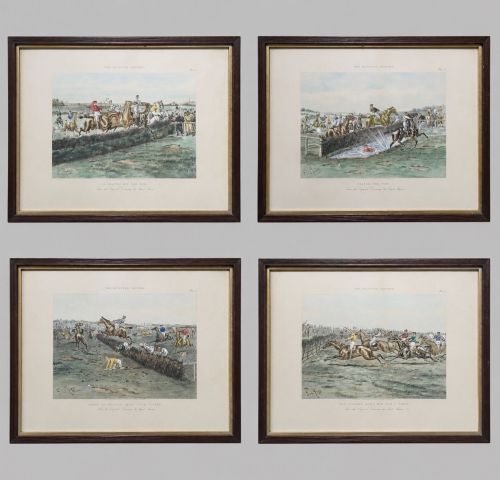
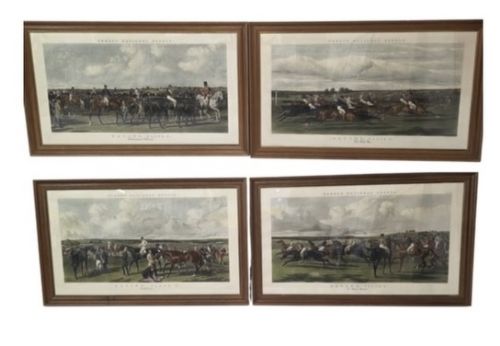


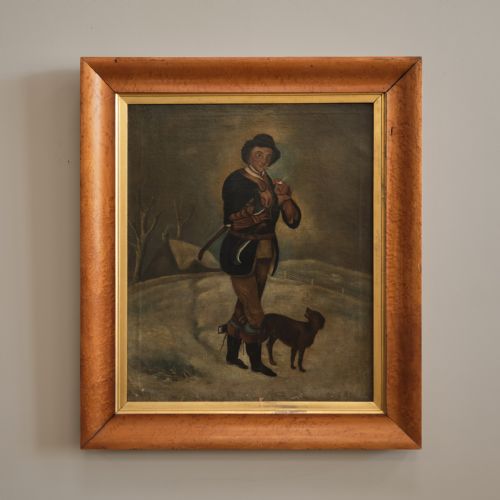


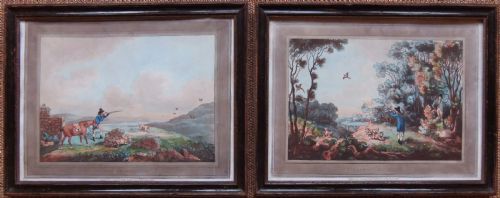
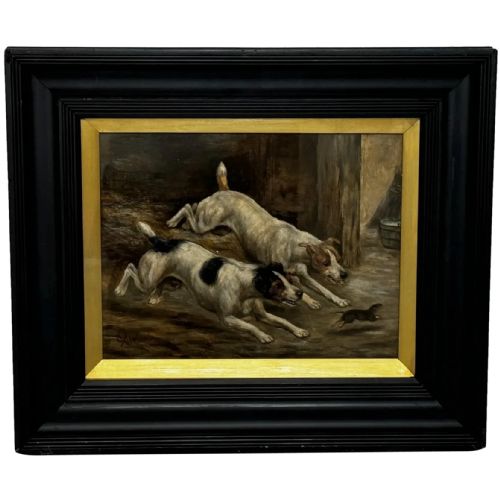

Wood Framed Sporting Art
Wood framed sporting art captures the energy of the field, the track, and the kennel within period surrounds.
Wood Framed Sporting Art
Wood framed sporting art gathers oil paintings, watercolours, gouache, prints, and photographs depicting horses, dogs, hunting, and racing. These works span the Georgian, Victorian, and Edwardian eras, reflecting a long British tradition of celebrating field sports and equine subjects.
You will most commonly encounter framed prints, original watercolours, and oil paintings housed in period wooden frames. The subjects range from racing pigeons and prize greyhounds to detailed hunting scenes and horse racing moments.
How they were made
Makers employed oil on canvas or board, watercolour, gouache, and various printmaking techniques including aquatint and stipple engraving. Paper and canvas surfaces received pigment applied by hand or transferred through traditional print plates.
Enclosing timber surrounds, often complemented by glass or gold leaf details, protected the delicate paper and canvas surfaces. These frames relied on traditional joinery and gilded finishes appropriate to their respective periods.
Wood Framed Sporting Art Retail Price Guide 2026
Typical asking prices for wood framed sporting art among the pieces listed under this phrase on Sellingantiques today, from the lower quarter to the upper quarter. They describe what is for sale here now, not the wider market.
Listings feature Victorian, Edwardian, and Georgian periods alongside mid-century examples.
What varies in quality
Quality rests in the precision of the draughtsmanship and the vitality of the subject matter, distinguishing competent studio work from masterly observation. The artist's ability to render the anatomy and movement of animals determines the visual impact of the piece.
The integrity and period appropriateness of the wooden frame contribute substantially to the piece's overall character. Original framing that complements the era of the artwork elevates the entire object.
John Rattenbury Skeaping·Colin Graeme Roe·Valentine Thomas Garland·John Sanderson-Wells·James Ward·James Barenger·Godfrey Douglas Giles·Frank Dadd
The Wood Framed Sporting Art Glossary
- Aquatint
- A printmaking technique that produces tonal effects similar to watercolour washes. It was frequently employed for 19th-century sporting prints.
- Gouache
- An opaque watercolour paint that dries to a matte finish, allowing for dense colour application. Artists used it to achieve vibrant sporting scenes.
- Eglomise
- A process of applying design and gilding to the reverse side of glass. It appears in decorative reproduction pieces.
- Stipple engraving
- A method of creating images on a copper plate using dots rather than lines. Hand colouring was often added afterwards.
- Marquetry
- The art of applying pieces of veneer to a structure to form decorative designs. It is seen in wooden panels depicting wildlife.
Wood Framed Sporting Art: Frequently Asked Questions
What subjects appear in wood framed sporting art?
These works depict horse racing, hunting scenes, gun dogs, and rural pursuits.
Subjects also include portraits of individual prize animals and racing pigeons.
How do I date a sporting artwork?
Dating relies on the costume of the human figures, the style of the horse and hound breeds, and the method of print or paint application.
The materials of the surrounding wooden frame also offer clues to the period.
Are these pieces original works or prints?
The category includes both original oil paintings and watercolours alongside various print formats such as aquatints and stipple engravings.
Descriptions specify whether a piece is an original drawing, painting, or period print.
How should I care for framed sporting art?
Keep the pieces away from direct sunlight to prevent fading on watercolour and paper elements.
Dust the wooden frames gently with a dry cloth and maintain stable indoor humidity.