

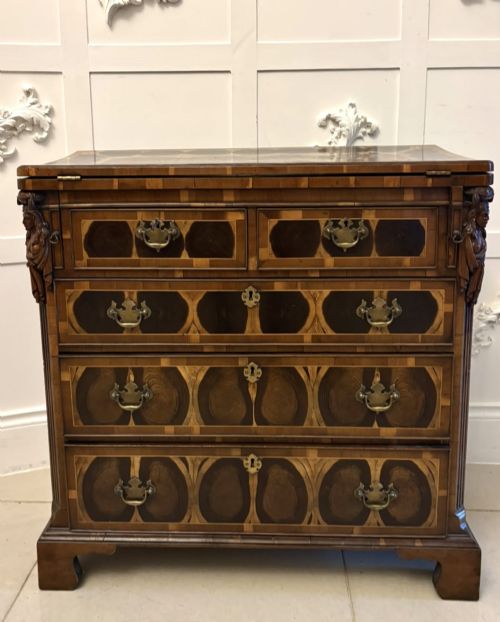
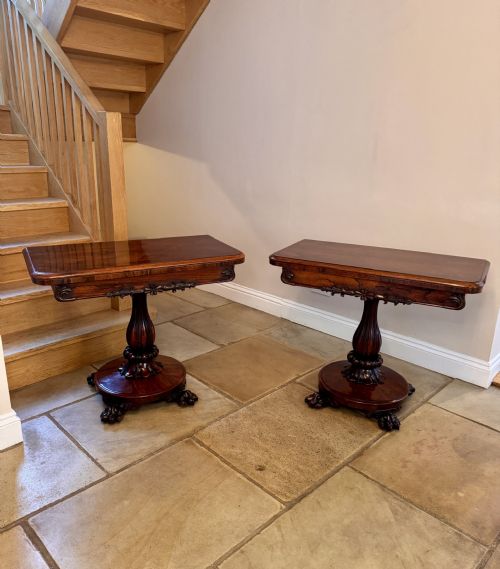
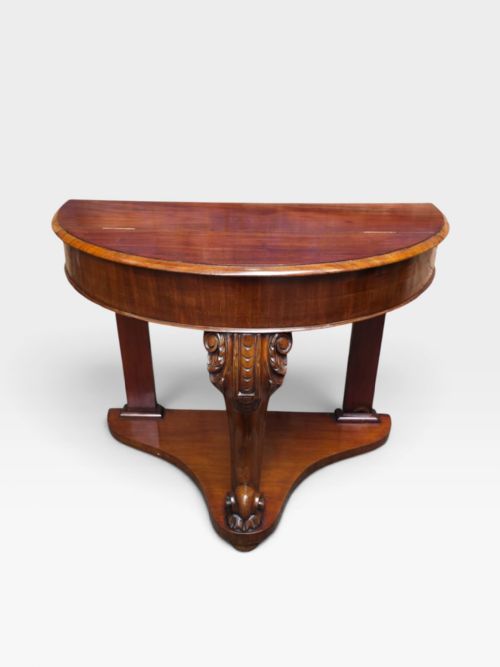
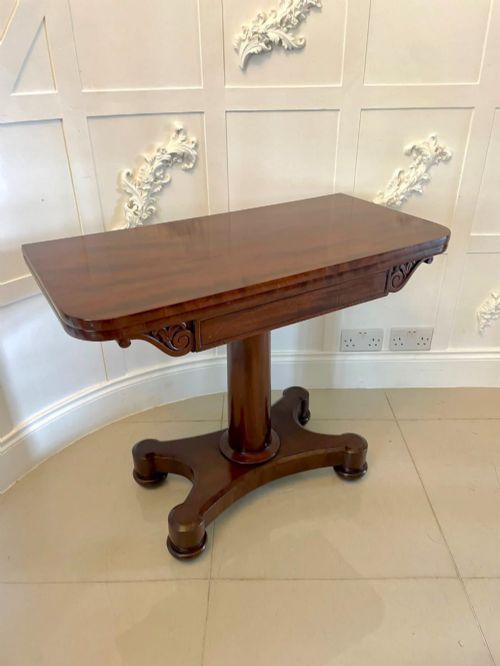
Wood Fold Over Table
A wood fold over table offers clever utility, expanding from a slender pier piece into a stable surface for cards, tea or writing.
Wood Fold Over Table
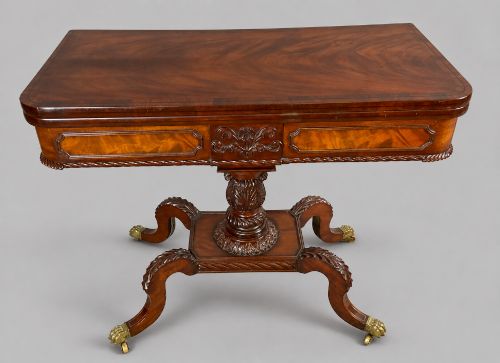
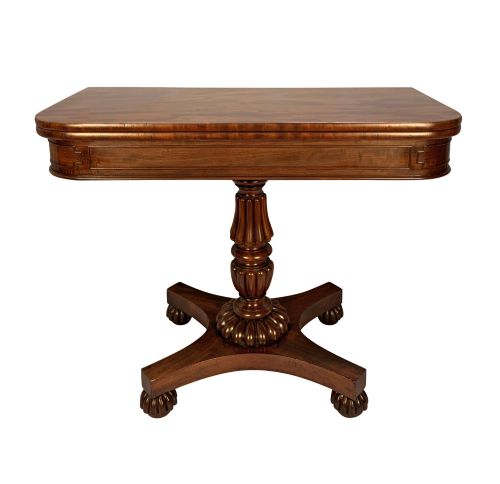
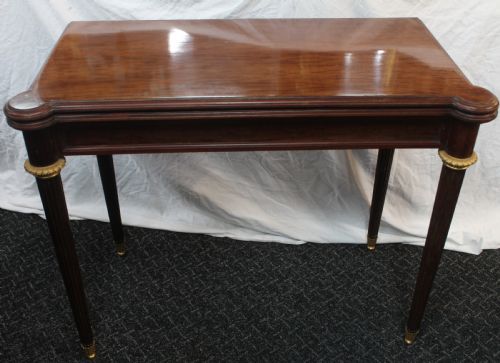
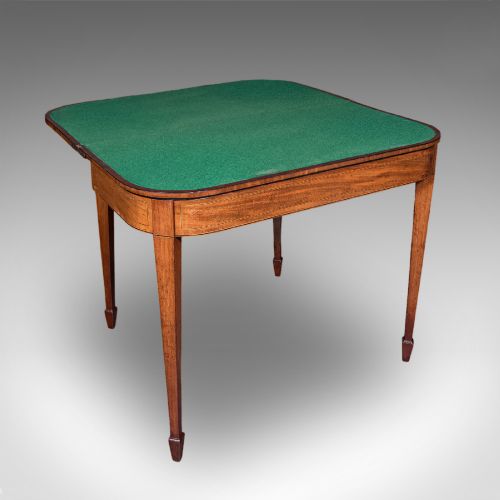
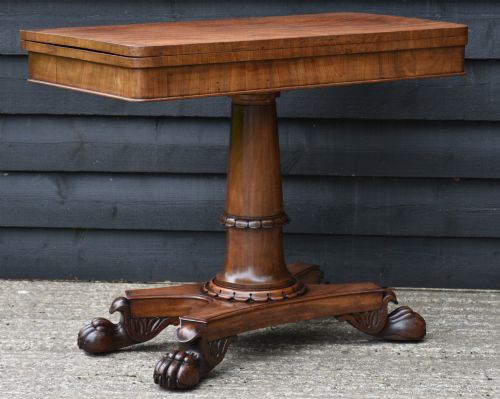
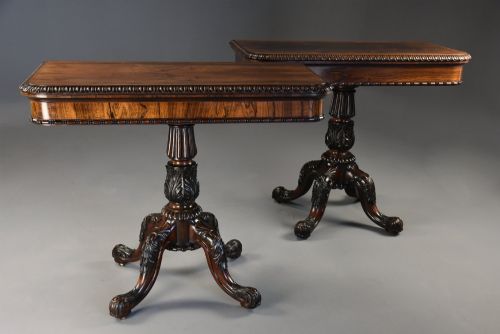
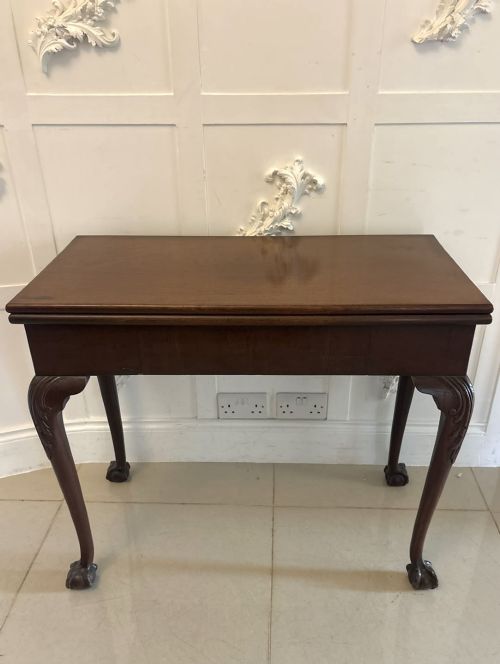
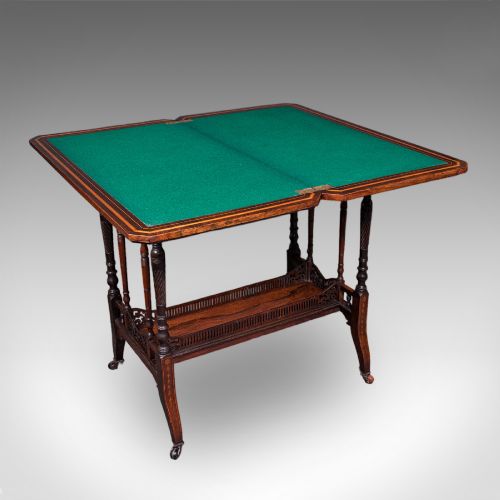
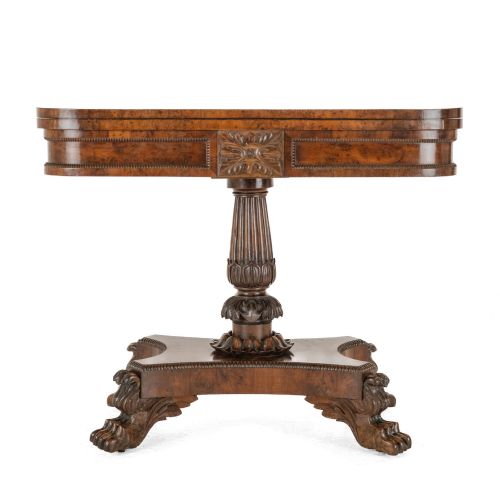
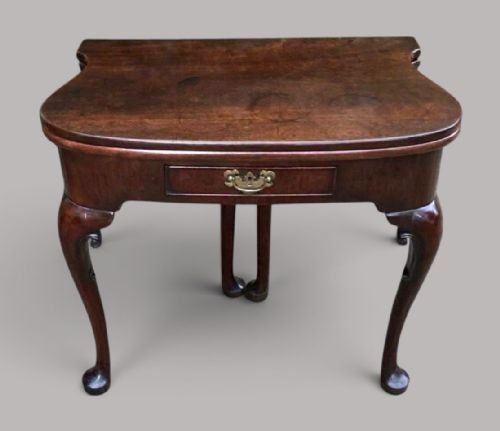
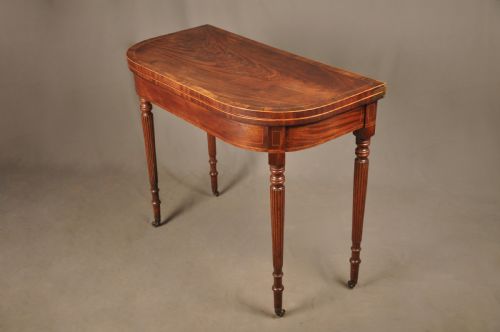
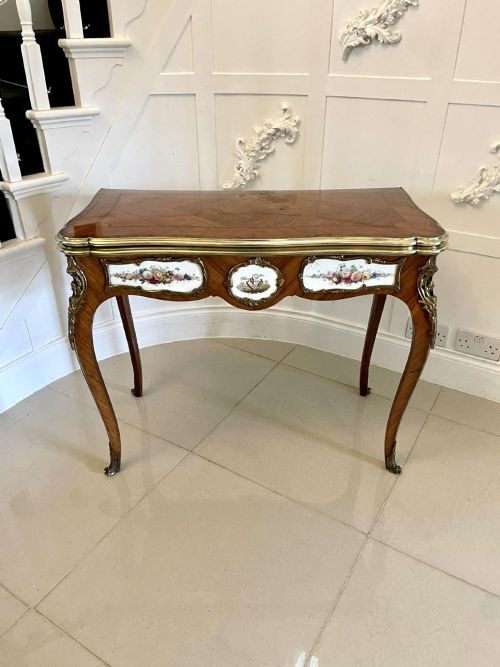
A wood fold over table serves multiple functions within period interiors, appearing most frequently on this page as mahogany or rosewood card, tea and games tables from the Georgian, Regency and Victorian eras. These designs adapt through hinged leaves, concertina actions or swivel tops to reveal lined playing surfaces or concealed storage compartments beneath.
Makers shaped these dual-purpose items in various silhouettes, including demi-lune, serpentine and rectangular formats, utilising styles ranging from George II and Chippendale to Sheraton, William IV and Grand Regency. The pieces function reliably as side or console furniture when closed, transforming swiftly to accommodate guests or evening entertainment.
Materials and Construction
Cabinetmakers constructed these surfaces using sturdy timbers such as mahogany, walnut and burr walnut, alongside exotic veneers like rosewood, satinwood, kingwood and burr yew wood. Selected pieces incorporate boxwood stringing and ormolu mounts to accent the timber grain.
The integration of brass inlay, intricate carved basket bases and concertina framing demonstrates precise joinery and hardware fitting. Finished surfaces rely on polished timber grains and cross-banding to frame the hinged tops securely.
Wood Fold Over Table Retail Price Guide 2026
Typical asking prices for wood fold over table among the pieces listed under this phrase on Sellingantiques today, from the lower quarter to the upper quarter. They describe what is for sale here now, not the wider market.
Certain Victorian tables hide secret compartments beneath the top, ready to swallow stray counters long after the game ends.
Distinctions in Standard
Evaluation rests upon the selection of timber figures, where richly figured mahogany, burr walnut and rosewood elevate the presence of a wood fold over table. The crispness of carved details on the legs and base indicates the skill applied during manufacture.
Construction integrity determines longevity, visible in how smoothly the hinged mechanism operates and how tightly the leaves align when closed. Thoughtful details such as brass inlay, cross-banding and secondary woods like satinwood or boxwood separate standard production from superior examples.
George Bullock
The Wood Fold Over Table Glossary
- Concertina action
- An expanding frame mechanism that supports a fold-over top when opened. This construction allows all four legs to move outward symmetrically for balanced support.
- Demi-lune
- A half-moon shape characteristic of tables designed to sit flush against a wall. Such profiles appear frequently on card and tea tables from the eighteenth and nineteenth centuries.
- Cross-banding
- A border of veneer laid with the grain running perpendicular to the main surface. This technique creates a distinct visual frame around tabletops.
- Serpentine
- A curved line that undulates gently with a convex centre flanked by concave curves. This contour adds movement to the front edge of a table top or frieze.
- Stringing
- Thin inlay lines of contrasting wood used to outline geometric panels on tabletops. Boxwood is frequently utilised for this decorative linear work.
Wood Fold Over Table: Frequently Asked Questions
What is a wood fold over table used for?
These pieces function primarily as dual-purpose furniture, operating as compact side or console tables against a wall when closed. Opening the hinged top reveals a baize-lined surface for card games or a polished timber space suited for tea and writing.
Such versatility made them essential for entertaining in period drawing rooms and parlours where floor space required efficient management throughout the day.
How do I date a wood fold over table?
Dating relies on observing structural characteristics, timber choices and stylistic details recorded across Georgian, Regency and Victorian eras. Georgian and Sheraton examples often feature straight mahogany legs and subtle stringing, whereas Regency pieces introduce rosewood, brass inlay and bolder carved supports.
Victorian iterations frequently display heavier burr walnut veneers, elaborate carved basket bases and concealed storage compartments beneath the turnover top.
How do I live with a wood fold over table?
Placing the item against a hallway or living room wall allows it to serve as a decorative console until an extra surface is needed. Raising the hinged leaf requires adequate clearance, so positioning the furniture away from tight corners ensures smooth operation.
Maintaining the polished timber surface involves gentle dusting and protecting the grain from direct heat and moisture.
What mechanisms support the folding top?
Makers employed several ingenious engineering methods to support the secondary leaf, including swing legs that pivot from the frieze and concertina frames that expand outwards. Other designs utilise a rotating swivel top where the entire upper surface pivots ninety degrees to rest securely upon the base frame.
These mechanical approaches ensured stability during card games or social gatherings without placing excessive strain on the main hinges.