






Wood Dumb Waiter
A wood dumb waiter is a tiered serving stand designed to hold dishes or drinks near a dining table without the need for a servant.
Wood Dumb Waiter
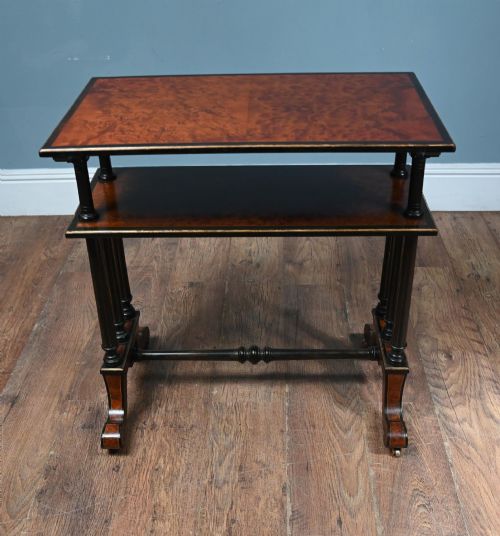
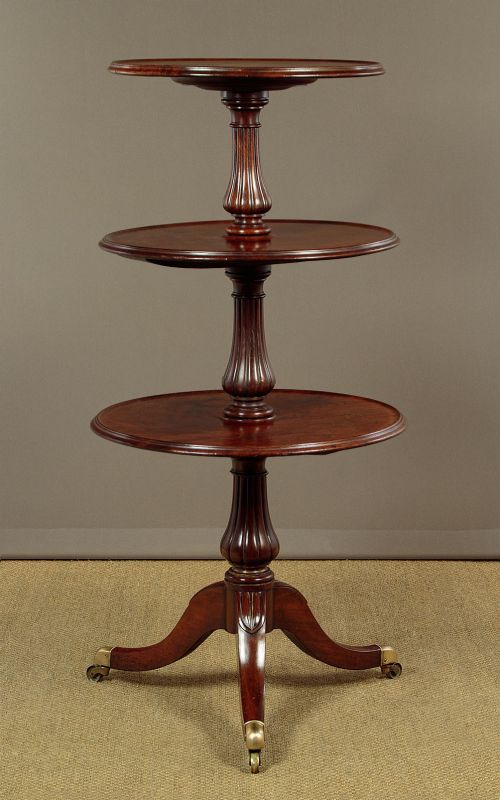
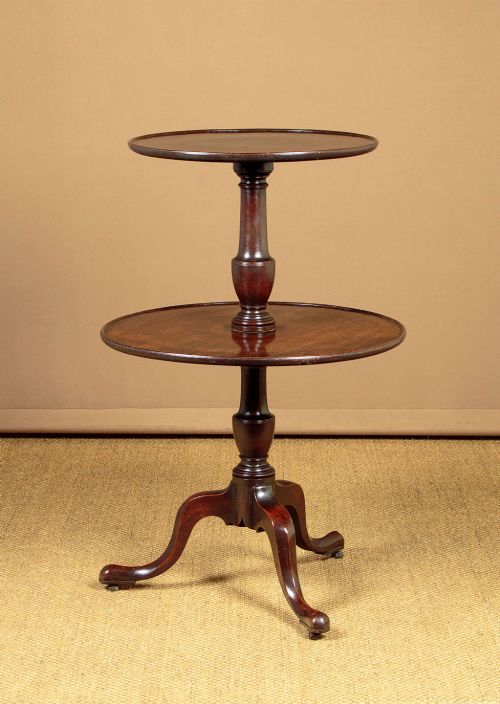
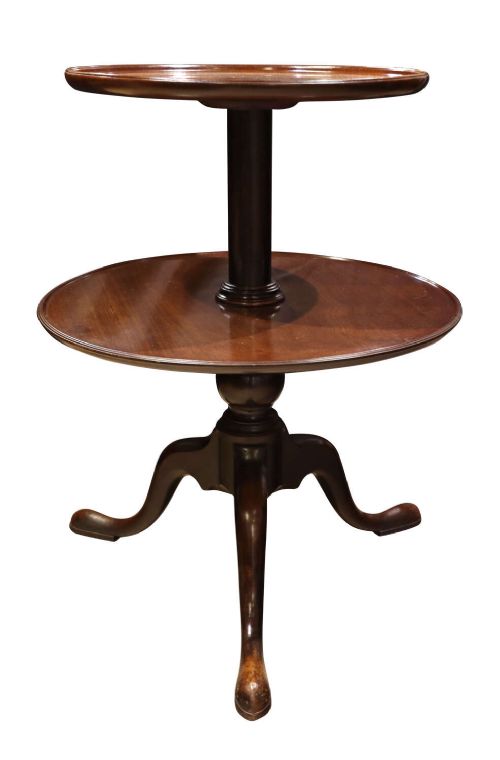
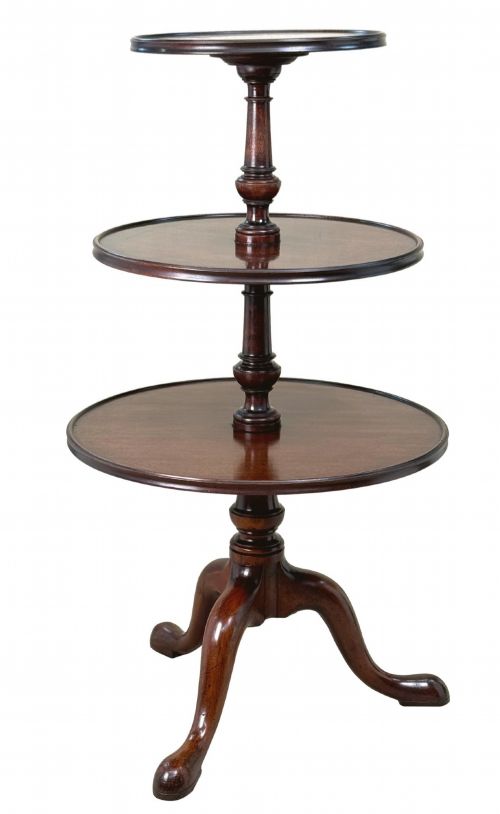
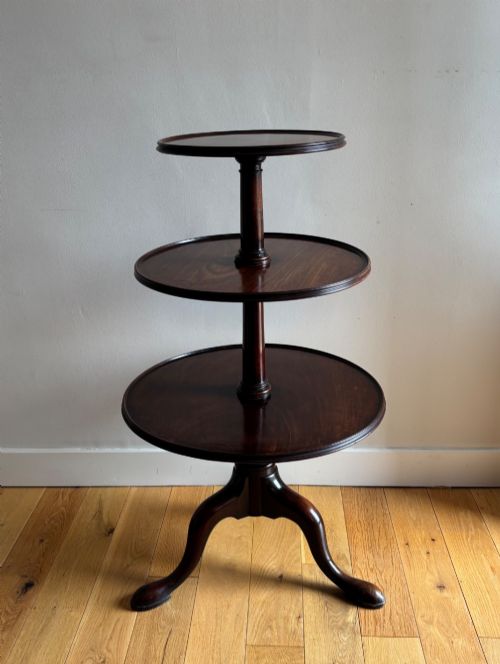
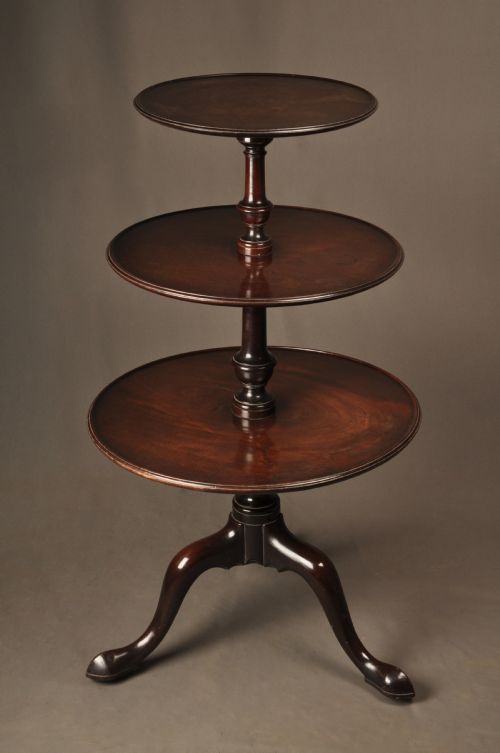
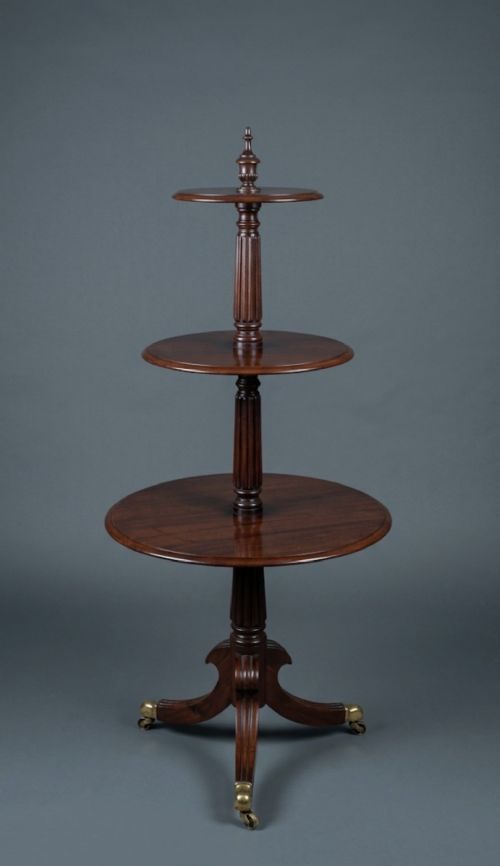
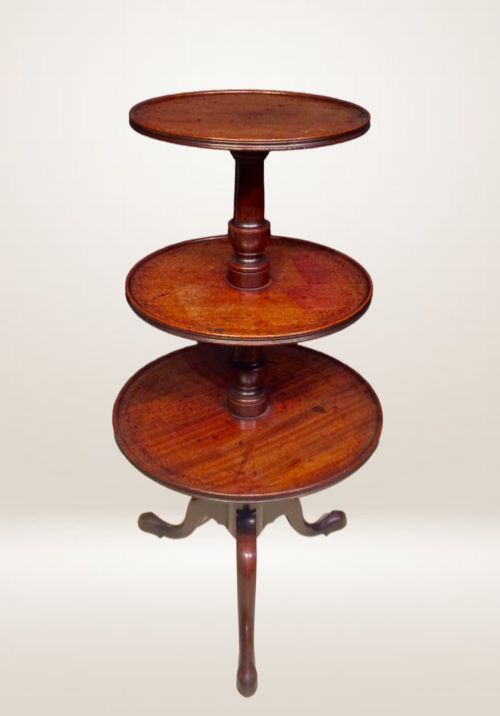
When you search for a wood dumb waiter, you encounter tiered serving stands spanning the eighteenth century through to the Edwardian era. The most common examples on this page are mahogany pieces featuring two or three circular graduating tiers supported on a central pillar and tripod base.
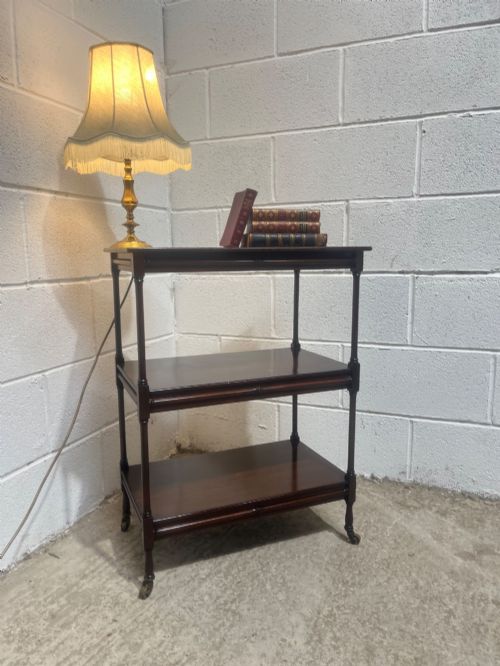
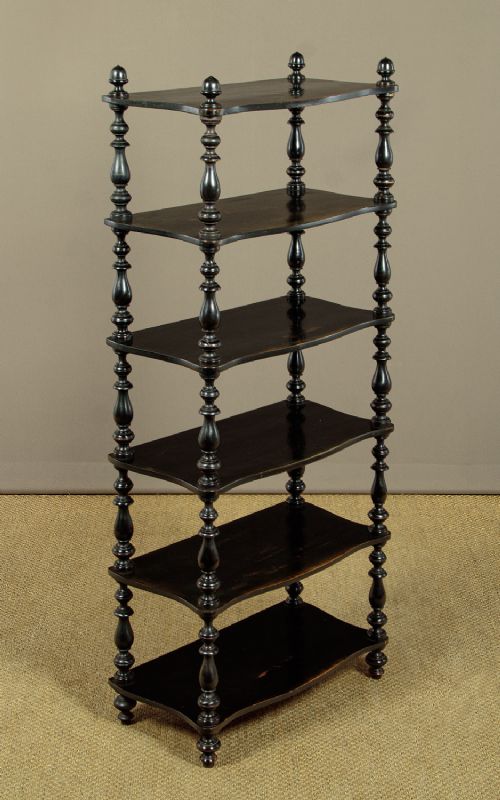
The form developed during the Georgian period to assist with dining by holding plates, bottles, and glasses within reach of guests. Alongside standard tables, the listings include rotating lazy susans, cake stands, and tall etageres from later Victorian and Edwardian workshops.
Materials and construction
Cabinetmakers constructed these pieces primarily from solid mahogany and Cuban mahogany, often turning the central pedestals on a lathe and shaping the tripod legs with pad or claw feet. Other woods appearing in the evidence include walnut, amboyna, rosewood, and ebonised timber.
Many examples incorporate brass fittings, such as castors on the feet or revolving mechanisms that allow the stacked circular tiers to turn independently. Joinery relies on traditional turning, pegging, and fitted joints to support the weight of multiple wooden trays.
Wood Dumb Waiter Retail Price Guide 2026
Typical asking prices for wood dumb waiter among the pieces listed under this phrase on Sellingantiques today, from the lower quarter to the upper quarter. They describe what is for sale here now, not the wider market.
Some pieces double as card butlers, proving that Victorian guests needed assistance with both their evening claret and their bridge hands.
Evaluating the pieces
Quality in a wood dumb waiter rests on the selection of timber, such as the rich grain found in Cuban mahogany, and the crispness of the turned column and carved legs. Superior examples show careful proportioning between the graduating tiers and balanced stability across the tripod base.
Mechanisms also divide standard utility items from finer pieces, particularly where brass pivoting hardware or revolving tiers operate smoothly without listing to one side. The integrity of the original tiered structure and the depth of the polished surface finish determine the standing of each piece.
The Wood Dumb Waiter Glossary
- Tripod base
- A three-legged support structure commonly found beneath the central pedestal of Georgian and Regency tables. This design ensures stability on uneven dining room floors.
- Tiered table
- Furniture built with multiple stacked surfaces rising one above another. These trays graduate in size from the largest at the bottom to the smallest at the top.
- Etagere
- A set of open shelves or tiers used for displaying or holding small items. The term often applies to multi-level serving furniture.
- Lazy Susan
- A revolving tray placed on a table or pedestal to allow easy access to food and drinks. Versions in the records include rotating tabletop models and larger freestanding stands.
- Cuban mahogany
- A dense, dark timber harvested in the Caribbean and prized by eighteenth-century cabinetmakers. It yields a deep patina and sharp carving detail.
Wood Dumb Waiter: Frequently Asked Questions
What is a wood dumb waiter used for?
These tiered stands served dining rooms by holding extra plates, cutlery, and wine bottles close to the table. They allowed diners to help themselves during meals without servants present.
Today, they function as display furniture or side tables in living rooms and dining spaces. The graduating tiers hold books, plants, or decorative objects while occupying a small floor area.
How do I date a mahogany dumb waiter?
Dating relies on stylistic clues such as the profile of the central pillar, the shape of the tripod legs, and the method of joining the tiers. Eighteenth-century George III examples typically feature clean classical turning and dense mahogany.
Later Victorian and Edwardian pieces introduce heavier carving, alternative woods like walnut or amboyna, and different brass hardware. Examining the timber grain and construction joints helps place a piece within its correct period.
Are the tiers fixed or movable?
Most traditional wood dumb waiters feature stationary tiers fixed securely to the central turned column at set heights. The graduating circular trays remain rigid during use.
Certain examples incorporate revolving mechanisms that allow the trays to turn independently on the central shaft. Some variants also include folding frames designed for compact storage.
How do I care for antique wood furniture?
Maintain the polished finish by dusting regularly with a soft, dry cloth and avoiding placement near direct heat sources or strong sunlight. These precautions prevent the wood from drying out or splitting.
Apply traditional beeswax periodically to nourish the mahogany or walnut surface and preserve the natural sheen. Avoid harsh chemical cleaners that can strip the historic polish.