


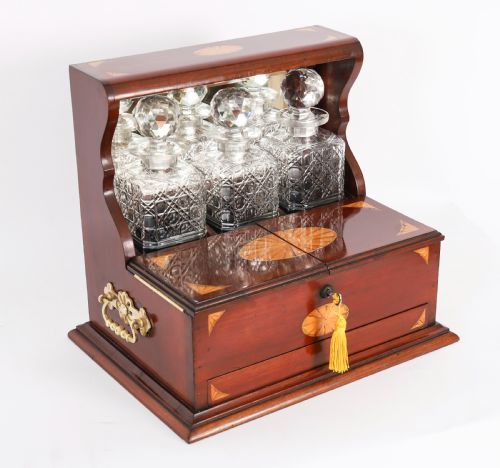


Wood Decanter Box
These wood decanter box pieces secure fine crystal bottles inside stout timber frames, keeping your best spirits safe and ready for the glass.
Wood Decanter Box
A wood decanter box serves to house and lock away glass containers holding wine or spirits, preserving both the contents and the serving gear within a single secure casing. These items frequently appear from the eighteenth and nineteenth centuries, taking the form of tantalus sets, cave a liqueur boxes, bottle carriers, and fitted drinks boxes.
The versions most commonly met on this page span the Victorian and Georgian eras, employing dense timbers and brass mounts to protect internal glass vessels. Many examples incorporate compartments for games, scent bottles, or jewellery alongside their primary function of holding cut crystal or lead crystal decanters.
Geographic origins vary across the available selection, ranging from English workshops to French makers and Scandinavian centres. Pieces like the George III wine bottle carrier or the Napoleon III cave a liqueur demonstrate how regional cabinetmakers adapted these portable cellars for domestic and officer use.
Materials and construction methods
Cabinetmakers built these frames using robust hardwoods such as mahogany and exotic coromandel, often enhancing the exterior with satinwood inlay or brass mounts. These dense timbers provided the structural integrity needed to support heavy glass bottles during transport.
Internal storage relied on precise carpentry to partition spaces for cut crystal decanters, lead crystal glasses, and occasionally game sets. Metal hardware, including locks and carrying handles, secured the contents while adding functional contrast to the dark wood surfaces.
Wood Decanter Box Retail Price Guide 2026
Typical asking prices for wood decanter box among the pieces listed under this phrase on Sellingantiques today, from the lower quarter to the upper quarter. They describe what is for sale here now, not the wider market.
Listings feature eighteenth and nineteenth-century pieces, spanning Georgian, Victorian, and Napoleon III periods using mahogany, coromandel, and cut crystal.
Judging the standard of execution
The distinction between standard containers and finer items rests upon the selection of timber and the precision of the internal fittings. Dense coromandel veneer and intricate satinwood inlay denote a higher level of workshop attention than plain secondary woods.
Glass quality plays a substantial role, with heavy cut crystal and gilt-decorated decanters indicating a superior production standard. Complete sets retaining their original matching bottles and functional locking mechanisms command greater interest than adapted or incomplete units.
The Wood Decanter Box Glossary
- Tantalus
- A locking drink stand that holds decanters in place by their stoppers, preventing removal until the locking bar is released. It earned its name because the bottles remain visible yet out of reach.
- Cave a liqueur
- A French portable drinks cabinet containing fitted glass bottles and small liqueur glasses within a lined interior. These boxes often feature marquetry or brass inlay.
- Coromandel
- A heavy, durable timber from Asian regions with a dark brown colour and striking black grain patterns. Cabinetmakers utilised it extensively for luxury Victorian boxes.
- Lead crystal
- A type of glass containing lead oxide that increases brilliance, weight, and clarity. It allows for deep, sharp cutting on decanter surfaces.
- Caddy
- A small box or container originally designed for holding tea or wine bottles. Eighteenth-century examples often use solid mahogany with brass carrying handles.
Wood Decanter Box: Frequently Asked Questions
What is a wood decanter box?
A wood decanter box is a portable or stationary timber case designed to safely store glass bottles and serving equipment. These containers range from simple bottle carriers to elaborate locking cabinets.
Inside, wooden partitions secure individual decanters and glasses to prevent breakage during movement. Many examples combine drink storage with compartments for games or personal items.
How did people use them?
Owners used these boxes in dining rooms, studies, and officers' quarters to serve wine and spirits to guests. The locking mechanisms kept expensive contents secure from household staff or uninvited drinkers.
Portable versions allowed travellers and military officers to carry fine liquor securely on journeys. Upon arrival, the box opened to provide an instant social station for entertaining.
How do I date a wood decanter box?
Dating relies on observing the timber species, construction joints, brass hardware styles, and the type of glass fitted inside. Georgian pieces often employ solid mahogany with simple lines, while Victorian examples frequently show coromandel veneers and complex locking bars.
Glass style offers further clues, as hand-blown lead crystal differs noticeably from later machine-pressed production. Examining the interior lining and hinges helps confirm the period of manufacture.
How should I care for the wood?
Maintain the timber by keeping the box away from direct heat sources and strong sunlight, which can dry out the polish and veneer. Regular dusting with a soft, dry cloth preserves the finish without harming the grain.
Occasional application of appropriate wax feeds the antique wood surfaces. Avoid using modern liquid polishes that contain silicones or harsh chemicals.