

Wood Canterbury Rack
A wood canterbury rack is a compartmented stand for papers and folios, offering neat utility and fine cabinet-making from the Georgian to Edwardian eras.
Wood Canterbury Rack
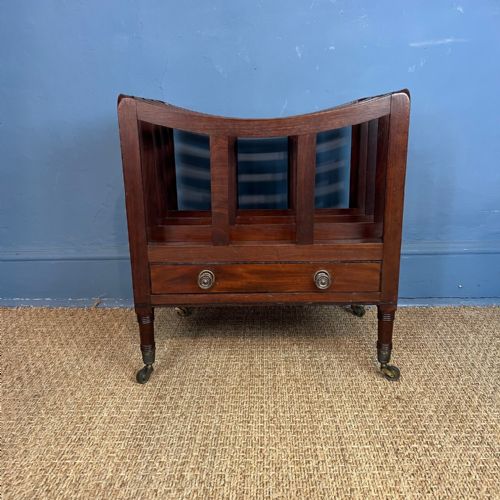
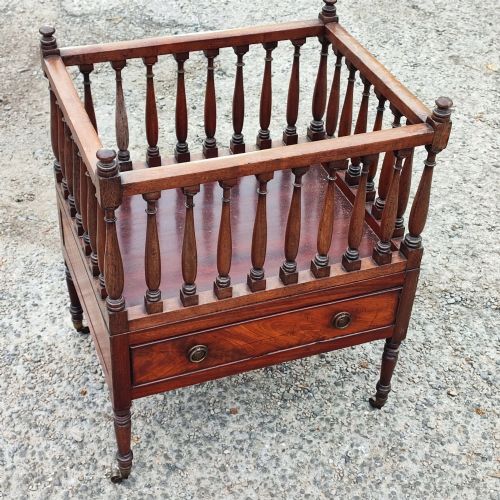
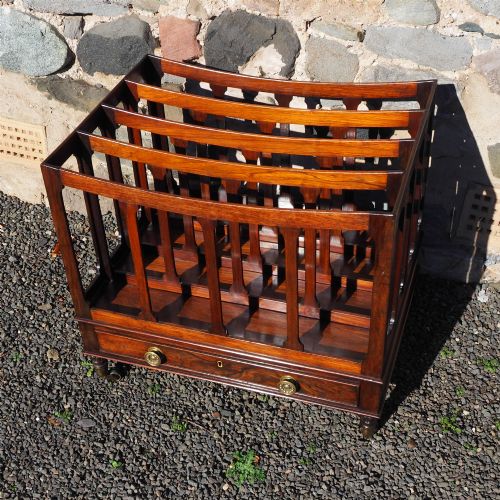
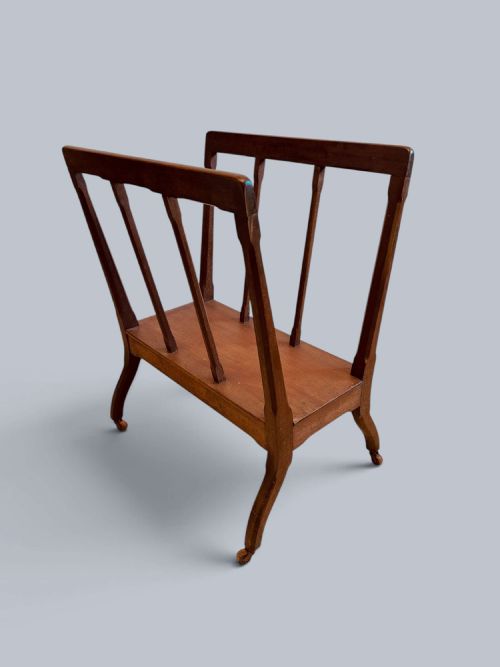
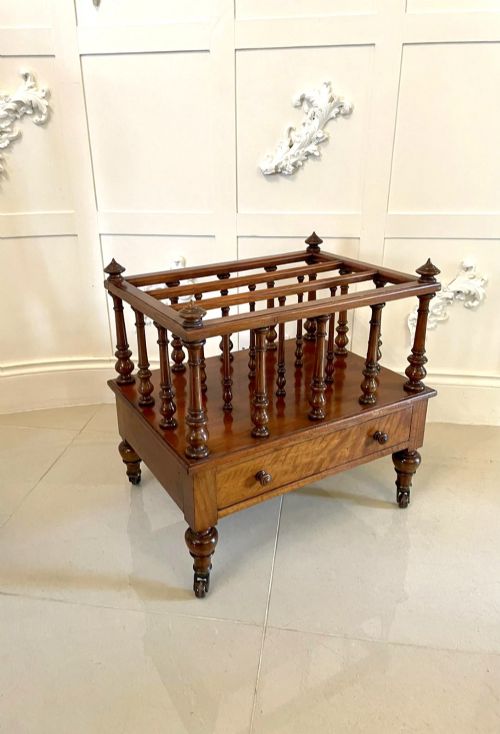
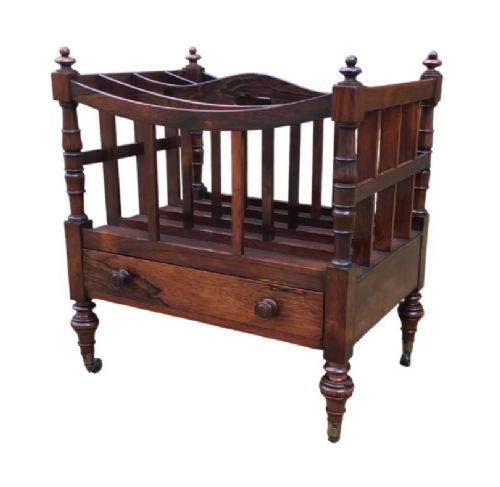
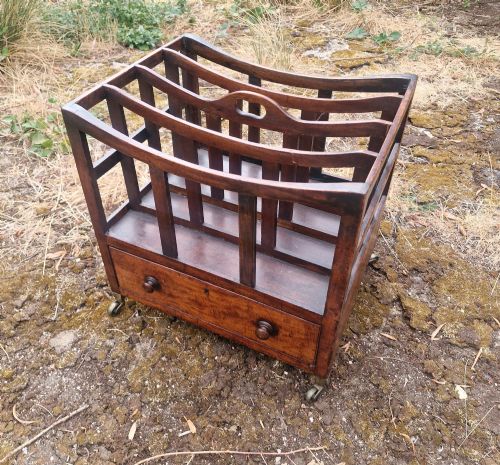
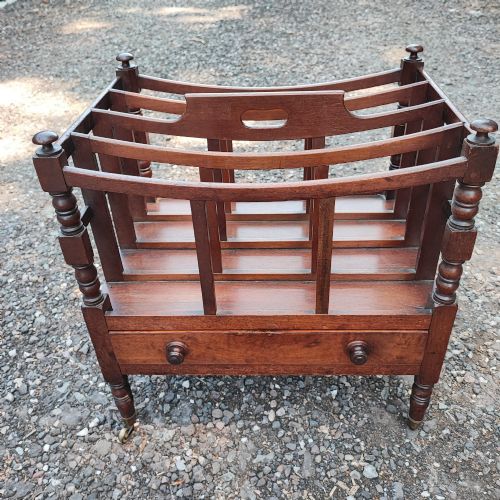
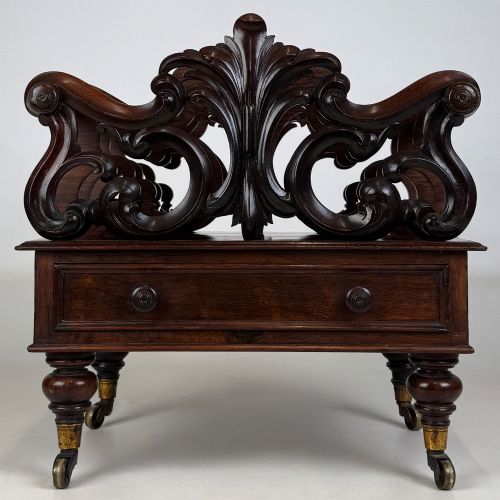
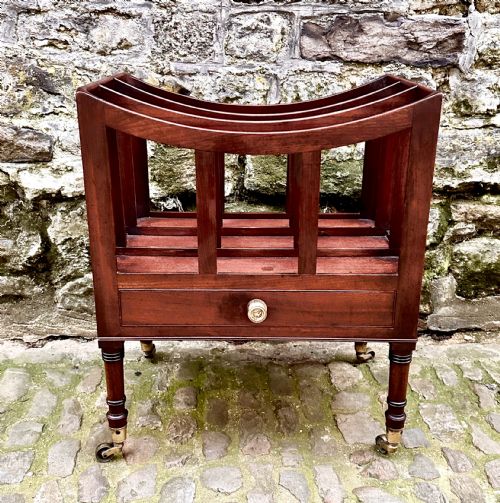
When you search for a wood canterbury rack, you look for a low freestanding stand traditionally designed to hold sheet music, newspapers, or folios. These pieces typically feature partitioned upright sections above a low drawer, standing on slender legs with castors.
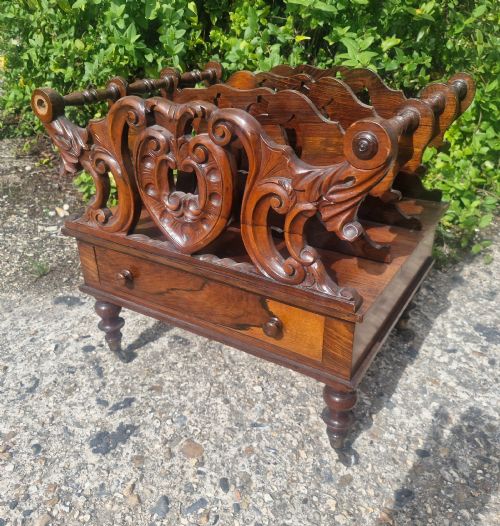
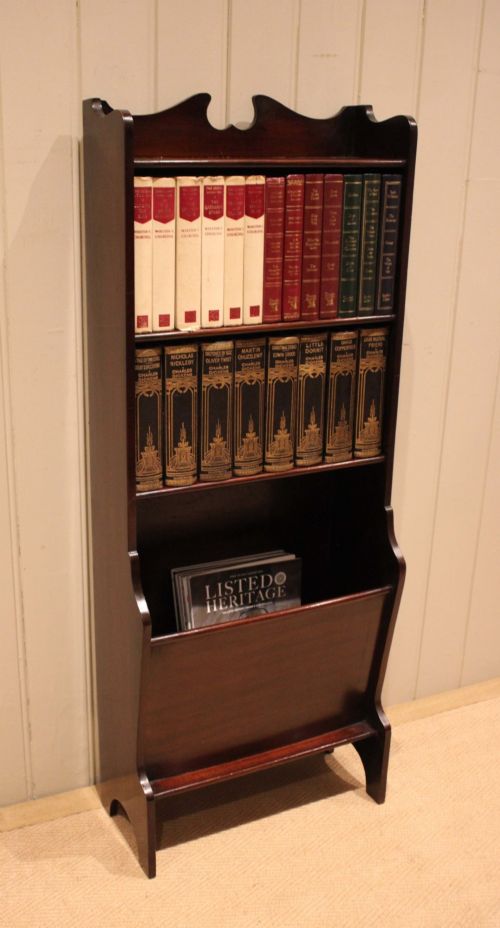
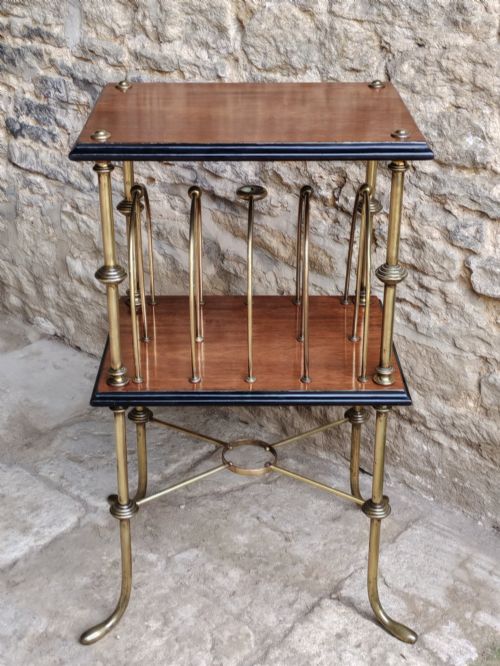
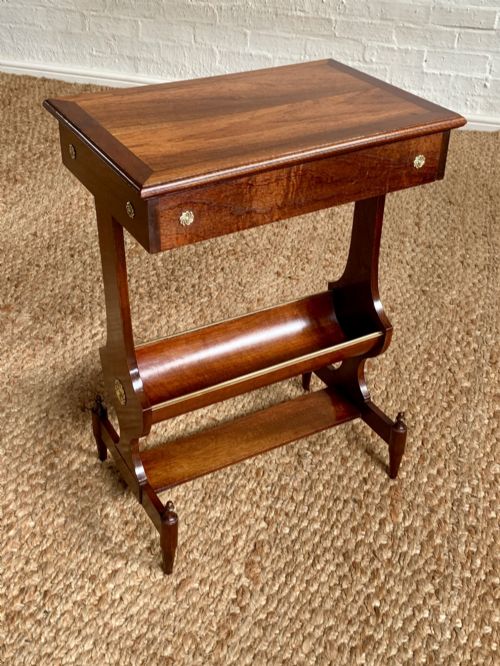
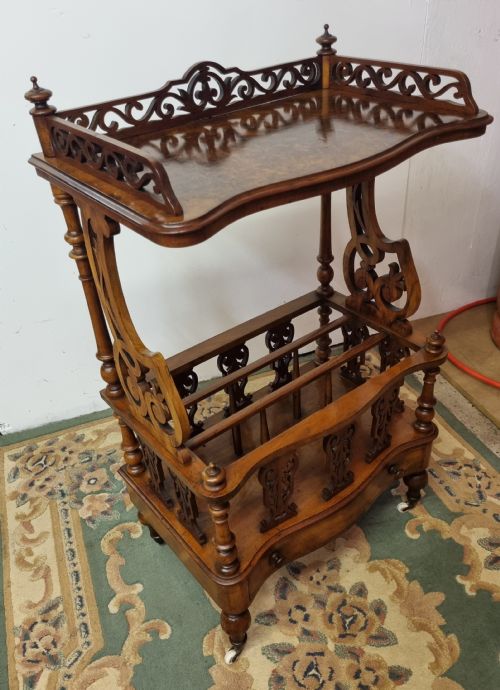
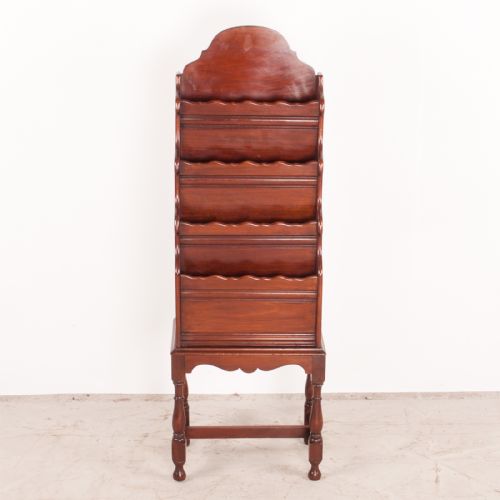
The versions you meet most frequently on this page date from the Regency and Victorian periods, though examples stretch from the eighteenth century into the Edwardian era. Forms range from boat-shaped designs and music stands to combined side tables and whatnots.
Makers shaped these stands to serve domestic parlours and music rooms, evolving from simple wooden partitions to elaborate multitiered furniture pieces. They remain practical items for modern interiors while displaying distinct historical cabinet styles.
Materials and construction
Cabinet-makers relied heavily on dense hardwoods, selecting figured mahogany, rosewood, walnut, and burr walnut for their rich grain patterns and durability. These timbers were often polished to a high sheen to highlight the natural figures in the wood.
Metal fittings such as brass castors and delicate hinges appear frequently, permitting easy movement across carpeted floors. Joinery combined precise slotting for the vertical slats with dovetailed drawer construction beneath the main rack.
Wood Canterbury Rack Retail Price Guide 2026
Typical asking prices for wood canterbury rack among the pieces listed under this phrase on Sellingantiques today, from the lower quarter to the upper quarter. They describe what is for sale here now, not the wider market.
Listings feature woods spanning mahogany, rosewood, walnut, burr walnut, and figured walnut alongside brass hardware.
What separates the fine from the ordinary
Quality rests in the crispness of the turning on the upright supports and the selection of the timber veneers, particularly on burr walnut and rosewood models. Finer examples display meticulous attention to the junction between the slatted dividers and the base.
The presence of integrated drawers with smooth mahogany linings and original brass hardware distinguishes superior pieces from standard workshop productions. Structural rigidity in the vertical dividers marks the difference between sturdy longevity and loose construction.
Gillow s
The Wood Canterbury Rack Glossary
- Canterbury
- A low stand with partitions for holding music sheets, newspapers, or folios. The name originates from the Archbishop of Canterbury, who supposedly commissioned the first such piece.
- Folio
- A large sheet of paper folded once, or a collection of loose papers and music scores. Canterburys were specifically sized to store these flat items upright.
- Whatnot
- An open set of freestanding shelves used for displaying ornaments or books. Some canterburys incorporate this form, combining partitions with tiered shelving above.
- Regency
- An English design style spanning the early nineteenth century, characterised by classical motifs and dark exotic woods. Pieces from this era often feature distinctive boat shapes.
- Serpentine
- A gently curving contour resembling a snake, used to shape the lower wooden trays or tabletops of certain walnut examples.
Wood Canterbury Rack: Frequently Asked Questions
What were wood canterbury racks originally used for?
These stands served as dedicated storage for sheet music, unbound books, and daily newspapers within nineteenth-century drawing rooms and parlours. Their compartmented design kept papers organised and accessible near pianos or reading chairs.
Over time, the form adapted to hold general folios and magazines, shifting slightly in function while retaining the signature divided layout above a drawer.
How do I date a wood canterbury rack?
Dating relies on identifying the prevailing timber choices, hardware, and structural styles associated with specific design periods. Georgian and Regency pieces typically showcase straight-grained or figured mahogany with linear slats, while Victorian examples lean towards richly veneered rosewood and burr walnut.
Later Edwardian models often integrate simpler joinery and multi-purpose configurations like sheet music cabinets with drawers.
Are these racks sturdy enough for daily use?
Most solid hardwood canterburys remain structurally robust and well-suited for holding modern magazines, newspapers, or vinyl records. The vertical partitions are traditionally tenoned into the base, providing reliable strength for everyday domestic demands.
Care should be taken when moving them across uneven floors to protect the slender legs and original brass castors from undue strain.
What is the difference between a music stand and a canterbury?
While both items served musical households, a traditional music stand often featured an adjustable reading desk for holding scores at eye level. A canterbury is primarily a low floor-standing receptacle designed strictly for horizontal or vertical storage underneath.
Some hybrid pieces merge these functions, offering both partition racks and table surfaces or auxiliary storage.