

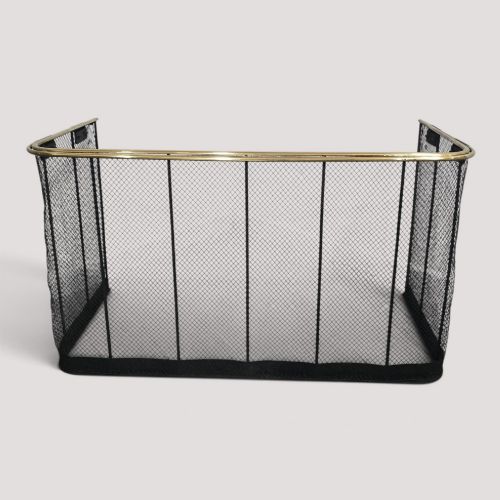
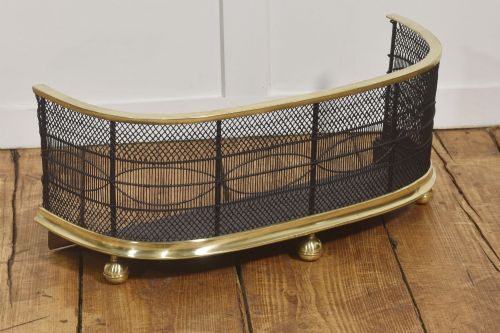


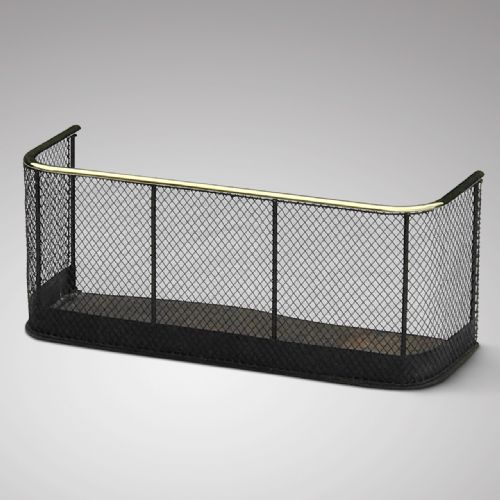


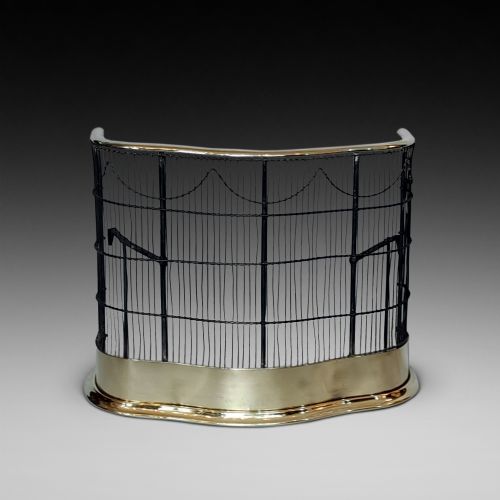


Wire Fire Guard
These wire fire guard pieces provide essential hearth safety while maintaining the open visibility of the fire.
Wire Fire Guard
A wire fire guard protects a room from sparks and embers while keeping the warmth fully visible. These guards appear in forms such as nursery fenders, spark guards, and fire screens across various periods.
Most examples found here date from the nineteenth century and the Edwardian era, often featuring brass top rails or brass rims combined with wire mesh. Their primary function was domestic protection, particularly in homes with children.
The styles span Regency elegance through to heavy Victorian builds and English Country House utility. Buyers encounter freestanding mesh frames, bowed nursery fenders, and embossed brass screens.
How they were made
Construction relies heavily on iron wire, woven iron wire, and steel wire mesh framed by structural iron or brass. The wire is secured within rigid metallic borders to withstand daily domestic heat and movement.
Brass frames and top rails provide a contrasting finish to the darker wire mesh bodies. Certain pieces incorporate clothes rails or extended nursery fenders for added household utility.
Wire Fire Guard Retail Price Guide 2026
Typical asking prices for wire fire guard among the pieces listed under this phrase on Sellingantiques today, from the lower quarter to the upper quarter. They describe what is for sale here now, not the wider market.
Listings feature items spanning the Regency period, the nineteenth century, the Edwardian era, and the 1920s country house style.
What varies in quality
Quality rests in the rigidity of the wire mesh and the heaviness of the surrounding brass or iron frame. Finer examples display tight, even weaving in the wire and substantial brass top rails that hold their shape securely.
Proportion and decorative restraint separate standard utility pieces from finer Regency or country house items. The integration of solid brass rims and thoughtful bowed shapes indicates higher original manufacture.
The Wire Fire Guard Glossary
- Nursery fender
- A low, protective barrier designed to encircle a hearth and keep children at a safe distance from the fire. These guards often feature tall wire mesh sides and a sturdy brass top rail.
- Spark guard
- A compact screen placed directly in front of the fire opening to catch flying embers. They utilise fine wire mesh to stop sparks while allowing maximum heat to pass through into the room.
- Fire screen
- A decorative panel used to shield the room from the radiant heat of an unlit fireplace during warmer months. They frequently incorporate embossed brass panels or framed mesh.
- Woven iron wire
- A flexible metallic mesh formed by interlocking individual strands of iron. This material provides the transparent barrier essential for observing the flames safely.
- Brass top rail
- The decorative and structural metal strip running along the upper edge of many guards. It offers a clean finish and serves as a convenient handle.
Wire Fire Guard: Frequently Asked Questions
What is a wire fire guard?
A wire fire guard is a protective hearth accessory made from woven wire mesh and metal frames designed to stop sparks.
They were essential nineteenth-century household items, particularly in nurseries, to protect children and furnishings from open flames.
How do I date a wire fire guard?
Dating relies on materials, construction methods, and stylistic cues such as Regency frames or heavy Victorian brass top rails.
Earlier nineteenth-century pieces often feature hand-worked iron wire and robust brass rims, whereas Edwardian examples tend toward lighter wire mesh designs.
Can I use an antique fire guard with an open fire?
Many antique wire guards remain structurally sound enough for daily domestic use around active open hearths.
Buyers should check the integrity of the wire mesh and the stability of the frame before exposing them to intense heat.
What is the difference between a fire guard and a fire screen?
Fire guards are primarily safety barriers built with wire mesh to contain sparks and keep children away from flames.
Fire screens often incorporate solid brass panels to block the dark opening of an unlit fireplace during summer.