
Windsor Armchair Wood
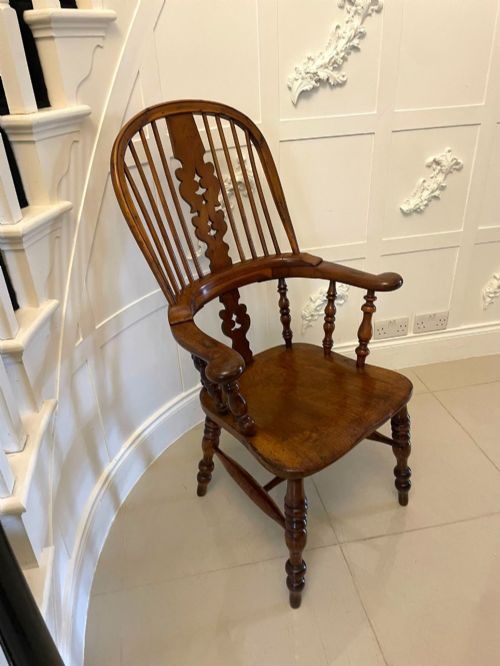
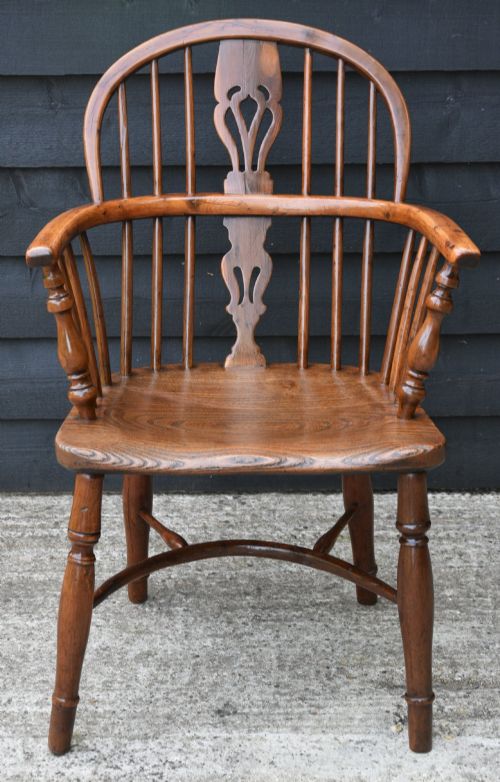
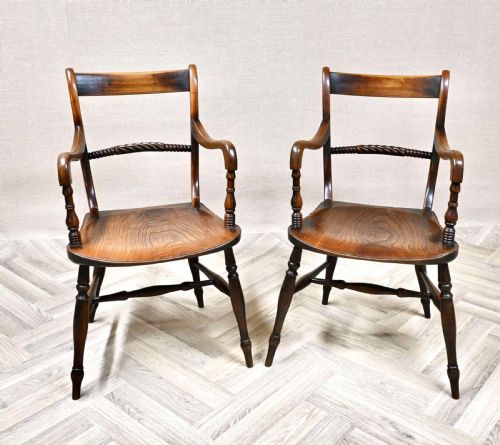
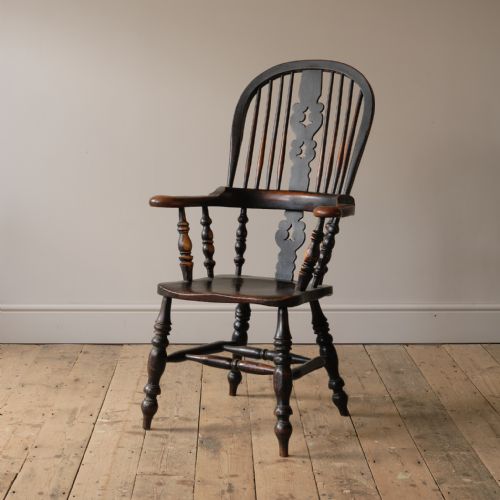
A windsor armchair wood selection gathers robust country seating shaped from native timbers across Georgian and Victorian England.
Windsor Armchair Wood
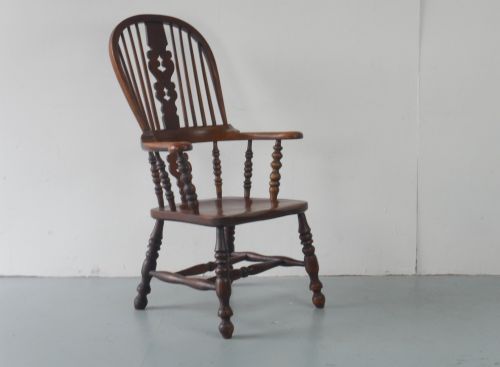
A windsor armchair wood search brings together traditional seating built with a solid wooden saddle seat into which the legs, back spindles and bow are independently wedged or socketed.
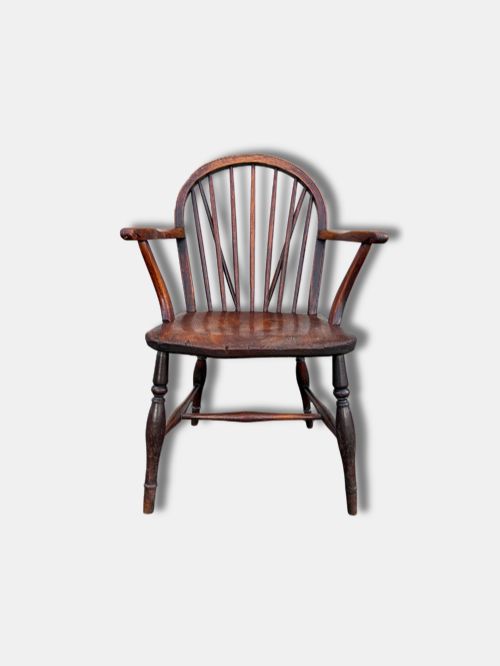
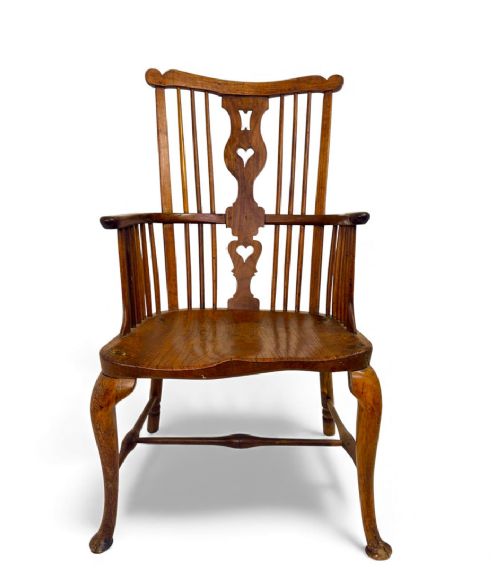
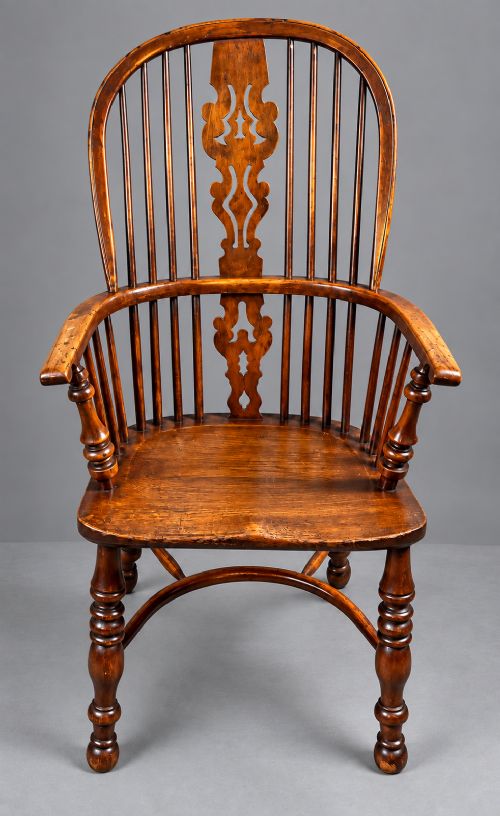
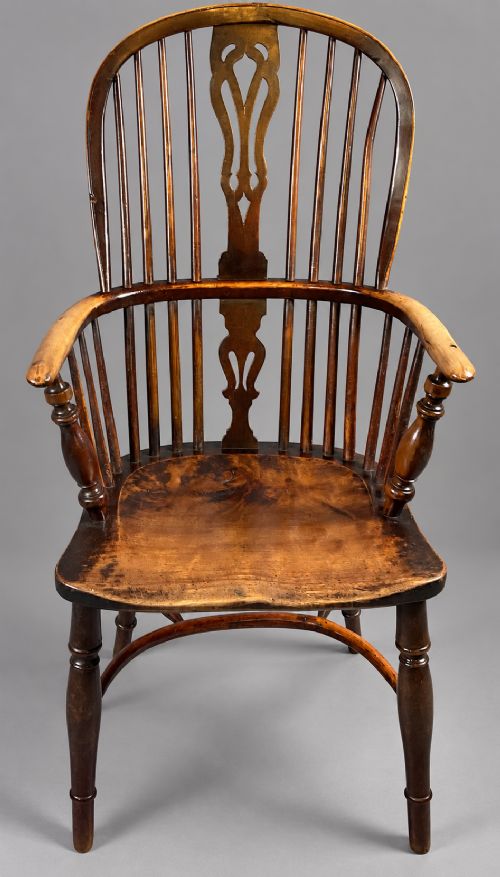
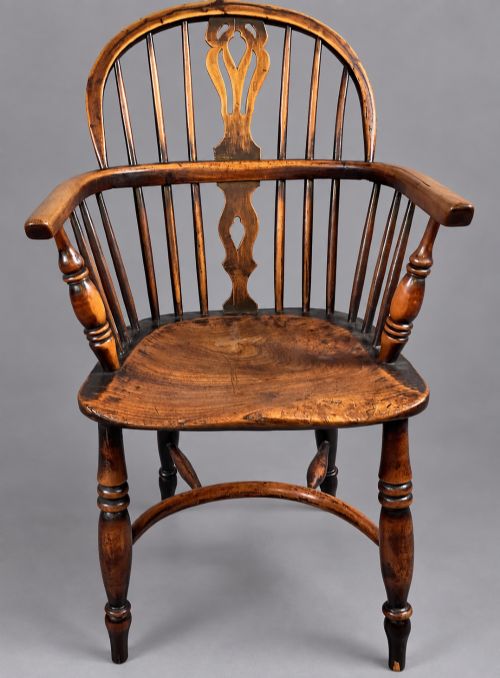
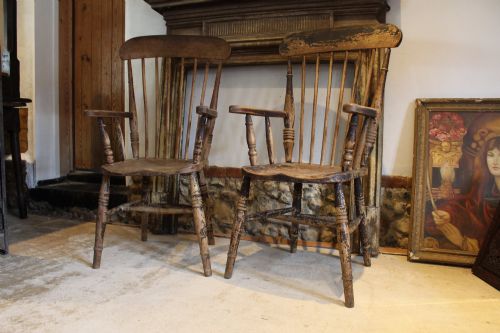
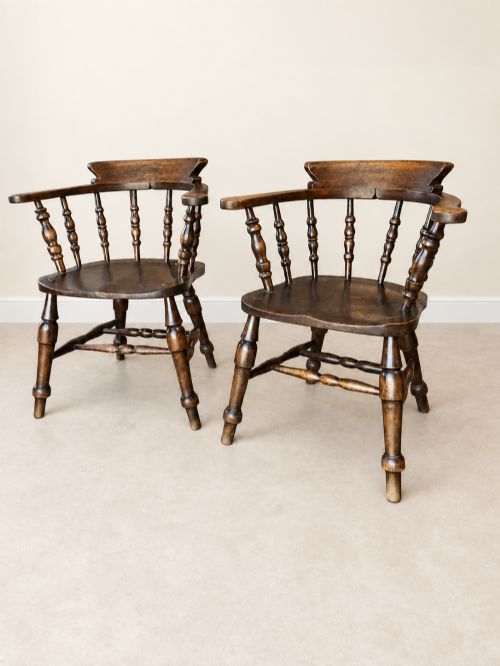
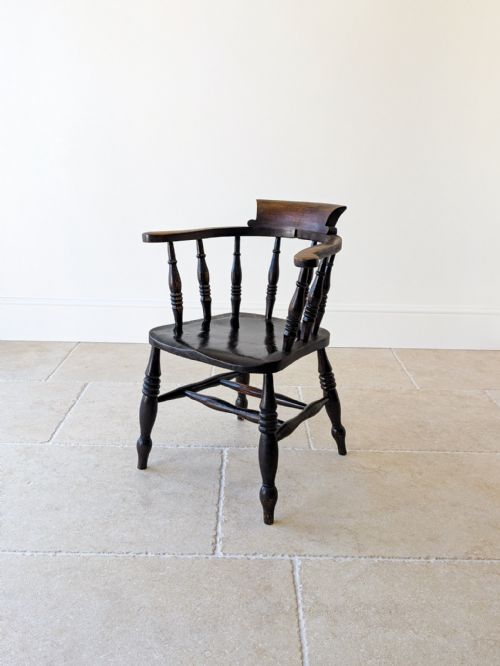
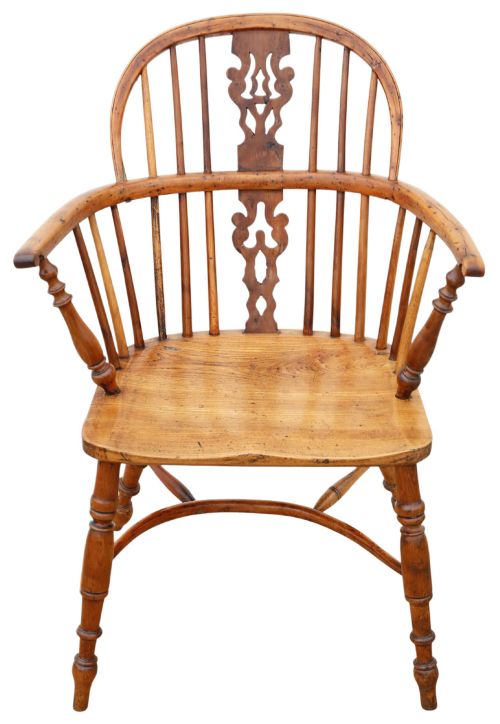
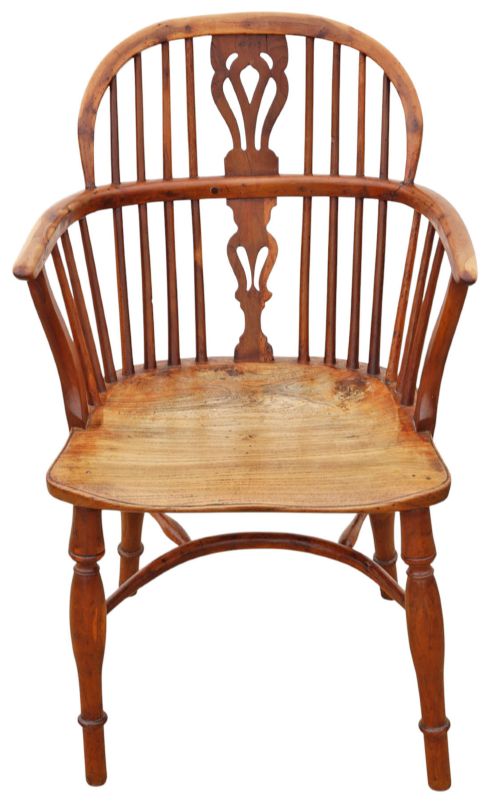
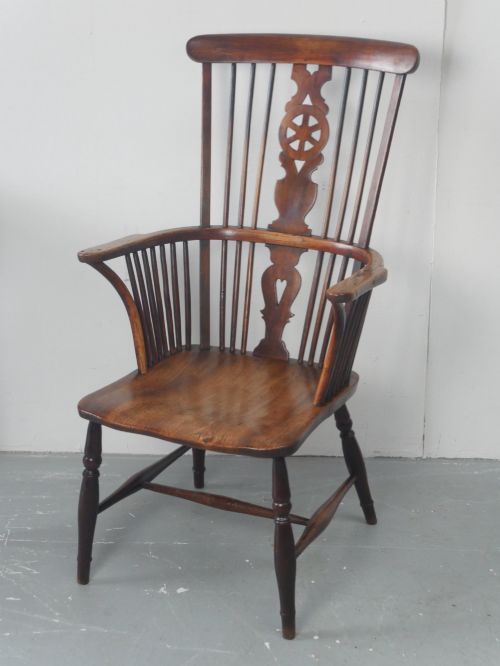
The version most commonly encountered on this page is the 19th century elm and ash or yew example, featuring either a high comb back, a wheel back or a low bow back.
These chairs originate primarily from English rural workshops and regional centres such as the Thames Valley and Nottinghamshire, serving both domestic kitchens and farmhouse parlours.
How they were made
Maker construction relies on combining contrasting native timbers, typically utilising tough elm for the sculpted solid seat plank because it resists splitting under the stress of wedged legs.
Frameworks employ flexible ash, yew or beech for the steam-bent hoops, arms and slender spindle backs, securing the components with traditional wedged tenons.
The inventory records regional English production spanning the 18th, 19th, and early 20th centuries.
What varies in quality
Quality depends upon the fluidity of the timber grain, the depth and comfort of the sculpted saddle seat, and the elegance of the steam-bent back hoop.
Finer examples display careful selection of richly figured yew wood or striking grain contrast between the elm seat and ash uprights, alongside balanced proportions in the arm terminals and leg turnings.
J Spencer·Robert Prior
The Windsor Armchair Wood Glossary
- Comb back
- A Windsor chair variation featuring a low back surmounted by a horizontal headrest supported by vertical spindles, resembling the teeth of a comb.
- Wheel back
- A chair back incorporating a pierced central wooden splat carved in the shape of a spoked carriage wheel.
- Saddle seat
- A heavy plank of timber, typically elm, scooped and hollowed into a shallow saddle shape for ergonomic seating.
- Bow back
- A continuous steam-bent piece of wood forming the arms and the top rail of the chair in a single curved arc.
- Stick back
- A minimalist chair construction where turned wooden spindles form the entire backrest without a central splat.
Windsor Armchair Wood: Frequently Asked Questions
What is a windsor armchair wood?
A Windsor armchair wood piece is a traditional English country chair constructed with a thick wooden seat where individual turned legs and back spindles are fitted directly into drilled holes.
Unlike standard upholstered furniture, the structural frame of these chairs remains entirely exposed, celebrating the natural grain of native timbers like elm, ash, and yew.
How do I date a windsor chair?
Dating relies on examining the construction methods, wood types, and regional design traits visible in the frame and undercarriage. Earlier 18th century pieces often feature heavier comb backs and fruitwood elements, while later Victorian versions frequently incorporate beech or wheel-back splats.
Inspect the underside of the seat for tool marks, screw types, and signs of wear that indicate age and original assembly techniques.
Where were these chairs made?
These seating pieces originated primarily in rural English workshops, with distinct regional styles developing across the Thames Valley, Nottinghamshire, and the West Country. Local makers utilised the native trees available in their immediate geographic areas, resulting in characteristic local variations in wood choice and back design.
Towns and rural counties developed specific framing traditions that help historians trace the geographic origins of individual chairs.
How do I care for wooden chairs?
Maintain the finish by keeping the timber away from direct heat sources and rapid temperature fluctuations that can cause the wood to dry out and split. Occasional application of a suitable wax polish helps nourish the surface and preserve the historic patina.
Avoid excessive moisture during cleaning and regularly check the undercarriage wedging to ensure the legs and spindles remain securely seated.