



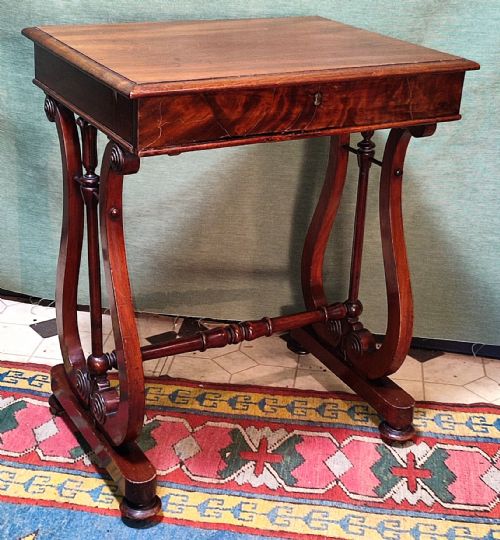
William IV Lamps
William IV lamps and related pedestal pieces bring robust proportion and dark timber warmth into a room.
William IV Lamps
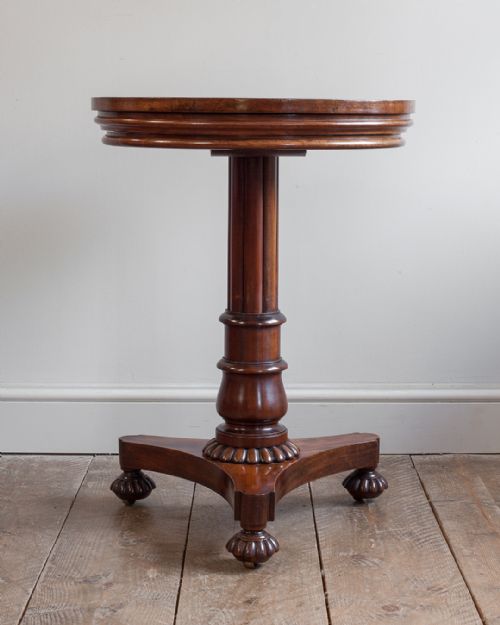
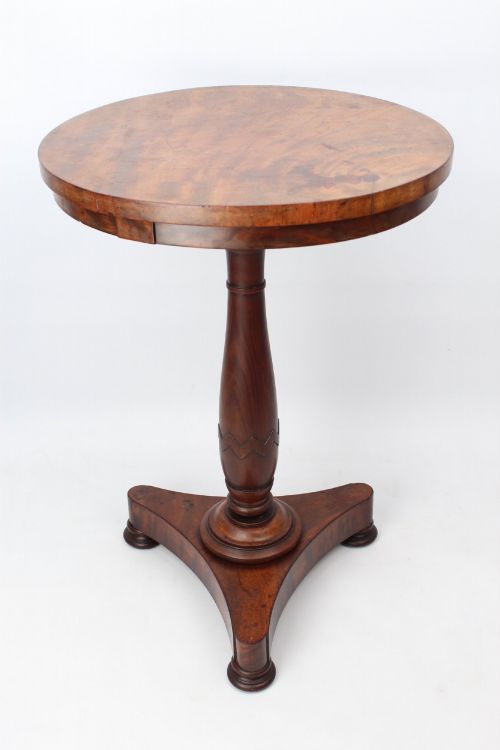
When you search for william iv lamps, you encounter a selection spanning table and floor lighting alongside occasional tables adapted or utilised as lamp stands. The form bridges late Regency severity and early Victorian elaboration, drawing on heavy pedestals and circular or octagonal tops.
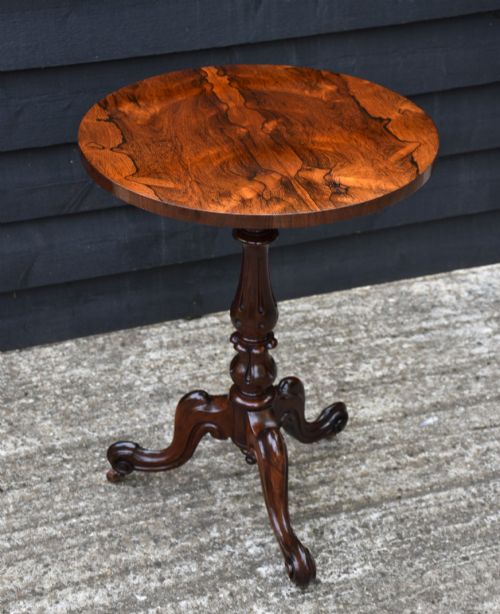
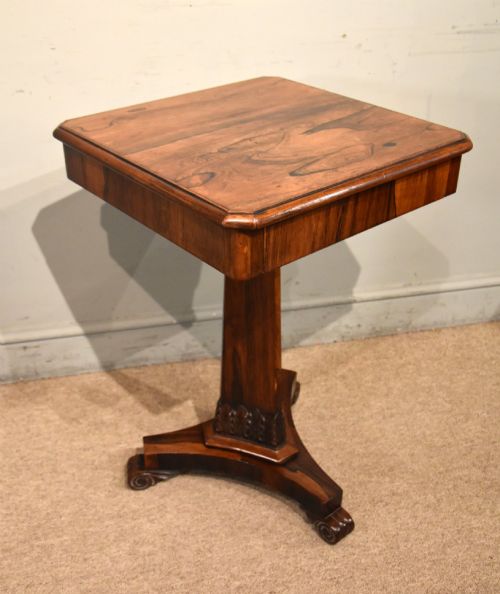
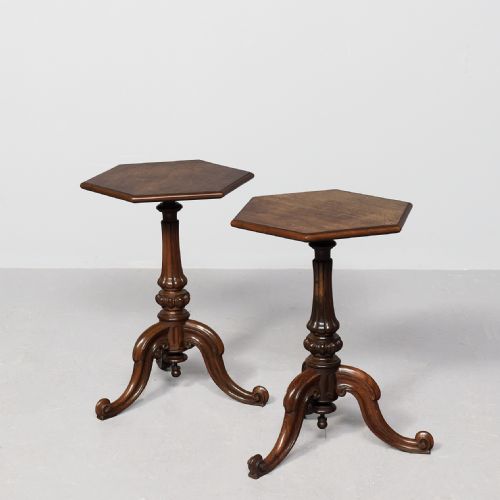
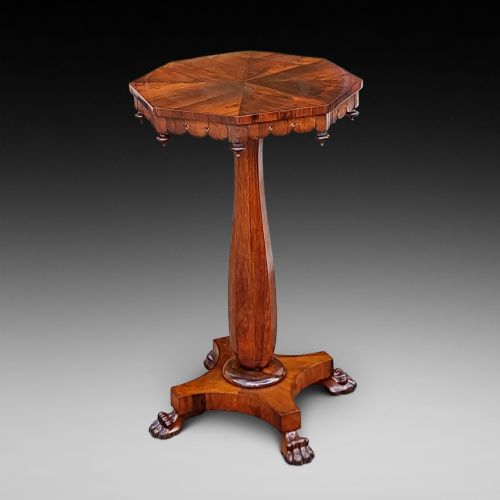
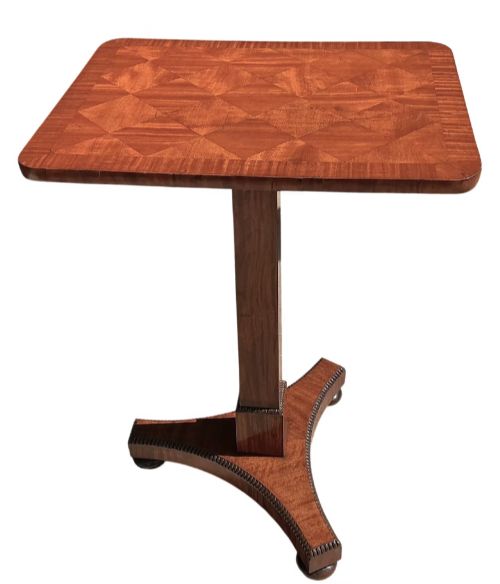
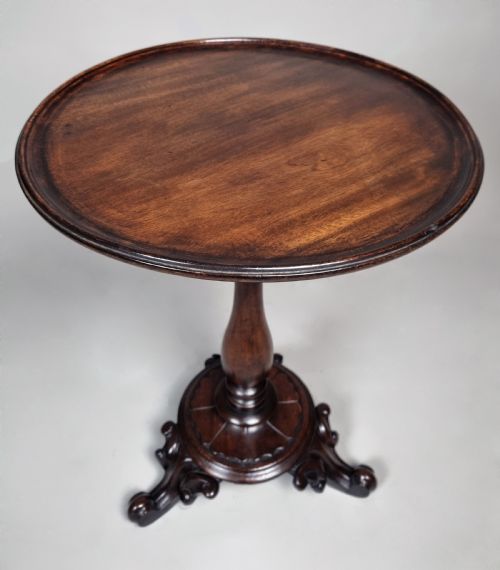
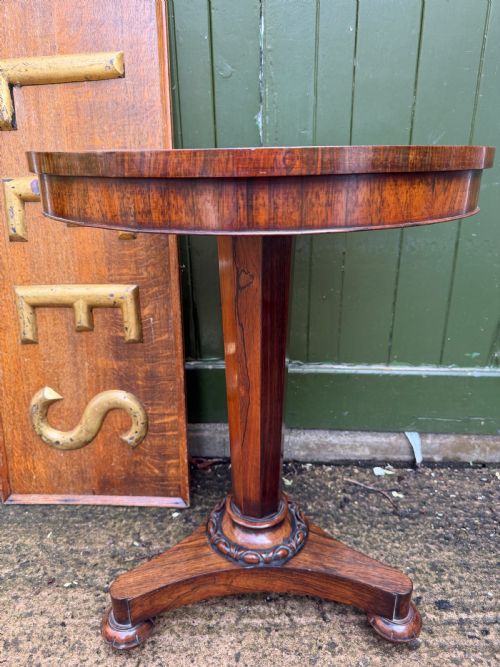
Mahogany and rosewood dominate the listings, frequently appearing as wine tables, side tables, and work tables that hold illumination. Many examples emerge from the nineteenth century, including specific pieces designated under the William IV and revival styles.
Materials and construction
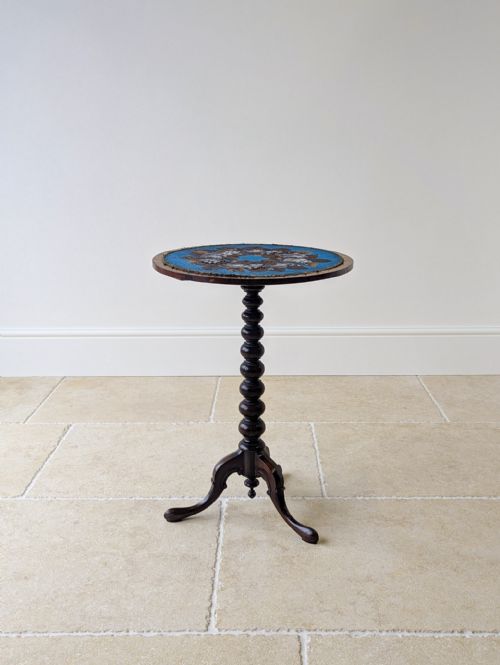
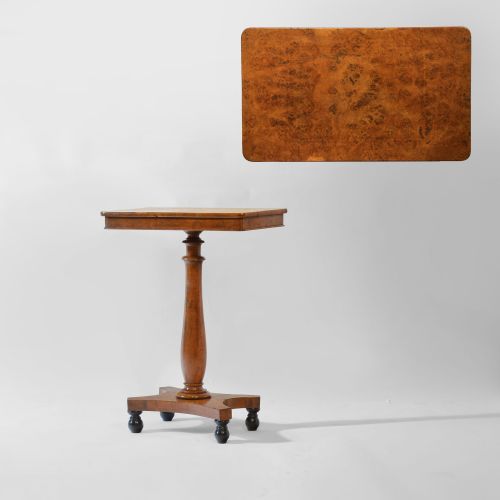
Cabinetmakers worked predominantly in solid mahogany, flame mahogany veneer, and rich rosewood, supported by secondary timbers like oak. Turned central pedestals stand upon tripod or platform bases, occasionally featuring brass mounts or inlaid specimen wood tops.
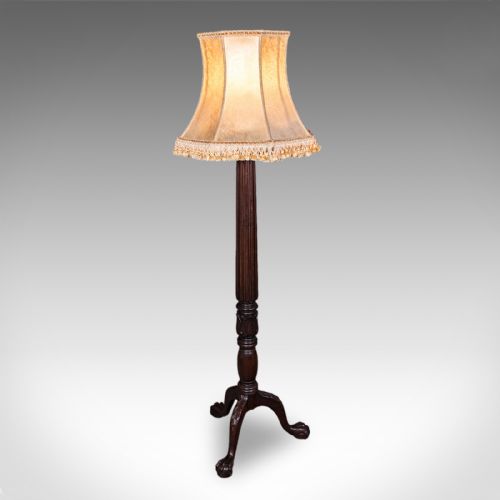
Metal versions utilise solid brass and gilt bronze, sometimes incorporating decorative details such as faux lapis lazuli columns. Adaptations also occur, converting standard occasional tables or torchere stands into functional lamp mountings.
Current listings feature materials ranging from solid brass and gilt bronze to pollard oak, flame mahogany veneer, and rosewood.
Distinctions in standard
Quality rests upon the selection of timber grain, seen in dense rosewood or richly figured flame mahogany veneers. Refinement in the turning of the pedestal and the crispness of carved details separate superior examples from plainer utility items.
The integrity of the timber structure and the presence of specialist decorative elements, such as beadwork or compass rose inlays, elevate certain tables and lamp bases above standard production.
The William IV Lamps Glossary
- Occasional table
- A small movable table used for subsidiary purposes around a room. These pieces frequently function as supports for table lamps.
- Torchere
- A tall stand designed to hold a light source or plant. They provide elevated placement in period interiors.
- Flame mahogany veneer
- A sliced layer of timber displaying a distinctive flickering flame pattern. Cabinetmakers applied this to prominent surfaces for visual impact.
- Pedestal table
- A table supported by a single central pillar rising from a base. This construction allows maximum leg room around the top.
William IV Lamps: Frequently Asked Questions
What defines a William IV lamp table?
William IV lamp tables typically exhibit robust proportions, dark dense timbers like mahogany or rosewood, and central pedestals. They reflect design tastes from the eighteen-thirties.
Many surviving pieces served originally as wine tables or work tables before being utilised for lighting. Their sturdy tripod or platform bases provide steady support.
Are these lamps original or adapted?
Some listings comprise period metal standard lamps or solid brass table lamps from the era. Other items are historical occasional tables later adapted to hold electrical fittings.
Checking the mounting and wiring helps clarify whether a timber piece was built for illumination or converted subsequently. Both forms appear within nineteenth-century collections.
How do I identify rosewood in these pieces?
Rosewood displays a heavy weight, an oily lustre, and deep dark brown grain patterns with distinct black streaking. It was favored for high-status occasional and wine tables.
Over time, the timber develops a mature dark patina that distinguishes it from lighter mahoganies. It remains a primary material associated with the style.
Where should I place a pedestal lamp table?
These compact tables suit corners, beside seating, or alongside reading chairs where surface space is required. Their central pillar design occupies minimal floor area.
The rich dark woods complement traditional and transitional interiors, adding nineteenth-century character to domestic lighting arrangements.