

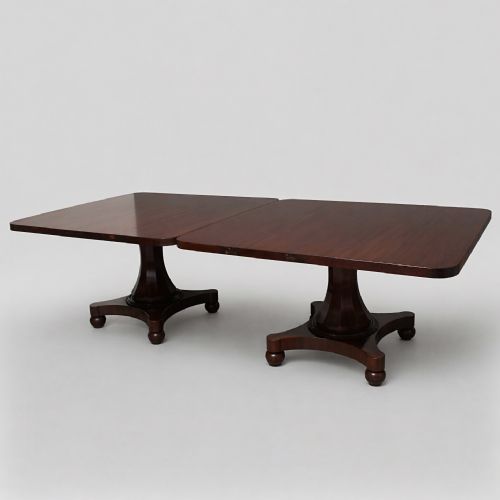


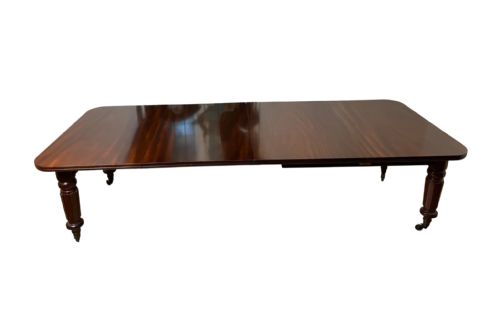


William IV Extending Dining Table
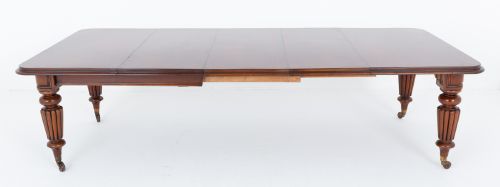
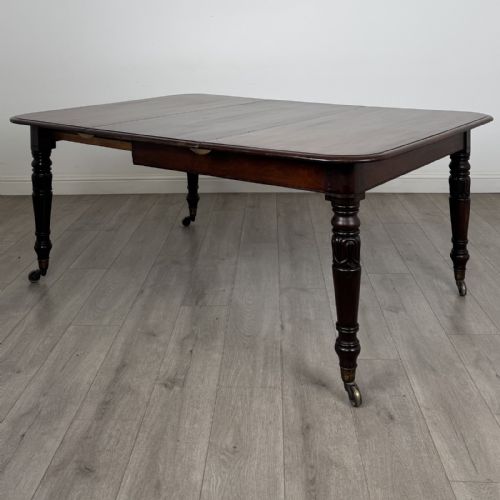
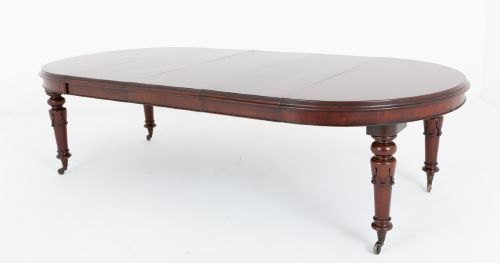
A william iv extending dining table brings substantial presence to a room, offering adaptable seating for large gatherings through traditional folding or pull-out mechanisms.
William IV Extending Dining Table
A william iv extending dining table is a heavy, architectural dining room piece designed to accommodate anywhere from eight to over fourteen guests using removable leaves or winding mechanisms. These tables predominantly date from the nineteenth century, reflecting the robust proportions and classical revival tastes of the period.
Makers and workshops of the era, such as Gillows of Lancaster or Mack, Williams and Gibton, engineered these tables to expand smoothly while maintaining structural stability. Buyers select them for their combination of generous capacity and dignified nineteenth century presence.
How they were made
Cabinetmakers built a william iv extending dining table primarily using solid mahogany and mahogany veneers, selected for deep grain patterns like flame and plum pudding. Supporting frames often incorporated sturdy oak or secondary timbers, while heavy brass castors allowed these massive pieces to move across floors.
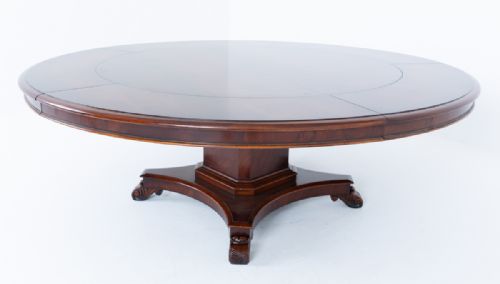
Tables utilised mechanical pull-out frames, drop-in leaves, or pedestal bases that parted to accept multiple sections. Joinery relied on robust internal runners and robust pedestal mountings designed to bear the considerable weight of extended timber tops.
William IV Extending Dining Table Retail Price Guide 2026
Typical asking prices for william iv extending dining table among the pieces listed under this phrase on Sellingantiques today, from the lower quarter to the upper quarter. They describe what is for sale here now, not the wider market.
Some tables require up to four sturdy guests just to negotiate the heavy mahogany leaves into place after the main course.
What varies in quality
The distinction between ordinary and exceptional examples rests in the selection of timber veneers and the sophistication of the extension mechanism. Tables featuring highly figured flame mahogany or dense plum pudding grain command attention for their visual depth.
Proportion and scale also dictate worth, with longer banquet formats accommodating twelve or more seats retaining architectural harmony across multiple pedestals or legs. Original matching leaves and smooth-running winding systems separate superior workshop output from standard utility production.
Gillows of Lancaster·Thomas Treherne·Mack, Williams and Gibton
The William IV Extending Dining Table Glossary
- Extending dining table
- A table designed with a mechanism or removable leaves to increase its surface length for larger dinner parties. These pieces typically rely on pull-out wooden runners or a split pedestal base.
- Flame mahogany
- A decorative wood veneer harvested from the fork of the mahogany tree, displaying flame-like patterns. It was heavily utilised during the nineteenth century for high-status furniture surfaces.
- Pedestal base
- A central column support resting on a platform or scrolled feet, commonly used to hold heavy dining table tops. Multiple pedestals often support longer extending formats.
- Drop-in leaf
- A separate section of timber inserted into the centre of an extended table to increase seating capacity. These leaves are stored separately when the table is closed.
William IV Extending Dining Table: Frequently Asked Questions
How do I extend the table?
Most nineteenth-century extending tables operate by pulling apart the ends of the frame to reveal internal wooden runners. Additional timber leaves are then dropped into the central gap and secured.
Larger banquet formats may utilise a winding handle mechanism or separate pedestal bases that glide apart on brass castors to support the extra weight.
How many people will it seat?
Seating capacity varies considerably based on the length of the specific table, ranging from compact circular models seating six to grand banquet tables accommodating fourteen or fifteen guests.
Individual leaf additions generally allow the host to scale the surface down for everyday use or expand it fully for larger dinner parties.
Are original leaves usually included?
Many surviving tables retain their original matched leaves, which share the exact timber grain and fading patterns of the main top. Some examples feature later replacement leaves constructed to match the original wood species.
Checking the edge matching and grain continuity helps determine whether the leaves were created alongside the main structure.
How do I care for mahogany surfaces?
Mahogany dining surfaces benefit from regular dusting with a soft, dry cloth and occasional application of traditional beeswax to nourish the timber. Direct sunlight and excessive heat sources should be avoided to prevent veneer drying.
Using protective mats during dining protects the polished finish from moisture and heat marks.