




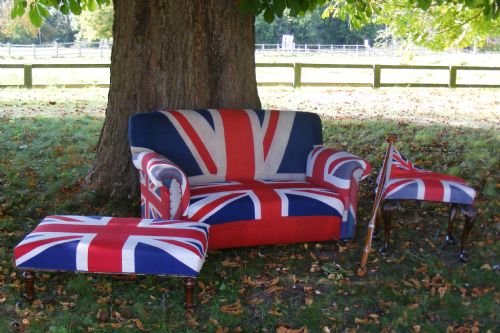


White Upholstered Settee
These white upholstered settee designs bring generous seating and traditional form together, offering a practical centrepiece for country houses and formal rooms alike.
White Upholstered Settee
A white upholstered settee combines seating capacity with historic craftsmanship, appearing across periods from the eighteenth century to the early twentieth century. These pieces take forms such as deep seated country house sofas, French canapés, love seats, and Swedish painted settees.
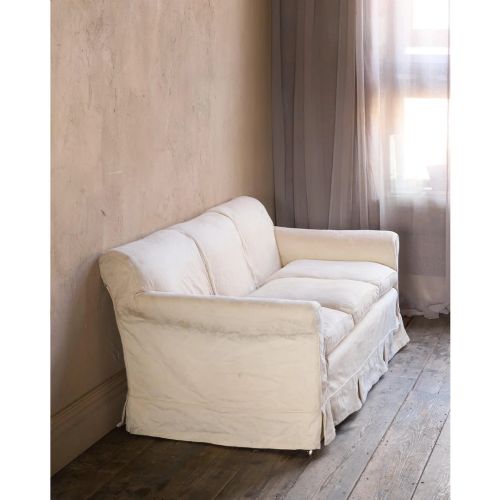
The versions most commonly met on this page span the Victorian and Edwardian eras, alongside French and Swedish regional interpretations. Buyers encounter multi-seater sofas, triple back frames, and settle benches upholstered in calico, fabric, and hessian.
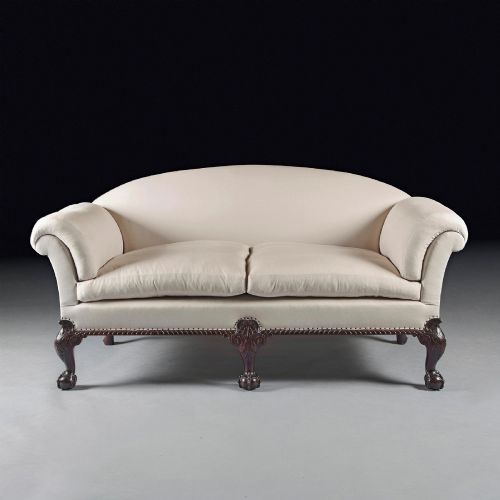
Makers and designers of the past range from Howard and Sons styles to French Louis XVI and Gustavian traditions. Each piece reflects the domestic requirements of its period, from English country house comfort to formal continental salons.
How they were made
Construction relies upon timber frameworks shaped from mahogany, painted wood, and general timber. Master joiners built robust carcasses designed to support deep cushioning and frequent domestic use.
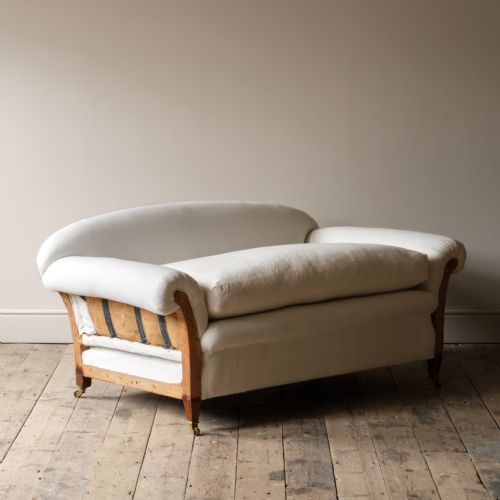
Upholstery techniques utilise foundational layers of calico and hessian beneath outer fabrics. Exposed frames often feature painted finishes or polished mahogany details, sometimes complemented by brass hardware.
White Upholstered Settee Retail Price Guide 2026
Typical asking prices for white upholstered settee among the pieces listed under this phrase on Sellingantiques today, from the lower quarter to the upper quarter. They describe what is for sale here now, not the wider market.
Periods represented on this page stretch from the eighteenth century to the early twentieth century.
What varies in quality
Quality rests upon the integrity of the wooden frame and the precision of the revival or period style. Pieces referencing makers like Howard and Sons or following Victorian Chippendale revival lines demonstrate superior joinery and proportional balance.
The refinement of the carved or painted wooden elements distinguishes standard domestic items from high status pieces. Original painted surfaces on Swedish and French frames hold greater distinction than later decorative applications.
Howard and Sons
The White Upholstered Settee Glossary
- Canapé
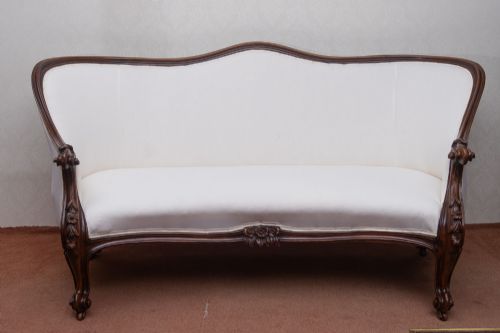
- An upholstered French sofa featuring an exposed wooden frame. These pieces often display stylistic elements from periods such as Louis XV and Louis XVI.
- Calico
- A plain woven cotton fabric traditionally used as an inner lining or base upholstery layer before top fabrics are applied.
- Hessian
- A coarse woven fabric made from jute fibres, utilised within traditional upholstery construction for internal webbing and support.
- Gustavian
- A Swedish neoclassical style originating in the late eighteenth century, characterised by pale painted woodwork and restrained ornamentation.
White Upholstered Settee: Frequently Asked Questions
What periods do these settees come from?
The listings encompass items spanning the eighteenth century through to the early twentieth century. Examples include 18th-century Swedish benches alongside Victorian, Edwardian, and Art Nouveau productions.
Craftsmanship evolves across these eras, moving from regional painted woodwork to sophisticated English country house seating and French revival designs.
How were these settees used historically?
These pieces served as primary seating within drawing rooms, country house libraries, and formal salons. Deep seated versions provided relaxed comfort, whilst French and Swedish models fulfilled both decorative and social functions in reception rooms.
Their substantial construction allowed for heavy daily use by families and guests over many generations.
What materials make up the frames?
Frames are constructed primarily from timber, with mahogany appearing frequently in Victorian examples. Painted wood finishes define many of the French and Swedish pieces.
Additional structural and decorative elements include brass components and exposed carved woodwork on revival styles.
How do I identify French styles?
French pieces often carry designations such as canapé, love seat, or French chateau style, dating from the nineteenth century. They frequently feature painted wood surfaces and triple back configurations.
These designs contrast with English country house models through lighter proportions and distinct continental ornamentation.