


White Rococo Candlesticks
White rococo candlesticks bring asymmetrical flourish and porcelain elegance to a table, offering collectors sculptural form from the Georgian and nineteenth-century periods.
White Rococo Candlesticks
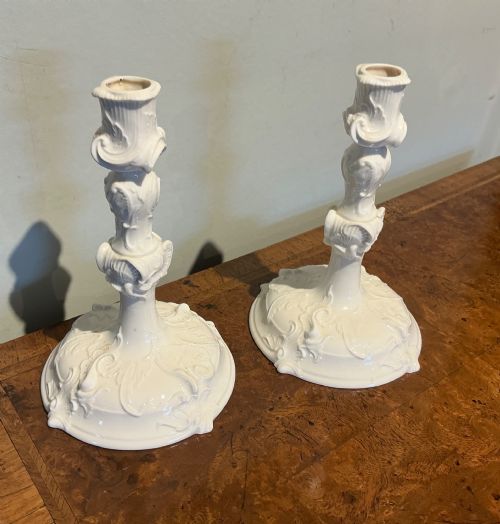
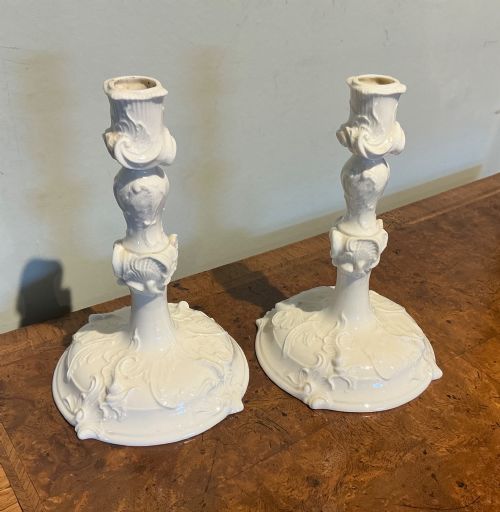
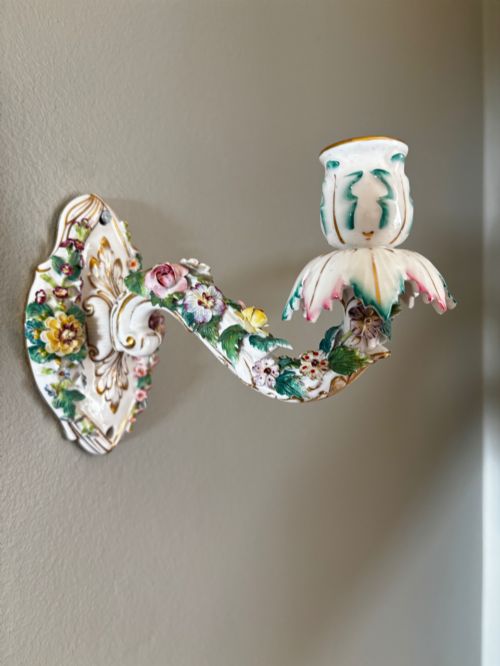
White rococo candlesticks encompass porcelain figures, glazed porcelain holders, and figural chambersticks shaped by European factories across the Georgian and nineteenth-century periods. These decorative objects display the scrollwork, asymmetry, and natural motifs typical of the rococo revival and Georgian rococo styles.
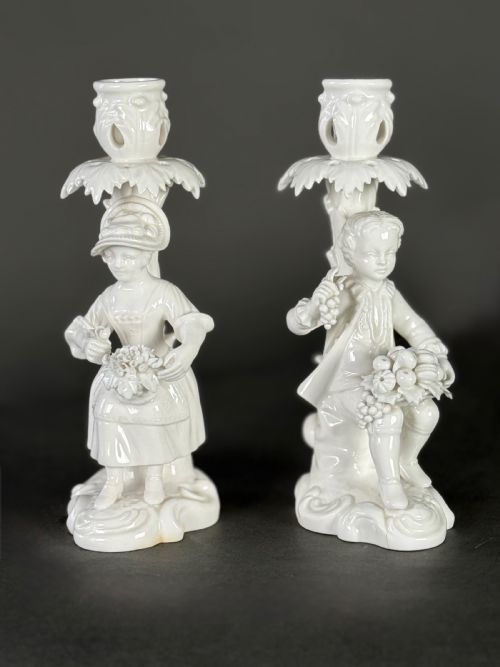
Buyers on this page most frequently encounter pairs of nineteenth-century porcelain figures, such as shepherdesses, putti, and cherubs, alongside single chambersticks and larger candelabra. German and English factories dominate the selection, bringing hard-paste porcelain and enamel details to domestic lighting forms.
How they were made
Makers utilised porcelain and hard-paste porcelain as the primary media, often shaping figures and scroll bases by hand before applying white glaze. Metal components incorporate bronze, gilt bronze, and gold leaf, frequently mounted onto marble bases to provide weight and contrast.
Artisans combined modelled figures with candle sockets, adding enamel painting and gilding to accentuate the moulded scrollwork of the rococo style. Firing techniques across German and English potteries achieved the distinct glossy surfaces characteristic of these glazed pieces.
Listings feature hard-paste porcelain, glazed porcelain, enamel, bronze, gilt bronze, gold leaf, and marble across the nineteenth century and Georgian period.
What varies in quality
The integration of materials also determines distinction, particularly where bronze mounts, marble bases, and gilt elements meet the porcelain body. Stronger examples maintain balanced proportions between the candle sockets, figural stems, and scrolling bases.
Nymphenburg·Meissen·Derby·Chelsea·Minton·Sitzendorf·Dresden
The White Rococo Candlesticks Glossary
- Blanc de Chine
- A white porcelain finish originating from Chinese kilns and later adopted by European factories. It allows the unpainted white glaze to highlight the sculptural contours of the piece.
- Chamberstick
- A short candlestick fitted with a pan to catch dripping wax and a looped handle for carrying from room to room. These portable lighting items often incorporate figural or floral motifs.
- Candelabra
- A branched candlestick holding multiple candles upon a single base. These larger lighting pieces frequently feature figural stems and arms spreading outward.
- Hard-paste porcelain
- A durable ceramic composition fired at high temperatures using kaolin and petuntse. It provides a dense, vitreous body capable of supporting intricate, thin-walled moulded forms.
- Rococo revival
- A nineteenth-century design movement that reinterpreted the curved, shell-and-scroll ornamentation of the eighteenth century. This aesthetic favours asymmetry and organic fluidity.
White Rococo Candlesticks: Frequently Asked Questions
How do I date these candlesticks?
Dating relies on identifying factory marks, material composition, and stylistic traits typical of Georgian or nineteenth-century production. Porcelain formulas and base construction also offer clear indicators of the period.
Examining the modelling style helps distinguish eighteenth-century origins from later nineteenth-century revival pieces. Comparing the hand-painted enamel details provides further context for the decade of manufacture.
Were these used for dining?
Many pairs served as garniture on mantelpieces or cabinets rather than dining tables. Their decorative figural subjects made them display pieces within reception rooms.
Smaller chambersticks were designed for personal portability and bedchambers. Larger candelabra provided ambient illumination during evening gatherings.
How do I clean white porcelain?
Cleaning requires a soft cloth and lukewarm water to remove dust from glazed surfaces without disturbing painted enamel or gilding. Harsh abrasives must be avoided entirely.
Metal components such as bronze or gilt mounts should be dusted separately with a dry brush. Moisture should be kept away from any exposed ceramic body edges.
What is the difference between candlesticks and candelabra?
Candlesticks hold a single candle upon a vertical shaft and supportive base. They function individually or in matched pairs.
Candelabra feature multiple branches extending from a central stem to hold several candles at once. They offer a more substantial visual presence on a surface.