



White Painted Settees
White painted settees bring an airy, structural elegance to a room, offering seating that spans from 18th century Swedish workshops to 20th century gardens.
White Painted Settees
White painted settees encompass a diverse group of seating furniture, ranging from interior settees and sofas to garden benches and settles. When searching for white painted settees, buyers encounter items dating from the 18th century through to the early 20th century.
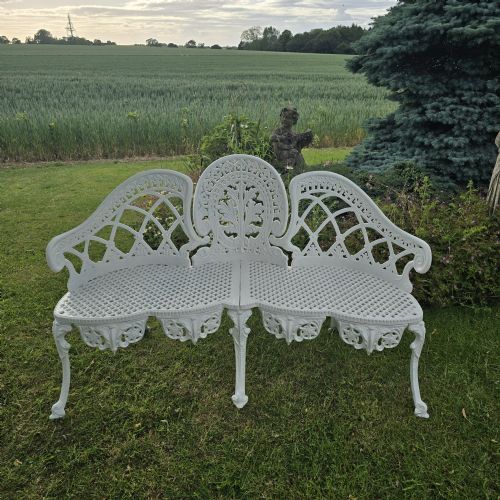
Interior examples often showcase refined painted and gilt finishes, whilst exterior and garden pieces demonstrate robust construction in pine, painted wood, and cast aluminium. This mix provides options suited for both formal drawing rooms and sheltered outdoor spaces.
Materials and Construction
Makers utilised timber such as pine and general wood as the foundational structure for interior settees, applying surface paint and sometimes gilding to achieve decorative elegance. Caning was frequently woven into the frames of French models to create lightweight, breathable backrests.
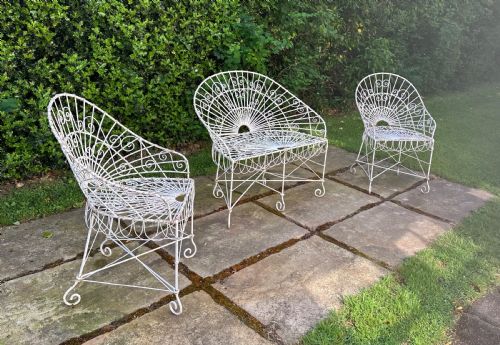
Exterior and garden pieces relied on durable metals, including wrought iron and cast metal, alongside treated painted wood to withstand the elements. These materials were shaped into curved forms and structural supports characteristic of Regency and later revival periods.
White Painted Settees Retail Price Guide 2026
Typical asking prices for white painted settees among the pieces listed under this phrase on Sellingantiques today, from the lower quarter to the upper quarter. They describe what is for sale here now, not the wider market.
Listings incorporate items spanning from the 18th century through the Regency era, 1850, and into the 1920s and 1930s.
Assessing Quality and Character
Quality in these pieces is dictated by the integrity of the original construction and the preservation of the painted surface. Hand-carved wooden details and period-appropriate gilding distinguish finer interior settees from later revival pieces.
For garden and exterior seating, the robustness of the metalwork and the depth of the surviving paint layers indicate the standard of craftsmanship. The balance between structural durability and delicate aesthetic proportion remains central to the value of each piece.
The White Painted Settees Glossary
- Gustavian
- The Swedish interpretation of French neoclassical design, characterised by restrained carving, light painted finishes, and functional elegance.
- Caned
- A technique where woven rattan or split cane forms the seat or back panel of a chair or settee, offering flexibility and airflow.
- Regency
- An English design style spanning the early 19th century, known for drawing inspiration from classical Greek, Roman, and Egyptian forms.
- Settle
- A traditional wooden bench with a high solid back, solid arms, and often a storage box beneath the seat.
- Gilt
- A thin layer of gold leaf or powder applied to the surface of wood or metal to impart a decorative metallic sheen.
White Painted Settees: Frequently Asked Questions
Where should I place a white painted settee?
Interior settees with painted or gilt finishes work well in drawing rooms, hallways, or bedrooms where their decorative frames can stand out against neutral walls.
Garden benches and metal settees are designed for outdoor settings, functioning effectively on patios, lawns, or within conservatory spaces.
How do I identify a Gustavian settee?
Gustavian pieces typically originate from Sweden and date to the 18th century, displaying pale or white painted surfaces with restrained neoclassical detailing.
They generally feature straight tapered legs, fluted columns, and carved motifs that are simpler and more austere than their French counterparts.
Are these settees suitable for daily sitting?
Many period settees are sturdy enough for regular use, particularly upholstered or caned models designed for interior reception rooms.
However, delicate antique frames or older garden benches may require more careful sitting or additional cushioning to protect fragile structures.
What is the difference between a settee and a sofa?
Historically, a settee referred to a long wooden or upholstered seat for two or more people, often featuring a rigid back and exposed wooden frame.
Sofas generally evolved to describe fully upholstered, deeply cushioned seating built primarily for comfort rather than formal posture.