



White Marble Mantelpiece
A white marble mantelpiece brings crisp neoclassical form and cool tactile weight to a hearth, uniting structural architectural dignity with refined domestic display.
White Marble Mantelpiece
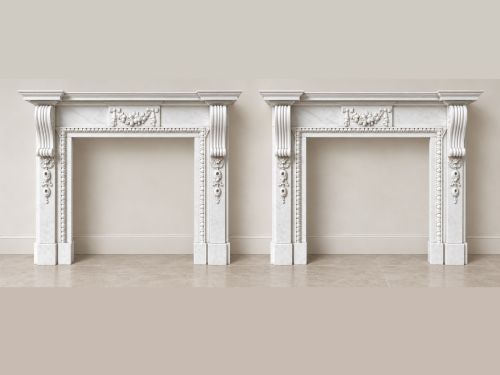
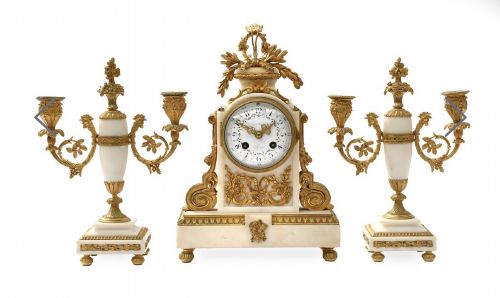
When you search for a white marble mantelpiece, you encounter architectural fireplace surrounds alongside decorative garniture sets and clock garnitures designed to sit upon the shelf above the fire. These pieces emerge from Victorian, Edwardian, and nineteenth-century workshops, drawing heavily on French Louis XVI style and neoclassical design principles.
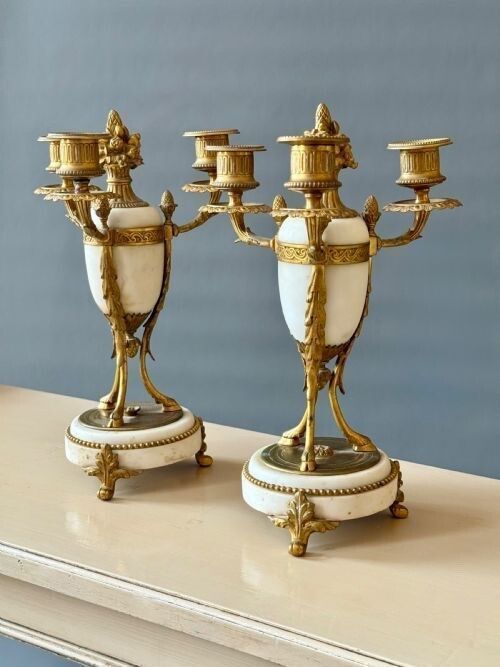
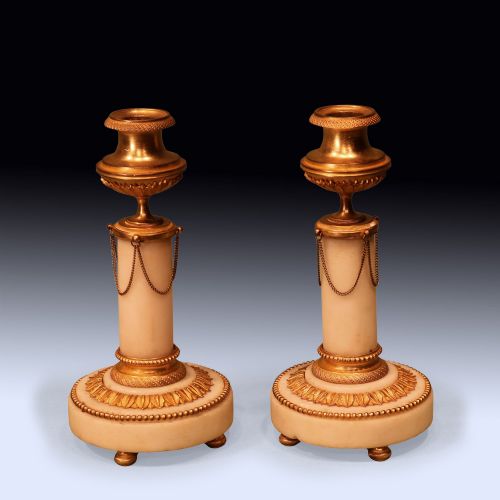
You are most likely to meet large carved fireplace surrounds alongside paired candelabras, candlesticks, and mantel clocks executed in white marble combined with gilt bronze or ormolu. The selection ranges from substantial architectural surrounds dated to the 1860s and 1900s down to smaller table mantel clocks and candelabra sets.
The aesthetic vocabulary relies on symmetrical neoclassical proportions, carved statuary marble, and contrasting gilt metal mounts depicting cherubs or classical motifs. Such pieces function as focal points in period reception rooms, balancing the warmth of a hearth with the chill brilliance of carved stone.
Quality and craftsmanship
The division between standard production and exceptional work rests in the depth and crispness of the marble carving, particularly evident in architectural fireplace surrounds and figural clock mounts. Finer pieces display deeply undercut foliage, sharply rendered cherubs, and precise architectural mouldings rather than shallow, mechanical incisions.
Furthermore, the integration between the metal mounts and the stone body reveals the maker's hand, where superior ormolu is heavily chased and pinned securely into the marble without visible gaps. The weight of the bronze, the complexity of the clock movement, and the purity of the statuary marble separate ordinary decorative items from masterworks.
White Marble Mantelpiece Retail Price Guide 2026
Typical asking prices for white marble mantelpiece among the pieces listed under this phrase on Sellingantiques today, from the lower quarter to the upper quarter. They describe what is for sale here now, not the wider market.
Several bronze cherubs hold up candelabra arms with expressions of mild exhaustion, immortalised in heavy gilt metal.
Claude Clodion
The White Marble Mantelpiece Glossary
- Ormolu
- Gilt bronze created by applying a mercury-gilding mixture to cast bronze, yielding a deep golden lustre. This technique was widely utilised on French decorative hardware throughout the nineteenth century.
- Garniture set
- A coordinated group of decorative objects, typically comprising a central mantel clock flanked by matching candelabras or vases. Such sets were placed symmetrically upon the mantel shelf.
- Neoclassical
- A style inspired by classical antiquity that emphasises restraint, symmetry, and architectural columns. It heavily influences the design of nineteenth-century fireplace surrounds and clock sets.
- Statuary marble
- A pure white, fine-grained marble traditionally favoured for sculpture and high-end architectural carving. It provides an exceptionally smooth ground for detailed chisel work.
- Candelabrum
- A branched candlestick designed to hold multiple candles simultaneously. These fixtures frequently accompany mantel clocks in matching bronze and marble sets.
White Marble Mantelpiece: Frequently Asked Questions
What is a clock garniture?
A clock garniture is a matched set consisting of a central mantel clock and two flanking ornaments, such as candelabras or urns, designed for display on a fireplace shelf.
These sets created a balanced, symmetrical focal point above the hearth in nineteenth-century drawing rooms.
How do I clean white marble?
White marble requires gentle cleaning with a soft cloth and warm water, avoiding acidic substances or harsh chemical detergents that etch the polished stone surface.
Careful maintenance preserves the natural matte or polished finish without wearing down delicate carved details.
Are these pieces French or English?
The selection includes both French mantel clocks and candelabras alongside British architectural fireplace surrounds from the Victorian and Edwardian eras.
French pieces often showcase Louis XVI revival styling with gilt bronze mounts, while British surrounds emphasise structural statuary marble.
How do I date a marble clock?
Dating relies on examining the clock movement, the style of the enamel dial, and the method of bronze casting employed in the mounts.
Nineteenth-century pieces frequently feature eight-day movements and distinct neoclassical design traits associated with specific decades.